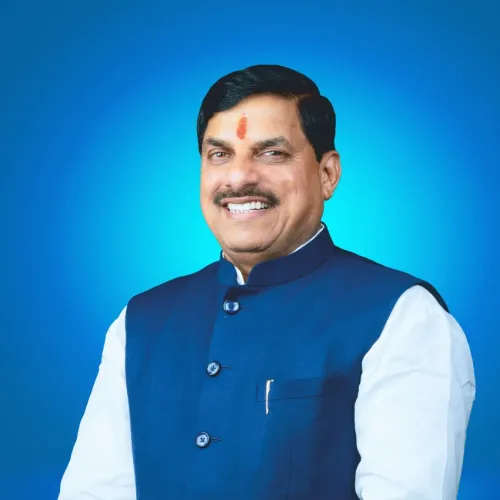
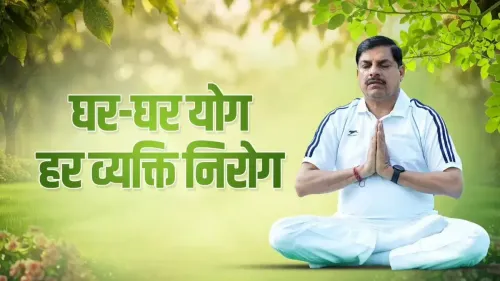
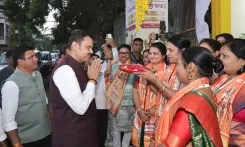
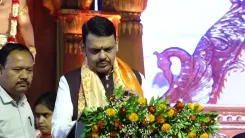
MP CM Mohan Yadav visits S-VYASA's golden jubilee in Bengaluru
Synopsis
Madhya Pradesh Chief Minister Dr. Mohan Yadav visited S-VYASA's Prashanti Kutiram campus in Bengaluru on 14 November 2026 during the institution's golden jubilee, observing its yoga therapy methodologies and management systems amid growing state interest in evidence-based traditional wellness integration.
Key Takeaways
Mohan Yadav visited S-VYASA's Prashanti Kutiram campus in Bengaluru on 14 November 2026 .
The visit coincided with S-VYASA's golden jubilee — 50 years of yoga research and therapy.
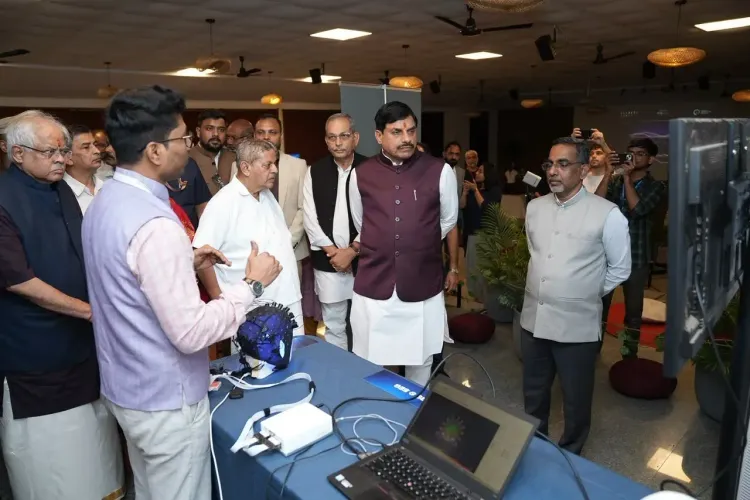
Yadav observed the institute's medical treatment methodologies and management systems and received a detailed operational briefing.
S-VYASA is a deemed university conducting peer-reviewed scientific research on yoga therapy, one of India's most credible traditional-medicine research bodies.
The visit aligns with a broader national trend since the Ministry of AYUSH's formation in 2014 of states integrating evidence-based yoga into public health frameworks.
A possible memorandum of understanding between Madhya Pradesh and S-VYASA for state yoga programmes or research tie-ups has not yet been announced.
Bengaluru, 14 November 2026 — At a yoga research institution that has spent five decades bridging ancient practice and modern science, Madhya Pradesh Chief Minister Dr. Mohan Yadav arrived to mark a milestone — and to look closely at what evidence-based yoga governance might mean for his state.
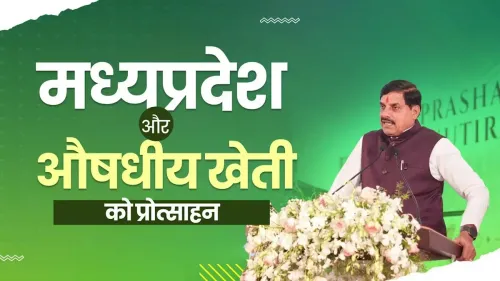
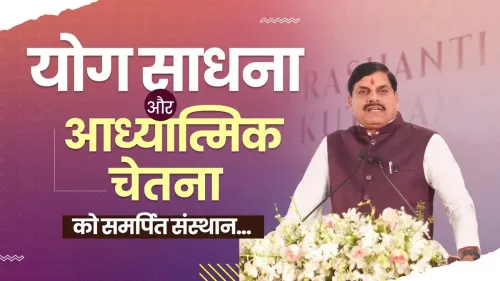
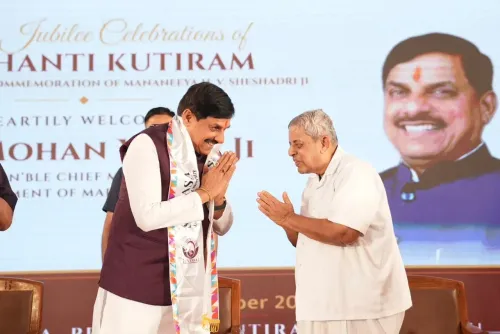
The Chief Minister's Office of Madhya Pradesh confirmed that Dr. Yadav visited the Swami Vivekananda Yoga Anusandhana Samsthana (S-VYASA) campus at Prashanti Kutiram, Bengaluru, on the occasion of the institution's golden jubilee celebrations. He observed the institute's medical treatment methodologies and management systems, and received a detailed briefing on its operational framework and various activities.
Fifty years of S-VYASA — and why a CM flew in
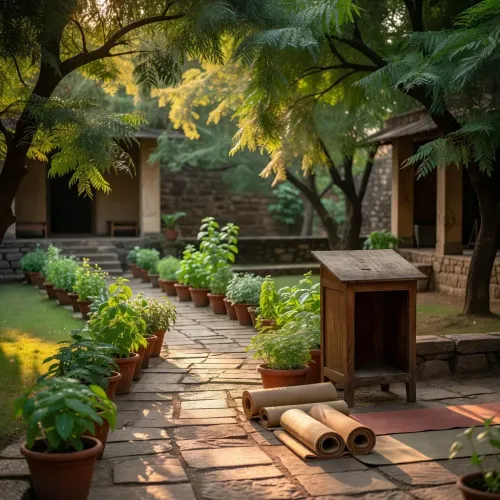
S-VYASA is no ordinary wellness centre. Recognised as a deemed university, it conducts peer-reviewed scientific research on yoga therapy, making it one of India's most credible bridges between traditional practice and clinical application. Its main campus, Prashanti Kutiram, hosts residential yoga therapy programmes, research laboratories, and management training rooted in yogic principles. Reaching its golden jubilee — 50 years of operation — is a significant institutional landmark in India's yoga research landscape.
Dr. Yadav's presence at the event signals more than ceremonial goodwill. Indian states have increasingly sought formal collaborations with institutions like S-VYASA to integrate yoga-based interventions into public health frameworks — a trend accelerated since the formation of the Ministry of AYUSH in 2014, which gave institutional momentum to evidence-based traditional medicine at the national level.
Madhya Pradesh's wellness ambitions on display
Since taking office in December 2023, Dr. Yadav has positioned cultural and wellness initiatives as a visible thread in Madhya Pradesh's governance identity. A visit to one of India's foremost yoga research institutions fits squarely within that frame — and raises a pointed question: will this observation tour translate into a formal partnership?
Researchers and traditional medicine practitioners who track state-level AYUSH integration will be watching for any follow-up memoranda of understanding between Madhya Pradesh and S-VYASA — whether for state-run yoga programmes, research tie-ups, or curriculum integration in public health outreach. No such announcement has been confirmed yet.
India's promotion of yoga as both living cultural heritage and complementary healthcare has created a competitive space among states to be seen as leaders in the field. For Madhya Pradesh — home to significant tribal wellness traditions and a growing medical tourism footprint — aligning with a globally recognised yoga research body carries both symbolic and practical weight.
Whether yesterday's visit becomes a blueprint for policy or remains a ceremonial gesture, the stopwatch is now running on what Madhya Pradesh does next with what its Chief Minister observed in Bengaluru.
Point of View
Making a visit like this a logical next step rather than a standalone gesture. For Madhya Pradesh, formalising a tie-up with a globally credible yoga research body could give the state a measurable edge in medical tourism and public health branding. The real test of intent will be whether a policy instrument — an MoU, a funded programme, a research chair — follows within the next few months.
NationPress
14 Nov 2026
Frequently Asked Questions
What is S-VYASA and why is it significant?
S-VYASA, or Swami Vivekananda Yoga Anusandhana Samsthana, is a deemed university in Bengaluru that conducts peer-reviewed scientific research on yoga therapy and traditional management systems. It is one of India's most credible institutions bridging classical yoga with modern clinical research.
Why did Madhya Pradesh CM Mohan Yadav visit S-VYASA in Bengaluru?
Dr. Mohan Yadav visited S-VYASA's Prashanti Kutiram campus on 14 November 2026 to attend the institution's golden jubilee celebrations and to observe its yoga-based medical methodologies and management practices, reflecting Madhya Pradesh's interest in wellness and AYUSH integration.
What is Prashanti Kutiram?
Prashanti Kutiram is the main campus of S-VYASA in Bengaluru. It hosts residential yoga therapy programmes, research laboratories, and management training grounded in yogic principles.
Will Madhya Pradesh sign an MoU with S-VYASA?
No formal memorandum of understanding between Madhya Pradesh and S-VYASA has been announced as of the visit on 14 November 2026. Researchers tracking state AYUSH collaborations consider it a possibility to watch.
What is the Ministry of AYUSH and how does it relate to this visit?
The Ministry of AYUSH was established in 2014 to promote yoga and traditional Indian systems of medicine through research and institutional collaboration. It created the national framework within which state-level visits and partnerships with institutions like S-VYASA now take place.