Kishan Reddy Highlights 12 Years of Rural Infrastructure Gains
Synopsis
Union Minister G. Kishan Reddy on June 9, 2026 highlighted twelve years of rural infrastructure gains under central schemes — Jal Jeevan Mission, Ujjwala Yojana, Swachh Bharat Mission and Saubhagya — crediting the Modi government with replacing smoky kitchens, dim lamps and open defecation with tap water, LPG, sanitation and electricity across rural India.
Key Takeaways
Kishan Reddy , Union Coal and Mines Minister and BJP Telangana president, posted on June 9, 2026 citing twelve years of rural welfare delivery.
The post referenced four flagship schemes: Swachh Bharat Mission (2014), Pradhan Mantri Ujjwala Yojana (2016), Saubhagya (2017), and Jal Jeevan Mission (2019).
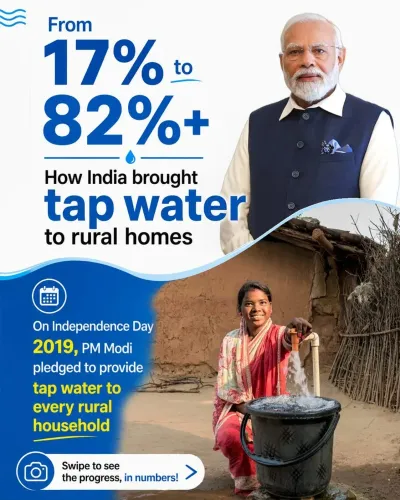
Jal Jeevan Mission aims to provide functional tap connections to rural homes across more than six lakh villages .
Pradhan Mantri Ujjwala Yojana targeted women from below-poverty-line households with free LPG connections to replace biomass cooking.
Rural women and children are identified as the primary beneficiaries, having historically borne the highest burden of water scarcity, indoor pollution, and lack of sanitation.
The 2026-27 Union Budget is the next key milestone for revised scheme targets and fresh allocations.
Union Coal and Mines Minister G. Kishan Reddy on Tuesday, June 9, 2026, took to X to highlight what he described as a sweeping transformation in rural living conditions over the past twelve years, citing gains in tap water access, clean cooking fuel, sanitation, and household electrification as evidence of sustained policy delivery under the Narendra Modi government.
Context
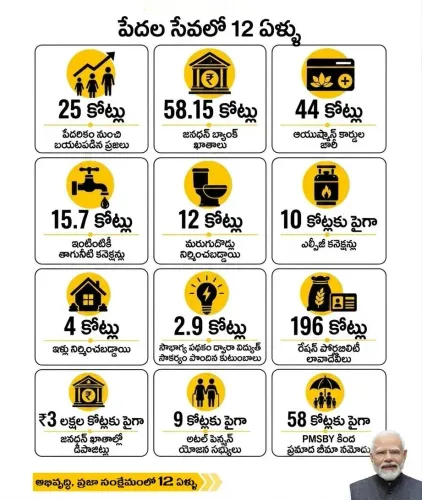
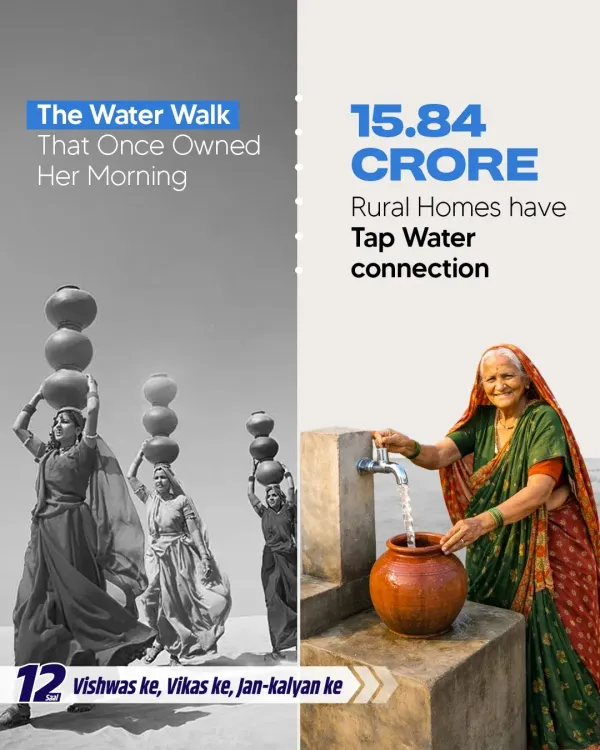
In his post, Kishan Reddy painted a before-and-after picture of rural India: 'Not long ago, millions of women began their mornings walking long distances to fetch water. Families cooked over smoky chulhas. Children studied under dim kerosene lamps. Access to a toilet remained a distant aspiration for many.' He then noted that 'over the past 12 years, these everyday hardships have steadily receded,' pointing to tap water in rural homes, LPG replacing smoke-filled kitchens, village sanitation coverage, and household electrification as the markers of change.
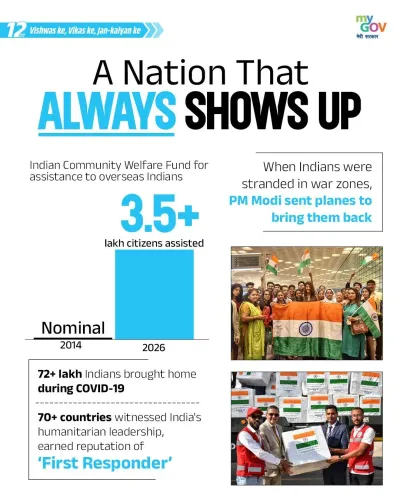
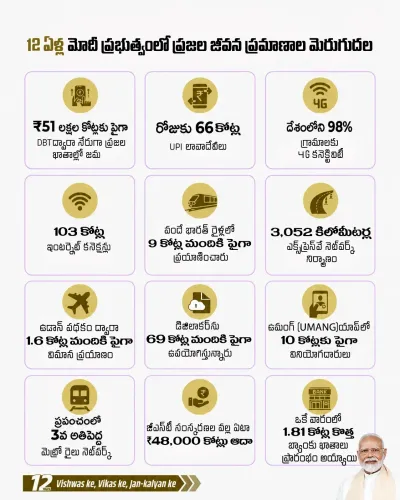
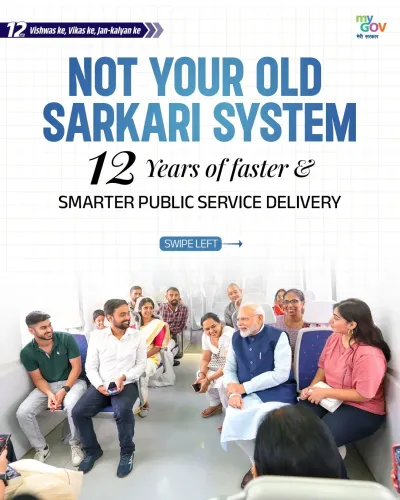
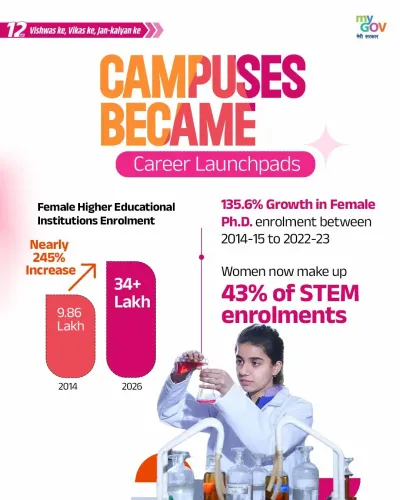
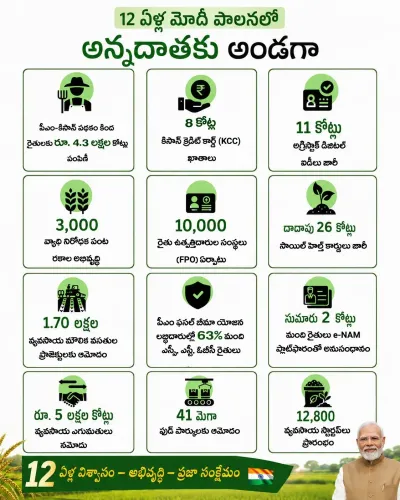
The post, accompanied by four images, was framed as a broad testimonial to the cumulative impact of flagship central government programmes rather than an announcement of any new policy measure.
Policy Backdrop
The four transformations Kishan Reddy cited map directly onto four time-bound central schemes launched in successive years. The Swachh Bharat Mission, launched in October 2014, targeted universal sanitation coverage through toilet construction and behaviour change across rural and urban India. The Pradhan Mantri Ujjwala Yojana, announced in May 2016, provided free LPG connections to women from below-poverty-line households, aiming to replace traditional biomass cooking with clean fuel.
The Saubhagya scheme, launched in September 2017, pursued last-mile household electrification, offering free electricity connections to previously unelectrified homes. The Jal Jeevan Mission, announced in August 2019, set out to deliver functional household tap connections to every rural home, covering over six lakh villages across the country. Together, these programmes represent the central government's most concentrated push on basic household infrastructure since independence.
The broader pattern since 2014 has been one of target-driven, centrally funded delivery with state-level implementation and third-party monitoring — a departure from earlier demand-driven models and a template that has also been applied in rural housing under PMAY-Gramin and in nutrition programmes.
Stakeholders and Impact
The primary beneficiaries of these schemes are rural women and rural households, particularly those in the lowest income brackets. The burden of water collection, exposure to indoor air pollution from biomass cooking, lack of safe sanitation, and absence of electricity have historically fallen most heavily on women and children — a fact Kishan Reddy's post implicitly acknowledged by opening with the image of women walking to fetch water and children studying under kerosene lamps.
As BJP Telangana state president, Kishan Reddy's post also carries a political dimension: Telangana, which is governed by the Congress party at the state level, is a key battleground where the BJP has sought to highlight the contrast between central government welfare delivery and state-level governance. Amplifying national scheme achievements is consistent with the party's outreach strategy in the state.
What's Next
The next significant checkpoint for these programmes is expected around the 2026-27 Union Budget, where revised saturation targets, convergence guidelines, and fresh allocations from the Ministry of Jal Shakti and the Ministry of Petroleum and Natural Gas are anticipated. Any updated coverage data released through official scheme dashboards will be closely watched by policy observers tracking whether the final-mile gaps — typically the hardest to close — have been bridged in states with the lowest baseline coverage.
Point of View
Smoke, light, toilets — rather than statistics, the post is calibrated for emotional resonance with rural audiences on social media. The four schemes cited span the full decade of the Modi government, suggesting a deliberate effort to present infrastructure delivery as a continuous, compounding achievement rather than isolated wins. As scheme saturation reports approach in the next budget cycle, such messaging is likely to intensify ahead of any state or national electoral cycle.
NationPress
22 Sept 2026
Frequently Asked Questions
What schemes did Kishan Reddy refer to in his post about rural India?
Kishan Reddy's post implicitly referenced four central government schemes: Jal Jeevan Mission for tap water, Pradhan Mantri Ujjwala Yojana for LPG, Swachh Bharat Mission for sanitation, and Saubhagya for household electrification — all launched between 2014 and 2019.
What is the Jal Jeevan Mission and what does it aim to do?
Jal Jeevan Mission is a central scheme announced in August 2019 that aims to provide functional household tap connections to every rural home across India's more than six lakh villages.
What is Pradhan Mantri Ujjwala Yojana?
Pradhan Mantri Ujjwala Yojana, launched in May 2016, provides free LPG cooking gas connections to women from below-poverty-line households to replace traditional biomass or wood-burning chulhas that cause indoor air pollution.
When was the Swachh Bharat Mission launched?
The Swachh Bharat Mission was launched in October 2014 with the goal of eliminating open defecation through toilet construction and behaviour change campaigns in rural and urban India.
Why is Kishan Reddy talking about rural welfare schemes?
As Union Coal and Mines Minister and BJP Telangana state president, Kishan Reddy regularly amplifies the central government's welfare record, particularly in states like Telangana where the BJP is in opposition and seeks to highlight national scheme delivery to voters.