Kishan Reddy: JJM lifts tap water cover to 82%
Synopsis
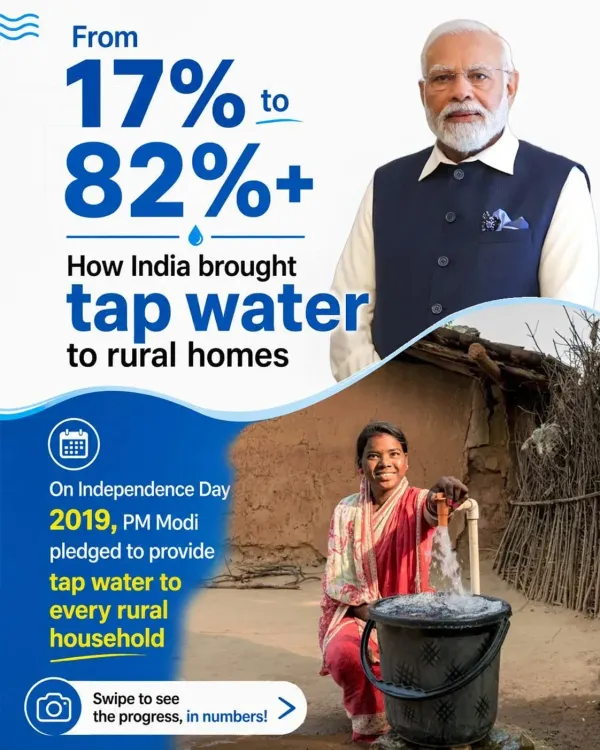
Union Minister G. Kishan Reddy highlights Jal Jeevan Mission milestones: rural tap coverage up from 17% to over 82%, 15.89 crore households connected, 11 States/UTs at 100%, 9 crore women freed from water-fetching, and 1.55 crore conservation structures built since PM Modi's 2019 pledge.
Key Takeaways
Rural tap water coverage has risen from 17% to over 82% since the Jal Jeevan Mission launched in 2019.
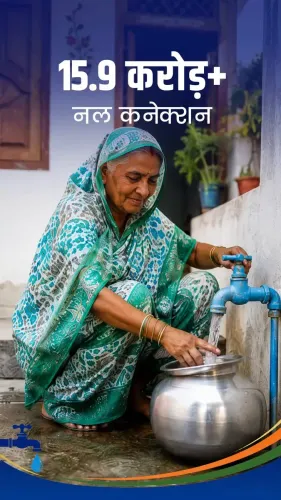
15.89 crore rural households now have functional tap connections under 'Har Ghar Jal'.
11 States and Union Territories have achieved 100% household tap coverage.
9 crore women have been relieved of the burden of fetching water daily.
1.55 crore water conservation structures have been built alongside the access drive.
70,000 hectares have been brought under smart irrigation, linking water access to farm productivity.
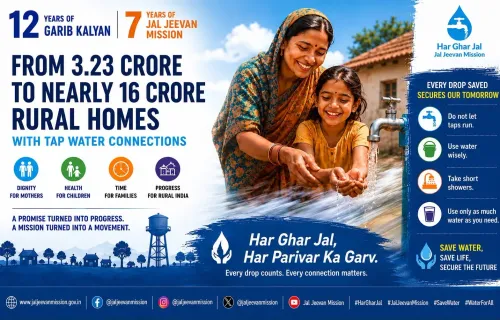
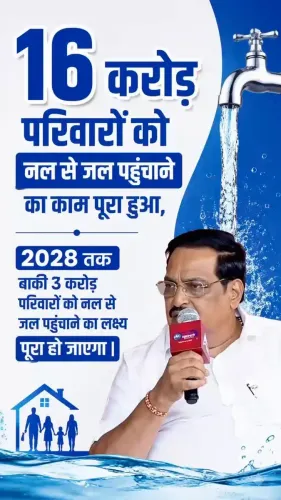
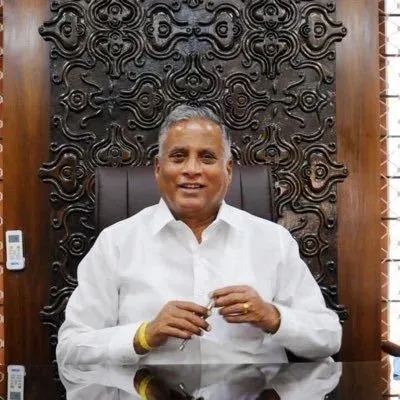
A pledge made from the ramparts of the Red Fort has, by the government's own count, become one of independent India's largest drinking-water drives. Union Coal and Mines Minister G. Kishan Reddy on Wednesday, 13 August 2026 posted a sweeping progress update on the Jal Jeevan Mission, citing rural tap-water coverage that has climbed from 17% to over 82% — reaching 15.89 crore households — since Prime Minister Narendra Modi announced the scheme on Independence Day 2019.
From 17% to 82%: what the numbers say
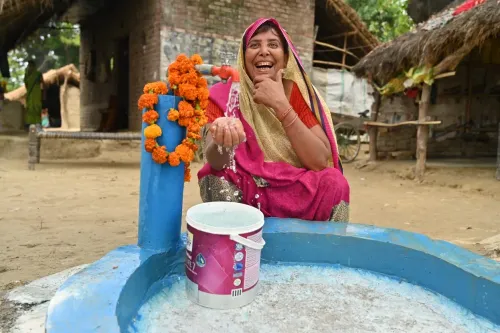
When PM Modi announced the Jal Jeevan Mission in his 15 August 2019 Independence Day address, fewer than one in five rural homes had a tap connection. The scheme replaced the earlier National Rural Drinking Water Programme with a sharper, time-bound mandate: a functional household tap connection for every rural family under the 'Har Ghar Jal' ('Water in Every Home') goal. According to Kishan Reddy's post, 11 States and Union Territories have now achieved 100% Har Ghar Jal status — meaning every rural home in those jurisdictions has a piped tap connection.
The scale of the remaining work is not trivial, but the trajectory is striking. A jump of 65 percentage points in coverage over roughly seven years represents tens of millions of new connections laid across villages, hamlets, and tribal settlements that previously depended on wells, ponds, or long walks to a handpump.
9 crore women and the burden that is lifting
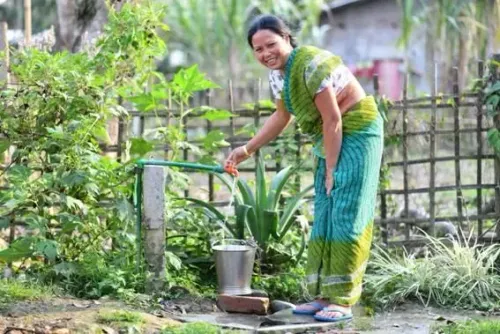
The most human dimension of the update is a single statistic: 9 crore women have been relieved of the daily task of fetching water. In rural India, that burden has historically fallen almost entirely on women and girls — hours each day, often before dawn, walking to a distant source and back. Every tap connection installed is, in effect, time returned: for school, for work, for rest. That is the kind of welfare dividend that rarely shows up in GDP figures but reshapes daily life at the household level.
Conservation alongside access: 1.55 crore structures and 70,000 hectares
Kishan Reddy's post goes beyond the headline access numbers. He flags 1.55 crore water conservation structures built under the mission — a figure that speaks to the government's parallel bet on groundwater recharge. Providing tap connections while ignoring aquifer depletion would be self-defeating; the conservation push is designed to ensure the water is actually there to pump in the coming decades. Separately, 70,000 hectares have been brought under smart irrigation, linking the drinking-water mission to the broader agriculture-water nexus that schemes like PMKSY and Atal Bhujal Yojana also target.
Together, the figures sketch a two-track strategy: connect homes to water today, and protect the underlying resource for tomorrow's farmers and families.
What the remaining gap means
With 11 States/UTs at full coverage and the national average at 82%, the arithmetic is clear: a significant number of states are still short of the finish line. The hardest connections to add are almost always the last ones — remote terrain, dispersed populations, contested land for pipelines. Parliamentary scrutiny of the Ministry of Jal Shakti's revised timelines and budget allocations for the lagging states will be the real test of whether the mission closes that final gap.
India's water story is not finished. But the distance already travelled is, on any honest reading, considerable — and the 15.89 crore families with running water at home know it.
Point of View
Verifiable outcomes that can be communicated to rural voters. The 9-crore-women figure is particularly deliberate, targeting a constituency the party has courted intensively through schemes like Ujjwala and PM Awas. The gap between 82% national coverage and the 11 fully saturated states also signals where political pressure — and bureaucratic scrutiny — will concentrate next. For the opposition, the credibility of the numbers and the pace of the remaining 18% will be the natural line of attack as the mission approaches its end-horizon.
NationPress
26 Sept 2026
Frequently Asked Questions
What is the Jal Jeevan Mission?
Jal Jeevan Mission is a central government scheme launched by Prime Minister Narendra Modi on Independence Day 2019 to provide a functional household tap connection for every rural home in India, replacing the earlier National Rural Drinking Water Programme.
How much has rural tap water coverage increased under Jal Jeevan Mission?
According to the government's figures cited by Union Minister G. Kishan Reddy, rural tap water coverage has risen from 17% in 2019 to over 82% in 2026, reaching more than 15.89 crore households.
Which states have achieved 100% Har Ghar Jal?
The government states that 11 States and Union Territories have achieved 100% 'Har Ghar Jal' status, meaning every rural household in those jurisdictions has a piped tap connection, though the specific names of all 11 are not listed in the post.
How has Jal Jeevan Mission helped women in India?
The mission has relieved an estimated 9 crore women of the daily task of fetching water from distant sources, returning hours each day that were previously spent on water collection.
What water conservation work has been done under Jal Jeevan Mission?
Alongside household connections, the mission has seen 1.55 crore water conservation structures built to support groundwater recharge, and 70,000 hectares brought under smart irrigation to link drinking-water security with agricultural needs.