Giriraj Singh hails Modi welfare schemes, rural transformation
Synopsis
Union Textiles Minister Giriraj Singh marked 12 years of the Modi government on 18 June 2026 by crediting central welfare schemes — electricity, water, toilets, LPG, housing, free rations and Ayushman Bharat — with transforming rural India and strengthening the confidence of the poor.
Key Takeaways
Union Textiles Minister Giriraj Singh posted on 18 June 2026 praising the Modi government's welfare record under the hashtag #12YearsOfSeva .
Schemes cited include Jal Jeevan Mission , Pradhan Mantri Ujjwala Yojana , Swachh Bharat Mission-Gramin , PMAY-G , Ayushman Bharat and PM Garib Kalyan Anna Yojana .
Swachh Bharat Mission-Gramin has constructed over 10 crore toilets in rural India since its October 2014 launch.
Ayushman Bharat offers up to Rs 5 lakh annual health cover to eligible families since 2018 .
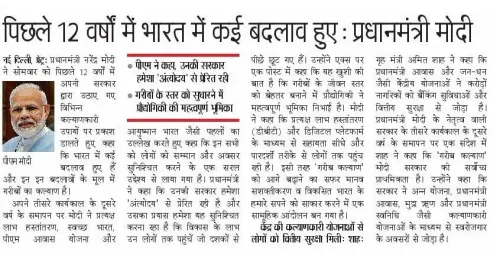
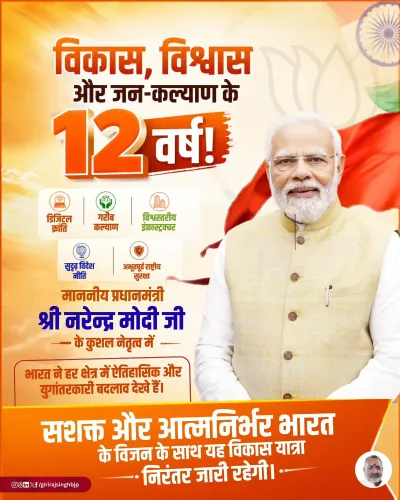
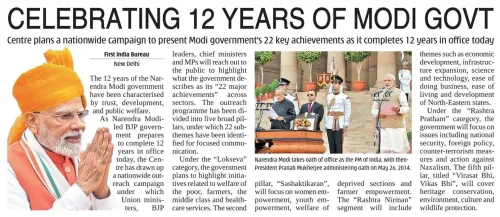
The post is part of a BJP-wide communication exercise marking 12 years of the Modi-led central government.
Future focus areas include Jal Jeevan Mission and PMAY-G saturation targets and the extension of free-ration provisions.
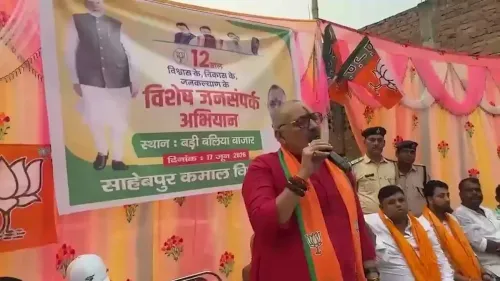
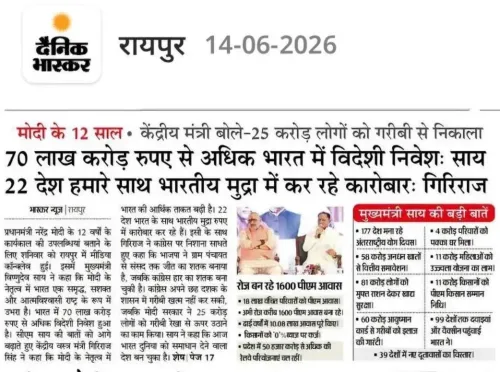
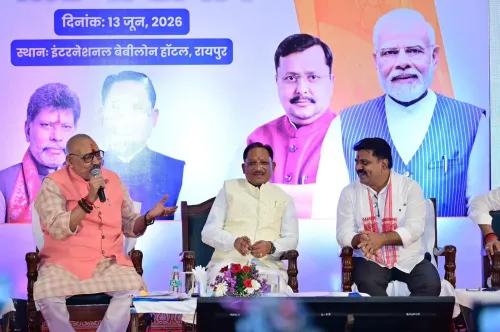
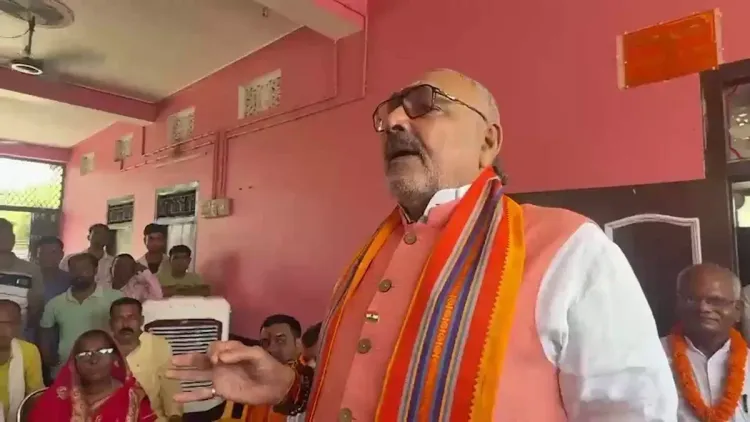
Union Textiles Minister Giriraj Singh on Thursday, 18 June 2026 credited a cluster of central government welfare programmes — from rural electrification and piped water to free rations and health insurance — with fundamentally transforming living conditions in India's villages, posting his assessment on X under the hashtag #12YearsOfSeva.
Context
In his post, Singh wrote: 'गांव-गांव तक बिजली, हर घर जल, शौचालय, उज्जवला गैस, पक्के मकान, मुफ्त राशन और आयुष्मान भारत जैसी योजनाओं ने ग्रामीण भारत की तस्वीर बदल दी है' — ('Schemes such as electricity to every village, water to every home, toilets, Ujjwala gas, pucca houses, free rations and Ayushman Bharat have transformed the face of rural India.'). He added that amenities in villages have grown, living standards have improved, and the confidence of the poor has been strengthened, calling this change 'direct proof' of Prime Minister Narendra Modi's resolve for service, good governance and welfare of the poor.
The post was made on the occasion of what BJP leaders are marking as 12 years of the Modi government, with the hashtag #12YearsOfSeva trending among senior party figures.
Policy Backdrop
The schemes Singh invoked span over a decade of central government programming. The Swachh Bharat Mission-Gramin, launched in October 2014, targeted open-defecation-free status and is credited with constructing over 10 crore toilets in rural India. The Pradhan Mantri Ujjwala Yojana, announced in May 2016, aimed to provide LPG connections to 5 crore poor households in its first phase and was later expanded with free refills during the COVID-19 pandemic.
The Saubhagya scheme, launched in September 2017, targeted last-mile rural electrification. Jal Jeevan Mission, rolled out in 2019, seeks functional household tap connections in every rural home. Pradhan Mantri Awas Yojana-Gramin, relaunched in 2015, provides pucca houses to rural below-poverty-line families, while Ayushman Bharat, introduced in 2018, offers up to Rs 5 lakh annual health cover to eligible families. The PM Garib Kalyan Anna Yojana, introduced in March 2020, has been extended in phases to provide free foodgrains.
Collectively these programmes have been grouped under the Garib Kalyan umbrella in official communications, with the government emphasising saturation coverage and measurable infrastructure metrics as the defining approach since 2014.
Stakeholders and Impact
The primary beneficiaries of these schemes are rural households and below-poverty-line families across India. The mission-mode delivery model — relying on direct benefit transfers and district-level monitoring — was designed to reduce leakage and ensure last-mile reach, particularly in states such as Bihar, Uttar Pradesh, Jharkhand, and Odisha, which account for a large share of the rural poor.
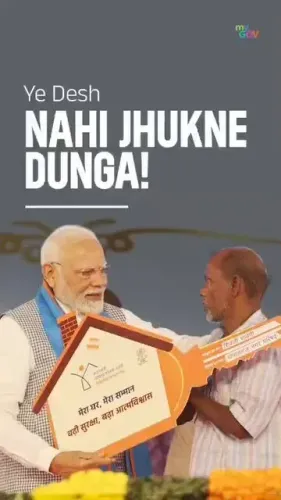
Singh, who represents Begusarai in Bihar — a state that has been among the top recipients of several of these schemes — has consistently championed the Garib Kalyan narrative as a model of governance. His post, accompanied by a video, is part of a coordinated party-wide communication exercise marking the BJP-led government's anniversary.
What's Next
Analysts and policymakers will watch whether the 2025-26 Union Budget allocations for Jal Jeevan Mission and PMAY-G reflect progress toward saturation targets, and whether the free-ration provisions under PM Garib Kalyan Anna Yojana are extended beyond their current deadlines. As the ruling party marks this milestone, the political messaging around welfare delivery is likely to intensify ahead of state assembly elections in the pipeline.
Point of View
Emotionally resonant narrative timed to an anniversary milestone. By anchoring the message in lived rural realities (electricity, water, gas, housing), the party attempts to shift the political conversation from macroeconomic indicators to visible household-level change. For a senior leader from Bihar — a state central to BJP's electoral arithmetic in the Hindi heartland — amplifying this narrative carries both ideological and electoral weight. The #12YearsOfSeva campaign signals that welfare delivery, not just economic growth, will remain the ruling party's core re-election argument.
NationPress
22 Sept 2026
Frequently Asked Questions
What schemes did Giriraj Singh mention in his post about rural India?
Singh referenced electricity to every village (Saubhagya), Jal Jeevan Mission, Swachh Bharat Mission toilets, Pradhan Mantri Ujjwala Yojana for LPG, PMAY-G pucca housing, PM Garib Kalyan Anna Yojana free rations and Ayushman Bharat health cover.
What is the #12YearsOfSeva hashtag about?
#12YearsOfSeva is a BJP-led campaign marking 12 years of the Narendra Modi government, during which senior party leaders have been highlighting welfare and governance achievements since 2014.
What is Ayushman Bharat and who benefits from it?
Ayushman Bharat, launched in 2018, is India's national health protection mission that provides up to Rs 5 lakh annual health insurance cover to eligible low-income families across the country.
How many toilets were built under Swachh Bharat Mission-Gramin?
The Swachh Bharat Mission-Gramin, launched in October 2014, is credited with constructing over 10 crore toilets in rural India as part of its open-defecation-free target.
Who is Giriraj Singh and which constituency does he represent?
Giriraj Singh is a senior BJP leader and Union Minister of Textiles. He is a Lok Sabha MP from Begusarai in Bihar.