Giriraj Singh Hails Modi Govt's 12-Year Welfare Record
Synopsis
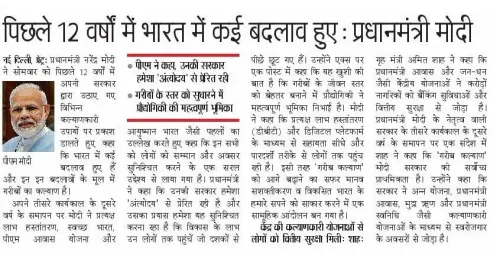
Union Textiles Minister Giriraj Singh marked the BJP-led government's 12 years in power by highlighting welfare deliveries — over 4 crore pucca homes, free rations, cooking gas, sanitation and ₹5 lakh health cover — as proof of non-discriminatory development under PM Modi.
Key Takeaways
Union Textiles Minister Giriraj Singh posted on 17 June 2026 to mark 12 years of the Modi government under the hashtag #12YearsOfSeva .
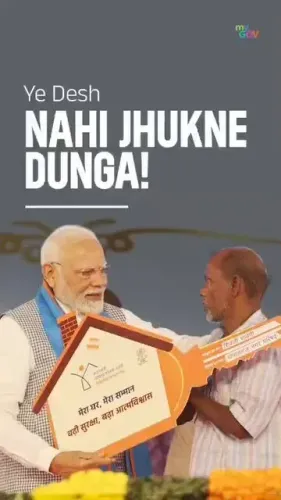
The post cites more than 4 crore poor families receiving pucca (permanent) houses under the government's housing push.
Welfare benefits highlighted include electricity, piped water, toilets, LPG cylinders, free food grains and health coverage of up to ₹5 lakh per family.
The ₹5 lakh health cover references Ayushman Bharat PM-JAY , which targets 10.74 crore poor families nationwide.
Singh framed all deliveries as non-discriminatory — covering farmers, youth and women equally — invoking the 'Sabka Saath, Sabka Vikas' doctrine.
The post is part of a coordinated BJP campaign; updated PMAY and PM-JAY progress data are expected in the next parliamentary session.
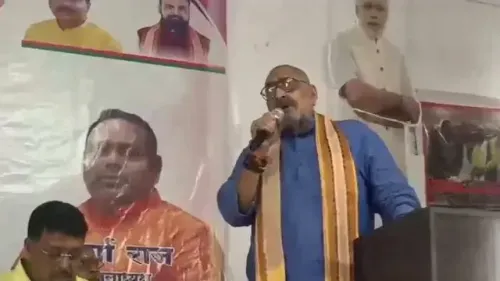
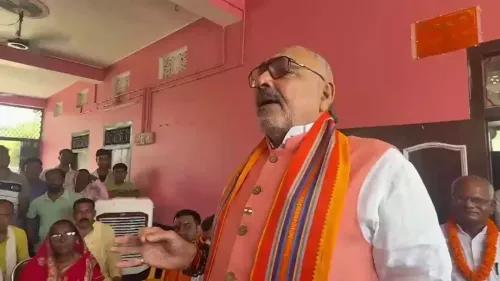
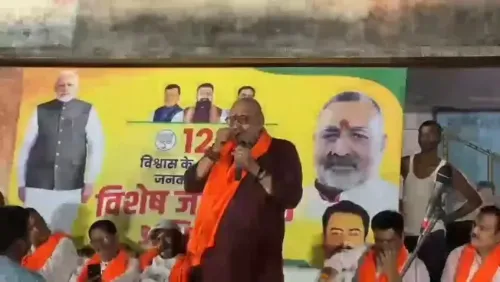
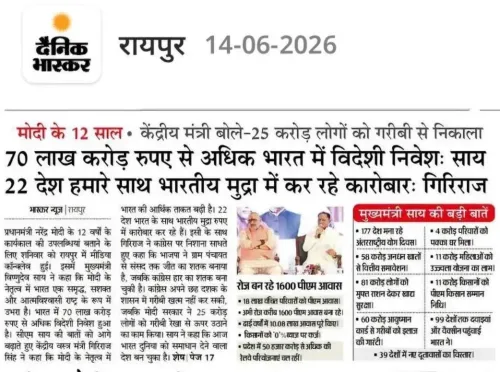
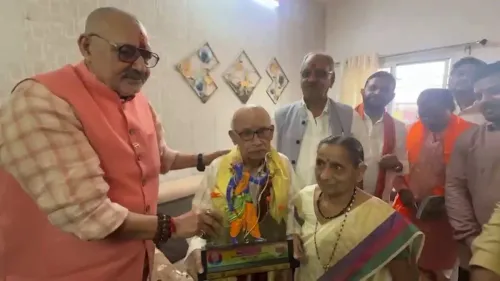
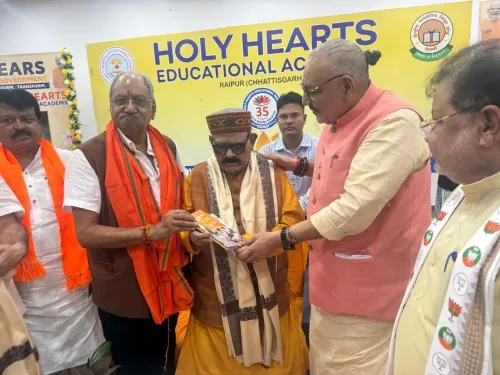
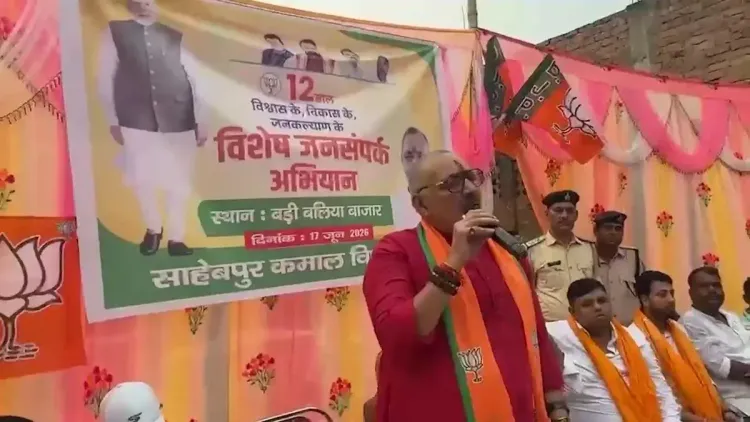
Union Textiles Minister Giriraj Singh on Wednesday, 17 June 2026, took to X to mark what the ruling BJP is calling '12 Years of Seva' — twelve years of the Narendra Modi-led government — highlighting a sweeping range of welfare deliveries for farmers, youth, women and the poor without discrimination.
Context
Singh's post, written in Hindi, states: 'Maananiya Pradhanmantri Shri Narendra Modi ji ke netritva mein desh ke har varg... bina kisi bhedbhav ke, sabhi ke kalyan ke liye aitihasik kaam hua hai' — 'Under the leadership of honourable Prime Minister Narendra Modi, historic work has been done for the welfare of every section of the country — farmers, youth, women — without any discrimination.' The post is hashtagged #12YearsOfSeva, #12YearsOfGaribKalyan and #SabkaSaathSabkaVikas, signalling a coordinated BJP campaign to mark a dozen years in power.
Singh specifically cites providing pucca (permanent) houses to more than 4 crore poor families, alongside access to electricity, water, toilets, cooking gas cylinders, free rations and health coverage of up to ₹5 lakh per family. His closing line underlines the stated political goal: 'No poor person in the country should remain homeless or without support.'
Policy Backdrop
The welfare pillars Singh references correspond to several flagship central schemes. The Pradhan Mantri Awas Yojana (PMAY), launched in June 2015, set out to deliver pucca houses to eligible rural and urban poor households, with the original deadline of 2022 subsequently extended. The Ayushman Bharat Pradhan Mantri Jan Arogya Yojana (PM-JAY), announced in 2018, provides health insurance of up to ₹5 lakh per family per year for secondary and tertiary hospitalisation, covering an estimated 10.74 crore poor families.
Free cooking gas connections for poor households were rolled out under the Pradhan Mantri Ujjwala Yojana, started in 2016 to reduce indoor air pollution. Free food grains are supplied under the Pradhan Mantri Garib Kalyan Anna Yojana (PMGKAY), introduced in 2020 and extended multiple times since. Together, these schemes form the government's 'last-mile saturation' model of welfare delivery.
Stakeholders and Impact
The primary beneficiaries of the schemes cited are rural and urban poor households, including women-headed families, agricultural labourers and Below Poverty Line (BPL) cardholders. The government's stated emphasis on non-discriminatory delivery — cutting across caste, community and region — is a recurring theme in BJP's political communication under the 'Sabka Saath, Sabka Vikas' ('Together with all, development for all') slogan.
Singh, as a senior BJP leader and Lok Sabha MP from Begusarai, Bihar — a state with a large share of PMAY and PM-JAY beneficiaries — is among the party's prominent voices on welfare outreach. His amplification of the '12 Years of Seva' narrative is part of a visible, party-wide social media push on the occasion.
What's Next
The BJP's '12 Years of Seva' campaign is expected to intensify across platforms in the coming days, with ministers and MPs sharing scheme-specific data and beneficiary stories. Analysts will watch for updated physical and financial progress reports on PMAY and PM-JAY in the next parliamentary session, as well as any announcement on extending or revising PMGKAY beyond its current deadline. The political framing of welfare delivery as non-partisan and non-discriminatory is also likely to feature prominently in the BJP's outreach ahead of upcoming state elections.
Point of View
Health, energy and nutrition into a single, emotionally resonant welfare arc timed to the government's twelve-year milestone. By invoking non-discrimination explicitly, the party aims to pre-empt opposition framing that welfare delivery has been uneven across communities or states. For Singh personally, amplifying this message from his Bihar base is strategically significant given the state's high concentration of PMAY and PM-JAY beneficiaries. The '12 Years of Seva' campaign signals that welfare delivery, not just economic growth metrics, will be the BJP's primary electoral currency in the near term.
NationPress
16 Sept 2026
Frequently Asked Questions
What is the '12 Years of Seva' campaign by BJP?
'12 Years of Seva' is a BJP campaign marking twelve years of the Narendra Modi-led government at the Centre, highlighting welfare scheme deliveries such as housing, health cover and free rations for poor households across India.
How many pucca houses has the Modi government provided to the poor?
Union Minister Giriraj Singh's post states that more than 4 crore poor families have been given pucca houses, referencing progress under the Pradhan Mantri Awas Yojana (PMAY) launched in 2015.
What is the ₹5 lakh health cover Giriraj Singh mentioned?
The ₹5 lakh health cover refers to the Ayushman Bharat Pradhan Mantri Jan Arogya Yojana (PM-JAY) , announced in 2018, which provides free hospitalisation insurance up to ₹5 lakh per year for eligible poor families.
What is Pradhan Mantri Garib Kalyan Anna Yojana?
Pradhan Mantri Garib Kalyan Anna Yojana (PMGKAY) is a scheme introduced in 2020 to provide free food grains to beneficiaries covered under the National Food Security Act; it has been extended multiple times since its launch.
Who is Giriraj Singh and why is he speaking on welfare schemes?
Giriraj Singh is the Union Minister of Textiles, a senior BJP leader and Lok Sabha MP from Begusarai, Bihar . He is a prominent party voice on welfare outreach, particularly relevant given Bihar's large base of beneficiaries under PMAY and PM-JAY.