CM Bhajan Lal to Form Cooperatives in Every Rajasthan Village
Synopsis
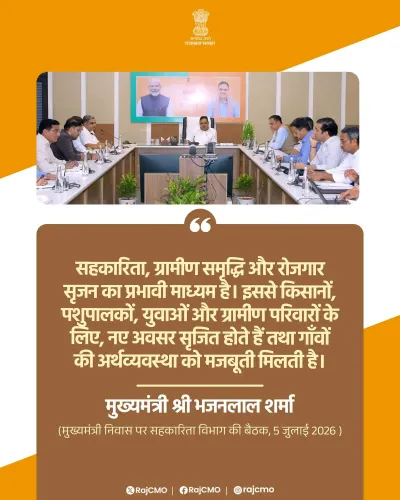
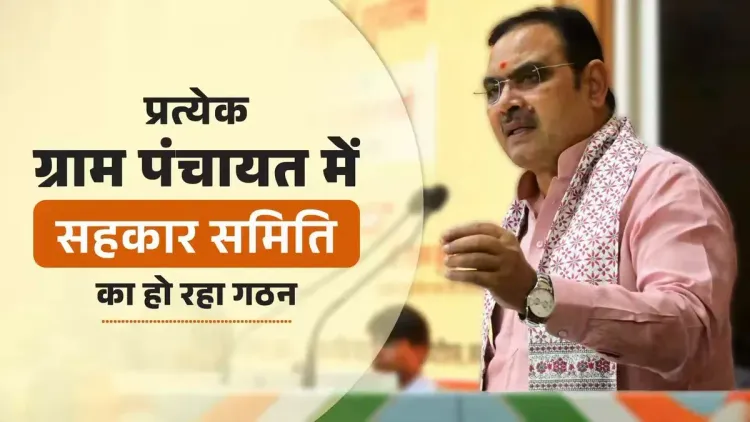
Rajasthan Chief Minister Bhajan Lal Sharma has announced that his government will form a cooperative society in every gram panchayat across the state, aiming to strengthen the rural economy, create local employment for youth, and build self-reliant villages.
Key Takeaways
Rajasthan CM Bhajan Lal Sharma announced cooperative society formation in every gram panchayat in the state.
The stated goals are strengthening the rural economy, generating employment for local youth, and building self-reliant villages.
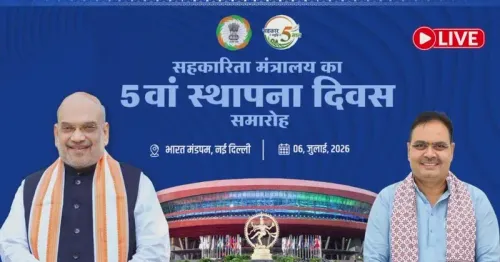
The move aligns with the Ministry of Cooperation established by the central government in July 2021 and the 97th Constitutional Amendment of 2011 .
Similar cooperative expansions linked to panchayati raj institutions have been undertaken in Gujarat , Maharashtra , and Madhya Pradesh .
Key implementation details — including timeline, number of panchayats covered, and funding — are yet to be officially specified.
State budget allocations and linkage with central cooperative schemes will be critical markers of the policy's actual reach.
Rajasthan Chief Minister Bhajan Lal Sharma announced on Saturday, 25 July 2026 that his government is forming a cooperative society in every gram panchayat across the state, with the stated aim of strengthening the rural economy, generating local employment for youth, and building self-reliant villages.
In a post on X, CM Sharma wrote: 'गाँवों को विकास और समृद्धि का नया केंद्र बनाने के संकल्प के साथ' ('With the resolve to make villages new centres of development and prosperity'), his government is constituting cooperative societies at each gram panchayat level so that the rural economy is empowered, new employment opportunities open up for local youth, and self-reliant villages take shape.
Context
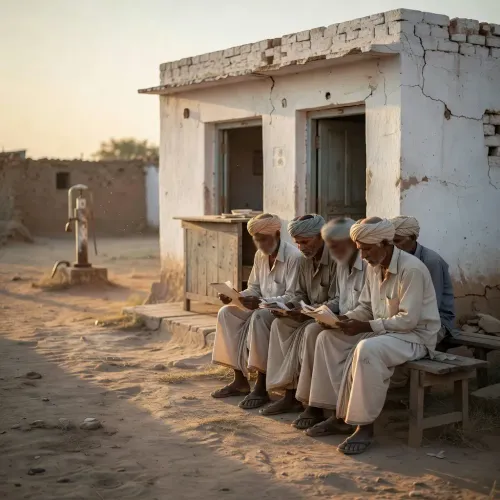
Rajasthan is a predominantly rural state in western India, with a large share of its population dependent on agriculture, dairy, and small-scale enterprises. Gram panchayats are the constitutionally mandated village-level bodies responsible for grassroots planning and development delivery. The announcement positions these bodies as the anchor points for a new layer of cooperative infrastructure.
Cooperative societies in India are member-owned entities historically used for agricultural credit, input supply, dairy marketing, and rural livelihoods. Their role in organising the informal rural economy and reducing dependence on private moneylenders and middlemen has been recognised since the Cooperative Credit Societies Act of 1904.
Policy Backdrop
The move draws on a renewed national policy emphasis on cooperatives. The Government of India established a dedicated Ministry of Cooperation in July 2021 to modernise and expand the sector, and the 97th Constitutional Amendment of 2011 inserted Article 43B to promote the voluntary formation of cooperative societies. The Rajasthan initiative reflects the broader post-2021 push to integrate cooperatives with panchayati raj institutions for last-mile service delivery and employment generation.
Similar state-level expansions of panchayat-linked cooperatives have been pursued in Gujarat, Maharashtra, and Madhya Pradesh in recent years, making Rajasthan's announcement part of a recognisable national pattern rather than an isolated policy move.
Stakeholders and Impact
The primary beneficiaries identified in the announcement are rural youth, who are expected to gain new employment opportunities through cooperative structures, and village farmers, who stand to benefit from organised credit, input supply, and marketing channels. Gram panchayat bodies will take on an expanded administrative role as the institutional base for these societies.
If implemented at scale, the policy could alter the economic architecture of rural Rajasthan by formalising transactions that currently pass through informal channels. The degree of impact will depend on state budget allocations, training of panchayat-level office bearers, and potential linkages with central schemes such as the computerisation of Primary Agricultural Credit Societies.
What's Next
Observers will watch for concrete follow-through in the form of state budget provisions for cooperative formation, a legislative or executive order specifying the rollout timeline, and clarity on how the new societies will be linked to existing credit and marketing infrastructure. Any convergence with centrally sponsored cooperative schemes will be a key indicator of the programme's scale and ambition.
The announcement signals that rural economic empowerment through cooperative institutions will be a central plank of the Bhajan Lal Sharma government's agenda heading into the next phase of its term, with Rajasthan's vast gram panchayat network serving as the delivery vehicle.
Point of View
Signalling political as well as economic intent. By anchoring cooperatives within gram panchayats, the state is attempting to merge two constitutional institutions — local self-government and the cooperative sector — into a single rural delivery mechanism. This mirrors a broader saffron-bloc strategy of using cooperative structures to consolidate rural support and reduce the influence of informal intermediaries. The real test will be whether the policy translates into funded, time-bound implementation or remains an aspirational announcement.
NationPress
25 Oct 2026
Frequently Asked Questions
What did Rajasthan CM Bhajan Lal Sharma announce about cooperative societies?
CM Bhajan Lal Sharma announced that the Rajasthan government is forming a cooperative society in every gram panchayat in the state to strengthen the rural economy and create employment for local youth.
What is the purpose of forming cooperatives in every gram panchayat in Rajasthan?
The stated purpose is to empower the rural economy, provide new employment opportunities for local youth, and build self-reliant villages across Rajasthan.
How many gram panchayats are there in Rajasthan?
Rajasthan has one of the largest gram panchayat networks in India, with thousands of village-level bodies, though the exact number covered under this announcement has not yet been officially specified.
What is the role of India's Ministry of Cooperation in this context?
The Ministry of Cooperation, established by the Government of India in July 2021, has been promoting the modernisation and expansion of cooperative societies nationwide, providing the policy framework within which state-level initiatives like Rajasthan's fit.
Which other states have formed panchayat-linked cooperatives?
States including Gujarat, Maharashtra, and Madhya Pradesh have undertaken similar expansions of cooperative societies linked to panchayati raj institutions in recent years.