Kargil Vijay Diwas 2026: 27 years of valour and India's defence transformation
Synopsis
Twenty-seven years after Indian soldiers reclaimed Kargil's frozen heights, the anniversary is no longer just a remembrance — it is a ledger of transformation. Defence production has quadrupled, exports have surged 56-fold, and Operation SINDOOR in 2025 showed a military willing to strike deep. Kargil 1999 did not just end a conflict; it wrote the blueprint for the force India is still building.
Key Takeaways
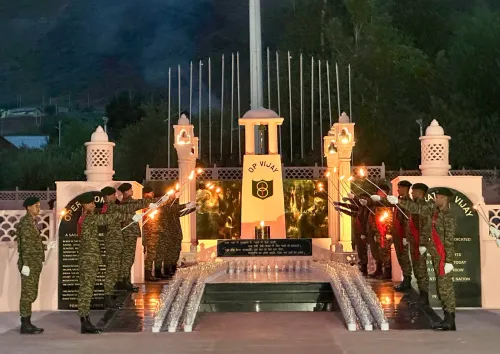
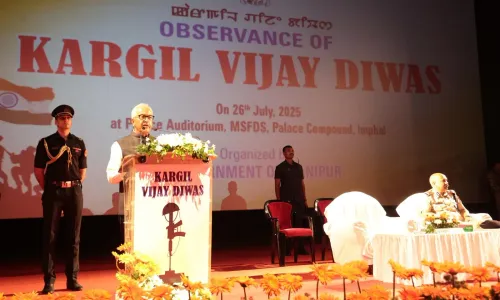
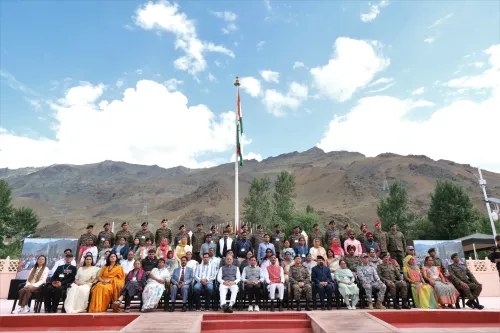
India observed the 27th Kargil Vijay Diwas on 26 July 2026 , marking the 1999 victory that restored all Pakistani-occupied positions.
The conflict earned four Param Vir Chakras and nine Maha Vir Chakras , among other gallantry awards; Captain Vikram Batra and Grenadier Yogendra Singh Yadav remain iconic figures.
Defence production reached an all-time high of ₹1.78 lakh crore in 2025–26 , nearly four times the 2014–15 figure.
Defence exports surged from ₹686 crore in 2013–14 to ₹38,424 crore in 2025–26 — a 56-fold increase spanning over 80 countries .
Operation SINDOOR ( May 2025 ) destroyed nine terrorist camps in Pakistan and PoJK, reportedly eliminating over 100 terrorists .
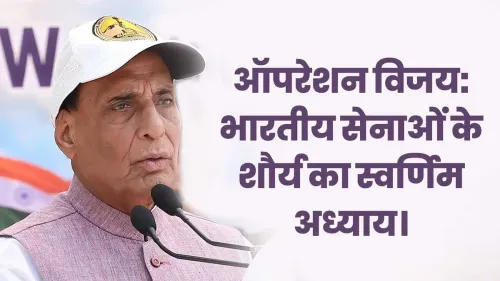
Defence Minister Rajnath Singh flagged off the 1,900-km 'Shaurya Vijay Yatra' motorcycle expedition from the National War Memorial to Dras .
India marked the 27th Kargil Vijay Diwas on 26 July 2026, honouring the soldiers who reclaimed snow-covered heights in the Kargil sector during the summer of 1999 — a conflict that reshaped the country's military doctrine, defence spending, and industrial ambition for a generation.
The War That Changed Everything
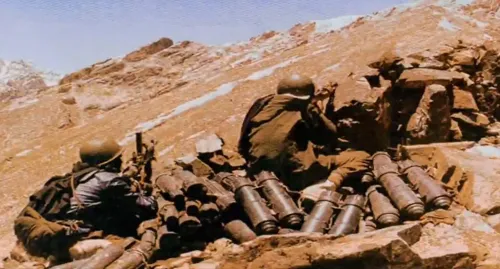
The Kargil conflict erupted in May 1999 when Pakistani forces crossed the Line of Control (LoC) and occupied commanding heights, threatening to sever the strategic link between Kashmir and Ladakh and isolate Indian troops on the Siachen Glacier. India responded with Operation Vijay on the ground, supported by the Indian Air Force's Operation Safed Sagar and a full naval deployment. The strategy was unambiguous: contain, evict, and deny — without crossing the LoC.
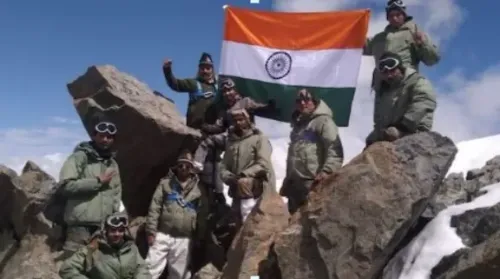
Key positions fell in succession. Tololing and Point 4590 were recaptured on 13 June 1999. Tiger Hill — the most iconic of the battles — fell on 4 July after a daring high-altitude assault. Fierce engagements at Point 4875, Batalik, Mushkoh Valley, and Kaksar followed. After more than two months of combat above 5,000 metres, every occupied position was restored. On 14 July 1999, then Prime Minister Atal Bihari Vajpayee declared Operation Vijay a success.
Gallantry Recognised, Sacrifice Immortalised
The nation conferred four Param Vir Chakras, nine Maha Vir Chakras, 55 Vir Chakras, one Sarvottam Yudh Seva Medal, six Uttam Yudh Seva Medals, eight Yudh Seva Medals, 83 Sena Medals, and 24 Vayu Sena Medals for exceptional gallantry. Grenadier Yogendra Singh Yadav, Captain Vikram Batra, and Captain Vijyant Thapar became enduring national symbols of courage and sacrifice.
A Defence Ecosystem Rebuilt from the Ground Up
Kargil exposed critical gaps in jointness, indigenisation, and procurement — and the decades since have been defined by efforts to close them. The Department of Military Affairs was created under a Chief of Defence Staff (CDS) to drive inter-service integration. General Bipin Rawat became the first CDS in 2020; the post is currently held by General N.S. Raja Subramani.
Defence allocation climbed from ₹2.53 lakh crore in 2013–14 to ₹7.85 lakh crore in 2026–27, with capital expenditure rising from ₹94,587.95 crore in 2014–15 to ₹2.19 lakh crore. Defence production reached an all-time high of ₹1.78 lakh crore in 2025–26 — nearly four times the ₹46,429 crore recorded in 2014–15. Exports surged from ₹686 crore in 2013–14 to ₹38,424 crore in 2025–26, a more than 56-fold increase, reaching over 80 countries.
Foreign direct investment in defence was raised to 74 per cent under the automatic route and up to 100 per cent via the government route, attracting ₹6,670.59 crore by March 2026. Nearly 65 per cent of defence equipment is now produced domestically. Five positive indigenisation lists covering 5,012 items of Defence Public Sector Undertakings (DPSUs) have been notified, and more than 15,700 items — including 3,204 from those lists — have been indigenised over five years, with domestic orders worth ₹9,782 crore placed.
The Uttar Pradesh Defence Industrial Corridor attracted investment commitments of ₹42,057 crore (with ₹4,409 crore grounded), while the Tamil Nadu Defence Industrial Corridor secured ₹32,699 crore (actual investment: ₹6,446 crore).
Platforms and Emerging Capabilities
The material transformation is visible across all three services. The Arjun Mk IA main battle tank was inducted in February 2021. The indigenous aircraft carrier INS Vikrant was commissioned on 2 September 2022. India is set to receive 62 Rafale fighters — including 26 Rafale M naval variants — by 2030. The multi-platform BrahMos cruise missile operates at up to Mach 2.8 with a range of 290 km. Project 17A stealth frigates, Sandhayak-class survey vessels, and Arnala-class anti-submarine craft — with INS Arnala as the largest waterjet-propelled warship in the fleet — round out the naval build-up.
Emerging capabilities have accelerated: Mission Shakti demonstrated an anti-satellite capability on 27 March 2019; 75 AI-based technologies were introduced in 2022; Mission Divyastra tested a multiple-warhead missile on 11 March 2024; the Pinaka Long Range Guided Rocket (range: 120 km) was tested on 29 December 2025; hypersonic scramjet tests were conducted in January 2026; the Kusha long-range surface-to-air missile was unveiled in July 2026; and the indigenous Netra AEW&C system received final clearance in June 2026.
From Kargil to Operation SINDOOR: A More Assertive Doctrine
India's post-Kargil posture has grown demonstrably more proactive. Surgical strikes followed the Uri attack in September 2016. Balakot airstrikes on 26 February 2019 targeted Jaish-e-Mohammad facilities in Pakistan after the Pulwama attack. Most recently, Operation SINDOOR in May 2025 — launched in response to the Pahalgam civilian attack — destroyed nine terrorist camps in Pakistan and Pakistan-occupied Jammu & Kashmir (PoJK) using drones, loitering munitions, and layered air defence, reportedly eliminating over 100 terrorists including key Jaish and Lashkar commanders. Pakistani drone and missile retaliation was intercepted.
Commemorations in 2026
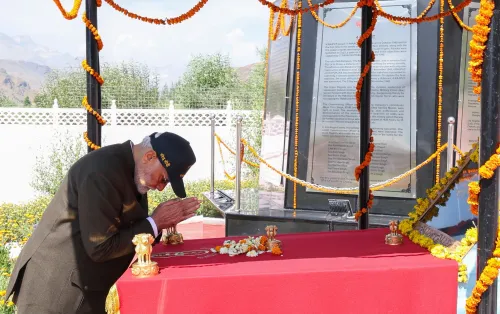
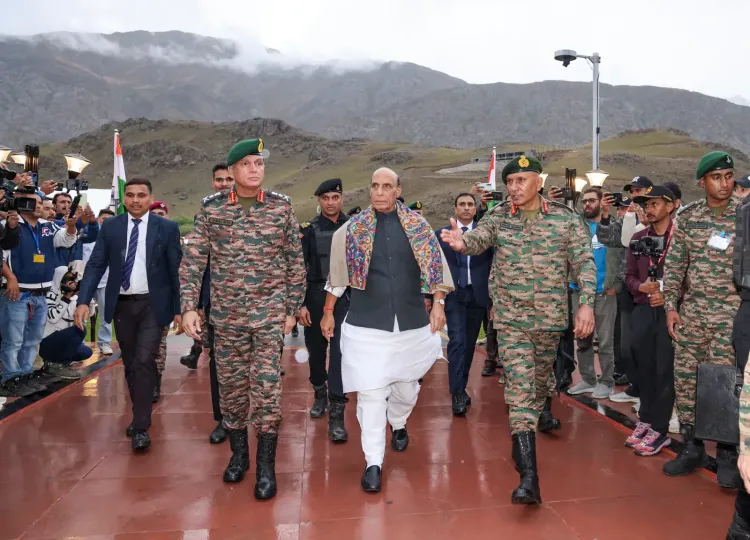
This year's observances were marked by a series of events. Defence Minister Rajnath Singh flagged off the 'Shaurya Vijay Yatra', a 13-day motorcycle expedition covering 1,900 km from the National War Memorial in New Delhi to Dras. The Corps of Signals Dare Devils set a world record by riding two motorcycles through the 9.8-km Atal Tunnel in 9 minutes 47.97 seconds. The Tiger Hill expedition, veteran visits, Point 5140 trek, and a Leh-to-Dras motorcycle ride further marked the occasion.
Twenty-seven years on, Kargil endures as a living testament to sovereignty defended at extreme cost — and as the foundation on which India's more capable, more self-reliant military has been built.
Point of View
057 crore committed versus ₹4,409 crore actualised — signals that execution still lags ambition. Operation SINDOOR's cross-border strikes mark the sharpest doctrinal escalation since Kargil itself, but the strategic calculus of sustained deterrence versus provocation risk remains unresolved. The real legacy of 1999 may be less about what India won on Tiger Hill and more about whether the institutional reforms it triggered — CDS, indigenisation mandates, joint doctrine — can keep pace with a rapidly shifting threat environment.
NationPress
26 Jul 2026
Frequently Asked Questions
What is Kargil Vijay Diwas and why is it observed on 26 July?
Kargil Vijay Diwas is India's annual commemoration of the 1999 Kargil War victory, observed on 26 July — the date in 1999 when Prime Minister Atal Bihari Vajpayee declared Operation Vijay a success after Indian forces reclaimed all Pakistani-occupied positions along the Line of Control. The day honours the soldiers who fought at altitudes above 5,000 metres to restore Indian sovereignty.
What were the key battles of the 1999 Kargil War?
The decisive engagements included the recapture of Tololing and Point 4590 on 13 June 1999, the fall of Tiger Hill on 4 July, and fierce fighting at Point 4875, Batalik, Mushkoh Valley, and Kaksar. The campaign, codenamed Operation Vijay on the ground and Operation Safed Sagar in the air, lasted over two months before all occupied positions were restored.
How has India's defence sector changed since the Kargil War?
India's defence production reached a record ₹1.78 lakh crore in 2025–26 — nearly four times the 2014–15 level — while exports surged 56-fold to ₹38,424 crore, reaching over 80 countries. The defence budget rose from ₹2.53 lakh crore in 2013–14 to ₹7.85 lakh crore in 2026–27, and nearly 65 per cent of equipment is now produced domestically.
What is Operation SINDOOR and how does it connect to Kargil's legacy?
Operation SINDOOR was a military operation launched in May 2025 in response to the Pahalgam civilian attack. It destroyed nine terrorist camps in Pakistan and Pakistan-occupied Jammu & Kashmir using drones, loitering munitions, and layered air defence, reportedly eliminating over 100 terrorists. It is seen as the most assertive cross-border military action since the Kargil War and reflects the more proactive doctrine India has developed since 1999.
How was Kargil Vijay Diwas 2026 commemorated?
Defence Minister Rajnath Singh flagged off the 'Shaurya Vijay Yatra', a 13-day, 1,900-km motorcycle expedition from the National War Memorial to Dras. The Corps of Signals Dare Devils set a world record riding two motorcycles through the 9.8-km Atal Tunnel in 9 minutes 47.97 seconds. Other events included the Tiger Hill expedition, veteran visits, a Point 5140 trek, and a Leh-to-Dras motorcycle ride.