Kargil to Operation Sindoor: How Vijay Diwas reshaped India's security doctrine
Synopsis
Twenty-six years after Operation Vijay, Kargil Vijay Diwas is not just a commemoration — it is a blueprint. From the creation of the CDS post to the doctrine shift that powered Operation Sindoor, every major pillar of India's current security architecture traces back to the hard lessons of 1999.
Key Takeaways
Operation Vijay (1999) exposed critical gaps in intelligence and inter-service coordination, triggering sweeping reforms via the Kargil Review Committee .
The Narendra Modi government created the post of Chief of Defence Staff (CDS) in 2019 , along with the Department of Military Affairs (DMA) , directly implementing Kargil Review Committee recommendations.
India's defence doctrine shifted from reactive defence to proactive, punitive retaliation — a posture demonstrated in the Uri surgical strikes , Balakot air strikes , and Operation Sindoor .
Domestic defence production has scaled to ₹1.78 lakh crore ; defence exports stand at ₹38,424 crore , with indigenous equipment supplied to over 80 countries .
India's restraint in not crossing the LoC during Kargil earned diplomatic credibility and helped isolate Pakistan internationally.
Any future act of terror, according to officials, will be treated as an act of war — not merely a cross-border strike.
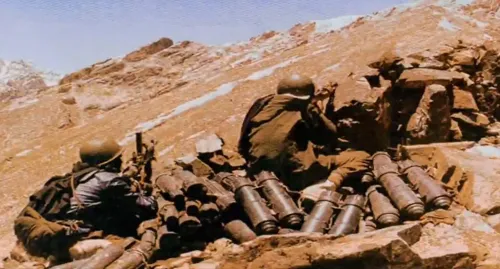
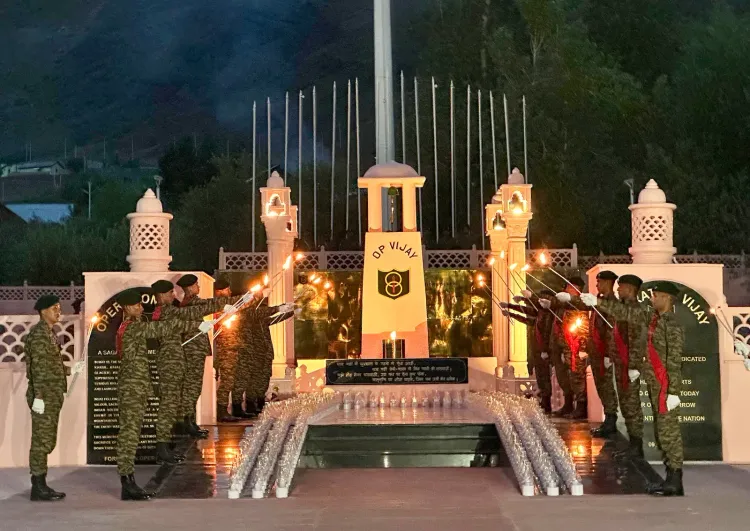
As India marks the 27th anniversary of Kargil Vijay Diwas on 26 July, the legacy of Operation Vijay — the 1999 military campaign that evicted Pakistani infiltrators from the strategic heights of Kargil — extends far beyond a battlefield victory. The operation permanently altered India's national security architecture, foreign policy calculus, military structure, and the country's relationship with its own armed forces.
Intelligence Failures That Built a Stronger System
The success of Operation Vijay came with a hard reckoning. The conflict exposed critical gaps in intelligence gathering, surveillance coverage, and coordination among the three services. In response, the government constituted the Kargil Review Committee, which recommended sweeping structural reforms — most notably, the creation of the post of Chief of Defence Staff (CDS) to ensure tri-service integration.
The Narendra Modi government acted on that recommendation in 2019, formally establishing the CDS post alongside the Department of Military Affairs (DMA) to streamline decision-making between the civilian bureaucracy and military leadership. India also created the Defence Intelligence Agency (DIA) and significantly expanded satellite and drone-based border surveillance to guard against future strategic surprises.
From Reactive Defence to Proactive Retaliation
Perhaps the most consequential doctrinal shift since Kargil has been the move away from reactive defence toward what officials describe as proactive, punitive retaliation. The earlier practice of vacating high-altitude posts during peak winter months was abandoned; the Line of Control (LoC) is now a permanently manned and heavily fortified frontier.
According to an official, the doctrine has 'completely shifted from a reactive defence to a policy of proactive, punitive retaliation against terror.' That shift was visible in the surgical strikes following the Uri terror attack, the Balakot air strikes in the aftermath of Pulwama, and most recently in Operation Sindoor, which targeted terror infrastructure across the border. Officials add that any future act of terror will no longer be treated as a cross-border strike but as an act of war.
Atmanirbharta and the Defence Manufacturing Push
Kargil also laid bare India's dependence on foreign military hardware at a critical moment. Restricted access to global technologies and equipment during the conflict accelerated the push toward Atmanirbharta (self-reliance) in defence. Under the current framework, domestic defence production has scaled to ₹1.78 lakh crore, while defence exports have reached ₹38,424 crore, with indigenous equipment now supplied to over 80 countries, according to official data.
Diplomatic Isolation of Pakistan and the Nuclear Calculus
India's decision to evict intruders without ordering its forces to cross the LoC earned it significant international credibility. Islamabad found itself diplomatically isolated — even traditional allies distanced themselves from supporting state-sponsored infiltration. That credibility has since been compounded: during Operation Sindoor, India demonstrated a willingness to act against terror infrastructure despite Pakistan's nuclear posture, leading Western nations to increasingly view India as a responsible and mature nuclear power in the region, according to officials.
The First Televised War and a Nation's Consciousness
Kargil was also India's first televised war. Live combat footage brought the realities of frontline warfare into living rooms across the country, generating a wave of national solidarity and deepening public recognition of military sacrifice. The names of Captain Vikram Batra, Yogendra Singh Yadav, and Manoj Kumar Pandey entered the national consciousness as symbols of that sacrifice.
Officials note that Pakistan's doctrine of 'bleeding India by a thousand cuts' is unlikely to change. But India, they argue, has fundamentally changed the terms of engagement — and the 26 years since Kargil represent the longest and most sustained transformation of the country's security posture since Independence.
Point of View
And the Atmanirbharta push, while real in export numbers, still depends on foreign-origin platforms for critical systems. The doctrine of treating terror as an act of war is bold, but its deterrence value depends entirely on consistent application — selective retaliation risks being read as political signalling rather than strategic resolve. The 27th Vijay Diwas is an opportunity not just to commemorate, but to audit how many of the Kargil Review Committee's original recommendations remain unimplemented.
NationPress
24 Oct 2026
Frequently Asked Questions
What is Kargil Vijay Diwas and why is it observed on 26 July?
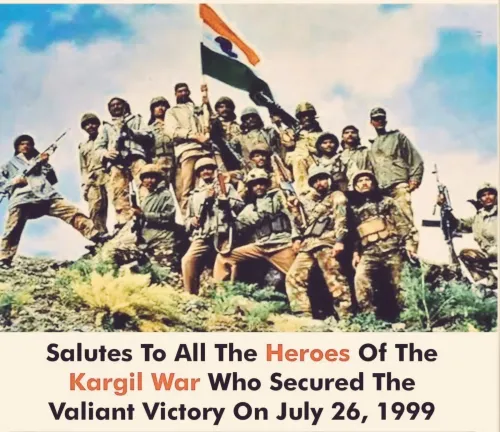
Kargil Vijay Diwas is observed every year on 26 July to mark India's victory in Operation Vijay, the 1999 military campaign that evicted Pakistani infiltrators from the strategic heights of Kargil in Jammu and Kashmir. The date marks the official declaration of the operation's success in 1999.
How did the Kargil war lead to the creation of the Chief of Defence Staff post?
The Kargil Review Committee, formed after the 1999 conflict to assess intelligence and coordination failures, recommended creating the post of Chief of Defence Staff to ensure tri-service integration among the Army, Navy, and Air Force. The Narendra Modi government implemented this recommendation in 2019, along with establishing the Department of Military Affairs.
What is India's current security doctrine and how has it changed since Kargil?
India's security doctrine has shifted from reactive defence to proactive, punitive retaliation against terror, according to officials. This shift was demonstrated through the surgical strikes after the Uri attack, the Balakot air strikes post-Pulwama, and Operation Sindoor, with officials stating that future acts of terror will be treated as acts of war.
What has India achieved in defence self-reliance since the Kargil war?
Restricted access to foreign military hardware during Kargil accelerated India's Atmanirbharta push. Domestic defence production has since scaled to ₹1.78 lakh crore, defence exports have reached ₹38,424 crore, and indigenous equipment is now supplied to over 80 countries, according to official data.
How did Kargil affect India's diplomatic standing and its relationship with Pakistan?
India's decision to evict Pakistani infiltrators without crossing the Line of Control earned it significant international credibility and helped diplomatically isolate Pakistan. Even traditional Pakistani allies distanced themselves from supporting the incursion, and Western nations have increasingly come to view India as a responsible nuclear power in the region.