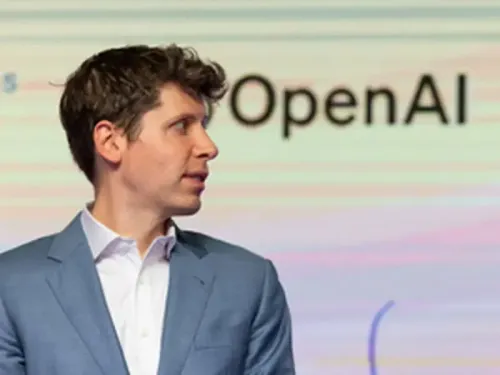
OpenAI CEO Sam Altman Calls for Clarity in AI Regulation

Synopsis
OpenAI chief executive Sam Altman posted 'clarity is nice' on X on 13 July 2026, a brief but pointed remark that AI policy observers interpret as a call for regulatory predictability as governments worldwide draft AI governance frameworks.
Key Takeaways
Sam Altman , chief executive of OpenAI , posted 'clarity is nice' on X on 13 July 2026 .
Altman has previously testified before the US Senate in May 2023 calling for regulatory oversight of advanced AI.
Governments in the US , EU , and UK are actively drafting or refining AI legislation as of mid-2026.
The post is seen as a signal about industry expectations for regulatory predictability.
AI developers and tech regulators are the primary stakeholders affected by ambiguity in AI governance frameworks.
India's own AI policy discussions make global signals from leaders like Altman relevant to the domestic ecosystem.
OpenAI chief executive Sam Altman posted a terse but pointed message on X on Monday, 13 July 2026, writing simply 'clarity is nice' — a statement that AI policy watchers have read as a signal about the regulatory environment facing the industry.
Context
The two-word post, while brief, arrives at a moment when governments across the world — including the United States, the European Union, and the United Kingdom — are actively drafting or refining legislation governing advanced artificial intelligence systems. Altman has a documented history of engaging publicly on the need for clear rules around AI, most notably when he testified before the US Senate in May 2023, calling for regulatory oversight of advanced AI models.
Technology executives, including those at OpenAI, have consistently argued that ambiguity in regulation creates friction for responsible AI development. A short, unambiguous statement from a figure of Altman's stature can carry outsized weight in ongoing policy conversations.
Policy Backdrop
The global race to regulate AI has produced a patchwork of frameworks, each at a different stage of implementation. The EU AI Act has moved into enforcement phases, while US federal efforts have remained fragmented across agencies. India, too, has been formulating its approach to AI governance, with discussions around a national AI policy and voluntary safety commitments from industry players.
In this environment, a call for 'clarity' from the head of one of the world's most influential AI companies resonates with a wide audience — from startup founders and enterprise technology teams to regulators and legislators who must translate broad principles into enforceable rules.
Stakeholders and Impact
AI developers and tech regulators are the most directly affected by any shift in the regulatory clarity landscape. For companies building on top of models like those produced by OpenAI, uncertainty about compliance requirements translates directly into product and legal risk. Investors, too, watch for signals that the operating environment for AI firms is becoming more or less predictable.
For India's rapidly growing AI ecosystem — which includes both homegrown startups and large enterprises integrating AI into core operations — the tone set by global leaders like Altman influences domestic policy conversations and international partnerships.
What's Next
Observers will watch for any follow-up statements from OpenAI leadership that elaborate on what specific form of clarity Altman is referencing — whether it pertains to liability frameworks, model evaluation standards, or voluntary safety commitments. Legislative calendars in the US and EU in the second half of 2026 will offer natural moments for such elaboration.
As AI governance debates intensify globally, even a two-word post from the chief executive of OpenAI underscores how closely the industry is watching — and shaping — the regulatory conversation.
Point of View
The remark fits a broader pattern of tech executives nudging regulators toward predictability without openly lobbying for specific outcomes. For India, which is still shaping its AI governance posture, such signals from the head of the world's most prominent AI company carry both symbolic and practical weight. The subtext is clear: industry will cooperate with regulation, but it wants rules it can actually plan around.
NationPress
12 Oct 2026
Frequently Asked Questions
What did Sam Altman post on X on 13 July 2026?
Sam Altman, chief executive of OpenAI, posted the message 'clarity is nice' on X on 13 July 2026, a remark widely interpreted as a call for regulatory predictability in the AI industry.
Why is Sam Altman's post about clarity significant?
The post is significant because it comes at a time when governments in the US, EU, UK, and India are drafting AI governance frameworks, and Altman is one of the most influential voices in the global AI industry.
Has Sam Altman spoken about AI regulation before?
Yes. Sam Altman testified before the US Senate in May 2023, explicitly calling for regulatory oversight of advanced AI systems, making his views on regulation a matter of public record.
How does Sam Altman's statement affect India's AI policy?
While the post does not reference India directly, Altman's public stance on regulatory clarity influences global policy conversations, including India's ongoing discussions around a national AI governance framework.
What is OpenAI's position on AI regulation?
OpenAI has publicly supported regulatory oversight of advanced AI, with its chief executive Sam Altman advocating for clear, enforceable rules that allow responsible AI development to proceed with predictability.