Shekhawat: Modi govt turning corruption savings into infrastructure
Synopsis
Union Minister Gajendra Singh Shekhawat says India has shed the darkness of corruption and is now channelling public funds into roads, railways, airports, metros and last-mile utilities under PM Narendra Modi's leadership.
Key Takeaways
Union Culture and Tourism Minister Gajendra Singh Shekhawat posted on 5 November 2026 arguing that funds previously lost to corruption are now fuelling infrastructure growth.
He credited Prime Minister Narendra Modi 's 'visionary leadership' for the shift toward roads, railways, airports and metro networks.
The post highlights last-mile delivery of electricity, water and gas pipelines as proof of governance transformation.
The BJP has anchored this narrative since 2014 , backed by schemes like Bharatmala Pariyojana and direct benefit transfers to cut leakages.
Key delivery programmes referenced include Jal Jeevan Mission , Saubhagya electrification and Pradhan Mantri Ujjwala Yojana for LPG connections.
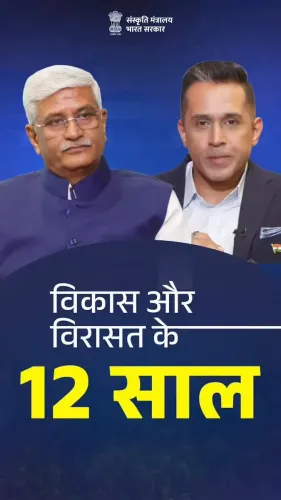
From highways to metro networks, Union Culture and Tourism Minister Gajendra Singh Shekhawat argues that money once lost to graft is now being channelled into the foundations of a modern India — and on Thursday, 5 November 2026, he took that message directly to his followers on X.
Posting in Hindi, Shekhawat wrote: 'भ्रष्टाचार और घोटालों के अंधकार से निकलकर अब देश विकास के नए और उज्ज्वल मार्ग पर अग्रसर है!' ('Emerging from the darkness of corruption and scams, the country is now moving forward on a new and bright path of development!'). He contrasted what he described as an earlier era of systemic leakage with the current government's focus on roads, railways, airports, metro networks, and last-mile delivery of electricity, water and gas pipelines.
The 'funds redirected' argument at the heart of BJP's governance pitch
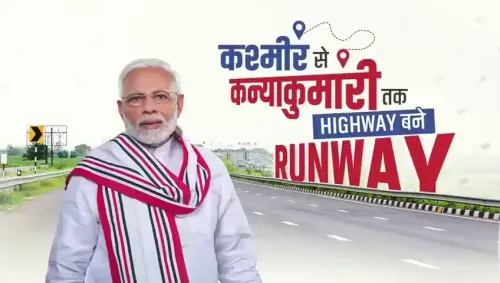
The framing Shekhawat deploys is a central pillar of the BJP's political narrative since 2014: that the fiscal space created by plugging corruption has financed a generational infrastructure push. The argument gained early institutional form with the Bharatmala Pariyojana, launched in 2015, which set out to accelerate national highway construction across the country. It was reinforced by the government's expansion of direct benefit transfers — technology-enabled payments designed to reduce middlemen and leakages in welfare spending.
Prime Minister Narendra Modi, whom Shekhawat credits as the 'visionary' behind this shift, has made infrastructure a signature of his administrations — from the rapid expansion of airport terminals and metro rail corridors in tier-two cities to the electrification of villages and the Ujjwala scheme's LPG connections for rural households. Shekhawat's post invokes each of these touchpoints as evidence of a governance transformation.
Last-mile delivery: the specific claim worth watching
Beyond roads and rails, Shekhawat singles out 'bijli, pani aur gas pipeline' — electricity, water and gas — reaching the 'last beneficiary at the final end.' This is a pointed reference to flagship programmes: the Saubhagya scheme for household electrification, the Jal Jeevan Mission for piped tap water, and the Pradhan Mantri Ujjwala Yojana for cooking gas. Each was designed explicitly around the idea that universal coverage, not just aggregate spending, is the true measure of governance. Whether the latest delivery targets on each scheme have been met will be a key number to watch in the upcoming Union Budget cycle and parliamentary sessions.
For a senior BJP leader holding a Union Cabinet portfolio and representing Jodhpur in Rajasthan — a state with vast rural stretches where last-mile infrastructure still matters acutely — the message is as much local as it is national. The ground the government claims to have covered is precisely the ground his constituents walk every day.
The infrastructure story is far from complete, and the next budget's allocation figures will tell whether the ambition matches the arithmetic.
Point of View
Turning fiscal management into moral contrast. The pitch is durable because it fuses two voter concerns — disgust at past scams and desire for visible development — into a single story. However, as the government enters what are likely its final Union Budgets before the next electoral cycle, the pressure to show concrete delivery numbers — not just directional messaging — will intensify. Last-mile utility targets under Jal Jeevan Mission and Saubhagya will be the empirical test of whether the narrative holds.
NationPress
5 Nov 2026
Frequently Asked Questions
What did Gajendra Singh Shekhawat say about corruption and infrastructure?
Shekhawat posted on X that India has emerged from the 'darkness of corruption and scams' and is now investing public funds in roads, railways, airports, metros and last-mile utilities under PM Modi's leadership.
What is the Bharatmala Pariyojana?
Bharatmala Pariyojana is a national highway and road development programme launched by the central government in 2015 to accelerate road infrastructure expansion across India.
What schemes does the government use for last-mile electricity and water delivery?
The Saubhagya scheme targets household electrification, the Jal Jeevan Mission aims to provide piped tap water to every rural home, and the Pradhan Mantri Ujjwala Yojana supplies LPG cooking gas connections to below-poverty-line households.
Who is Gajendra Singh Shekhawat?
Gajendra Singh Shekhawat is a senior BJP leader, Union Minister of Culture and Tourism, and a Lok Sabha Member of Parliament representing the Jodhpur constituency in Rajasthan.
What is the BJP's main governance narrative since 2014?
The BJP has consistently argued since 2014 that plugging corruption and leakages has freed up public money to fund large-scale infrastructure projects and direct delivery of welfare benefits to citizens.