HP CM Office urges students to report drug activity on 112
Synopsis
The Chief Minister's Office of Himachal Pradesh highlighted a Class 12 student's question on chitta drugs and directed all students to report related activity to police via the 112 emergency helpline, reinforcing the state's community-level anti-narcotics push.
Key Takeaways
The Chief Minister's Office of Himachal Pradesh posted on 5 November 2026 about a school interaction focused on the drug chitta .
A Class 12 student raised a question against chitta, which the CMO described as 'very important'.
Students were directed to call 112 — India's unified emergency number — to report any chitta-related activity to police.
The advisory extends to neighbourhoods , not just school premises, broadening the community reporting scope.
The initiative fits a longer pattern of school-based drug awareness programmes in northern Indian states that pair student engagement with helpline reporting.
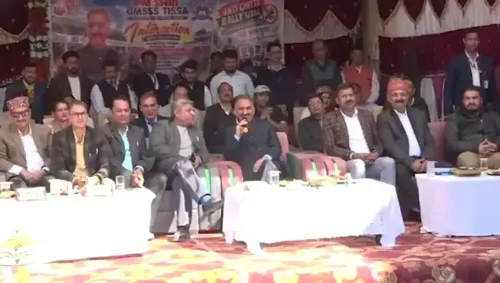
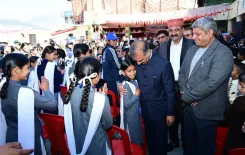
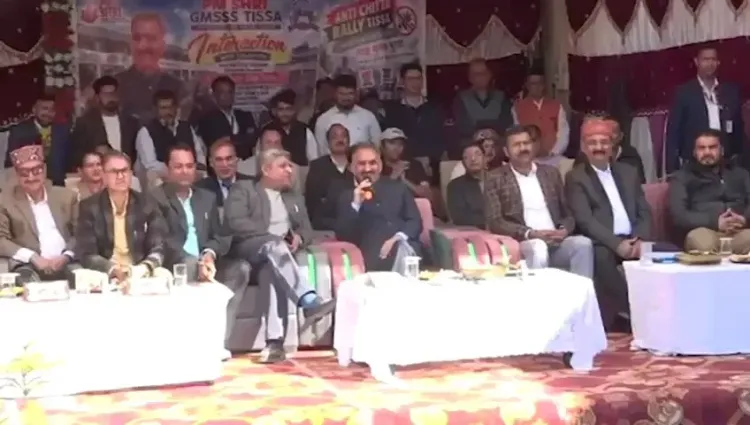
A Class 12 student's pointed question about chitta — the street name for heroin-based synthetic drugs ravaging Himachal Pradesh's youth — stopped a government interaction in its tracks on Thursday, 5 November 2026, and the answer from the Chief Minister's Office of Himachal Pradesh was direct: pick up the phone and dial 112.
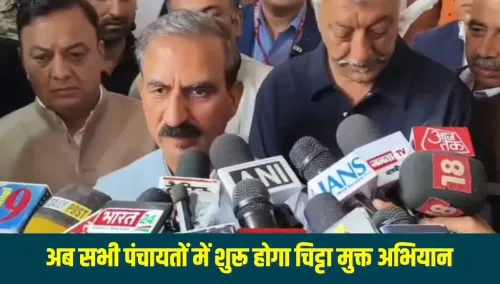
The CMO's post, shared in Hindi, captured the moment in plain terms: 'चिट्टे के खिलाफ बारहवीं की छात्रा का सवाल बहुत महत्वपूर्ण है' — 'The Class 12 student's question against chitta is very important.' The office noted its satisfaction that the state's young generation is not only aware of the dangers of narcotics but is also paying attention to the government's own initiatives on the issue.
The 112 directive and what it means for students
The core message was unambiguous. Students were told to report any activity related to chitta — supply, consumption, or suspicious behaviour — to the police by calling 112, India's unified emergency response number for police, fire, and ambulance services. The post added a neighbourhood dimension too: the community around a student, not just the school compound, is part of the reporting net.
That framing matters. Placing the reporting obligation on young people in their localities — not just inside school gates — signals that the state is trying to build a grassroots intelligence layer against narcotics, using students as front-line witnesses rather than passive recipients of awareness lectures.
Chitta's grip on Himachal's youth — why school sessions count
Himachal Pradesh has struggled with chitta's spread for over a decade, particularly in its hill districts where the drug's low cost and high potency have made it accessible to teenagers. Northern Indian states have run school-based awareness programmes on substance abuse for several years, typically pairing student engagement with public reporting mechanisms. This interaction fits that established pattern — but the student's question, and the government's public acknowledgement of it, suggests the dialogue has become more pointed and two-directional.
When a Class 12 student publicly presses the government on drug policy, it is not a soft moment. It is civic pressure in a school uniform.
What to watch next
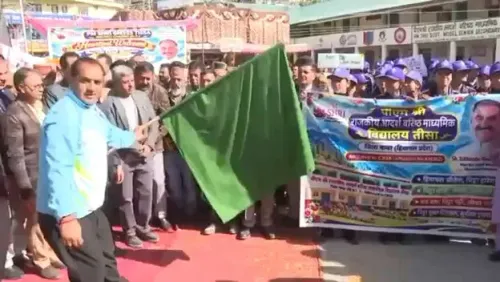
The CMO's post leaves the broader initiative unnamed, and specific details of the student interaction could not be independently verified. What is clear is the direction of travel: the state is actively reinforcing the 112 helpline as the primary reporting tool and leaning on young citizens to act on what they see. Whether this translates into expanded school-district sessions or a formal reporting drive will determine how far the initiative reaches beyond one student's sharp question.
Himachal's fight against chitta has always needed ears close to the ground. Right now, those ears belong to its students.
Point of View
The Himachal Pradesh CMO is deploying a subtle but deliberate framing: the demand for anti-drug action originates from youth, not just the government. This positions the administration as responsive rather than directive — a useful posture when anti-drug campaigns are often dismissed as top-down lecturing. Routing all reports through the 112 helpline also centralises intelligence-gathering under the police umbrella, which carries both operational efficiency and civil-liberties questions about how such tip-offs are handled. The broader arc is clear: northern hill states increasingly see school corridors as the first line of narcotics surveillance.
NationPress
5 Nov 2026
Frequently Asked Questions
What is chitta and why is it a problem in Himachal Pradesh?
Chitta is a street name for a heroin-based synthetic drug that has spread widely in Himachal Pradesh, particularly among young people, due to its low cost and high potency. It has been a persistent challenge for the state for over a decade.
How can students report drug activity in Himachal Pradesh?
The Chief Minister's Office of Himachal Pradesh has directed students to call 112 , India's unified emergency response number, to report any chitta-related activity to the police.
What did the HP CMO post about on 5 November 2026?
The CMO shared a post about an interaction where a Class 12 student asked an important question about chitta, and noted that the government advised students to report drug activity by dialling 112.
Is 112 only for police in India?
No. 112 is India's integrated emergency response number covering police, fire, and ambulance services. It replaced separate numbers such as 100, 101, and 108 as part of a national unification effort.
What is the Himachal Pradesh government doing to fight drug abuse among youth?
The state government has been running school-based awareness programmes on substance abuse and is now reinforcing community-level reporting through the 112 helpline, encouraging students to flag drug activity in their schools and neighbourhoods.