Jal Shakti Minister Paatil hails New India's entrepreneurship push

Synopsis
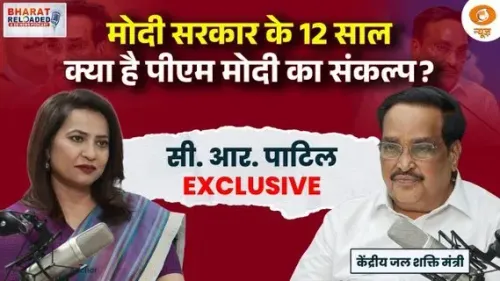
Union Jal Shakti Minister C. R. Paatil, posting under #12YearsOfSeva, declared that New India has replaced paperwork-driven barriers with genuine entrepreneurship opportunities for youth, reflecting the BJP government's 12-year push to make business ownership a mainstream career path.
Key Takeaways
Union Jal Shakti Minister C.
Paatil posted on 9 June 2026 under #12YearsOfSeva , praising India's shift toward youth entrepreneurship.
He said the fear of 'paperwork processes' that once blocked dreams has been replaced by new business opportunities for young Indians.
The post aligns with the Startup India initiative launched in 2016 , which provided tax benefits and easier compliance for early-stage ventures.
Ease of Doing Business reforms from 2014 digitised company registration and reduced licence burdens, directly addressing the bureaucratic barriers Paatil cited.
The Atmanirbhar Bharat framework extended this push, positioning self-employment as a mainstream economic pillar alongside salaried jobs.
Next Union Budget allocations for MSME credit guarantees will be a key indicator of whether the political messaging is backed by fresh fiscal commitment.
Union Jal Shakti Minister C. R. Paatil on Tuesday, 9 June 2026 lauded what he described as a fundamental shift in India's economic culture, saying that bureaucratic hurdles that once blocked young people's ambitions have given way to a new ecosystem that treats business ownership as a mainstream career path. The post, tagged #12YearsOfSeva, marks a milestone in the BJP-led government's governance narrative.
Context
Paatil wrote in Hindi: 'जहाँ कभी सपनों को कागज़ी प्रक्रियाओं का डर रोक देता था, आज वही भारत युवाओं को उद्यमिता के नए अवसर दे रहा है' — 'Where once the fear of paperwork used to stop dreams, today that same India is giving youth new opportunities in entrepreneurship.' He added that in 'New India', starting one's own business has become 'a big dream and a strong alternative' to salaried employment.
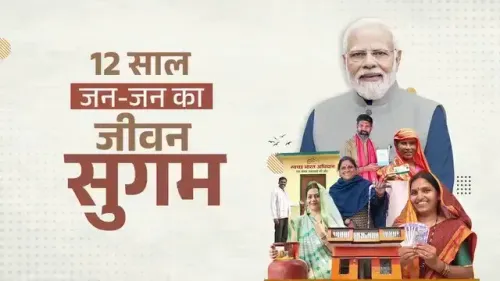
The post is part of a broader BJP social-media campaign under #12YearsOfSeva, which marks twelve years since Narendra Modi assumed office as Prime Minister in May 2014. Party leaders across portfolios have used the hashtag to highlight governance achievements in their respective domains and beyond.
Policy Backdrop
The sentiment Paatil invokes has a direct policy lineage. The Startup India initiative, launched in 2016, extended tax benefits, easier compliance windows and structured funding access to early-stage ventures, explicitly positioning entrepreneurship as a state-supported career option for young Indians.
Alongside it, a sustained Ease of Doing Business reform drive from 2014 onward digitised company incorporation, collapsed multi-step licence processes into single-window portals and decriminalised a range of minor procedural offences. Together, these measures were designed to reduce the 'fear of paperwork' that Paatil references in his post. The broader Atmanirbhar Bharat framework later extended this logic to micro, small and medium enterprises, framing self-employment as a pillar of national economic resilience.
Stakeholders and Impact
The primary beneficiaries of this policy arc are first-generation entrepreneurs and young job-seekers who previously faced high compliance costs and opaque regulatory processes as barriers to starting a business. Simplified online registration and credit-guarantee schemes for MSMEs have lowered the floor for new business formation, particularly in smaller cities and towns.
Critics have periodically argued that while registration has become easier, downstream challenges — access to affordable credit, market linkages, and skilled labour — remain significant for early-stage ventures. The government's position, reflected in Paatil's post, is that cultural and structural change is already under way and accelerating.
What's Next
Attention will turn to the next Union Budget, where allocations for MSME credit guarantees and any further moves to decriminalise minor compliance offences will be closely watched as a measure of whether the political messaging translates into fresh fiscal commitment. Parliamentary discussions on widening the formal entrepreneurship support net are also anticipated. If the #12YearsOfSeva campaign continues to generate policy-linked messaging from senior ministers, it may also preview themes the BJP intends to carry into upcoming state election cycles.
Point of View
The party is attempting to convert abstract policy wins into a tangible youth-facing narrative. The message is also a quiet rebuttal to opposition arguments about unemployment, pivoting the conversation from job creation to opportunity creation. Whether this framing gains traction will depend on how visibly the next Budget reinforces the MSME and startup support architecture that underpins it.
NationPress
26 Oct 2026
Frequently Asked Questions
What did C. R. Paatil say about entrepreneurship in India?
C. R. Paatil said that where once the fear of bureaucratic paperwork stopped young people's dreams, today India is giving youth new opportunities in entrepreneurship, and that starting one's own business has become a strong alternative to salaried employment.
What is #12YearsOfSeva?
#12YearsOfSeva is a BJP social-media campaign marking twelve years since Narendra Modi became Prime Minister in May 2014, used by party leaders to highlight governance achievements across various domains.
What is the Startup India scheme?
Startup India is a central government initiative launched in 2016 that offers tax benefits, simplified compliance and structured funding access to early-stage ventures, aimed at encouraging entrepreneurship among Indian youth.
How has India improved its Ease of Doing Business for young entrepreneurs?
Since 2014, the government has digitised company incorporation, introduced single-window portals for licences and decriminalised minor compliance offences, significantly reducing the paperwork burden that previously deterred first-time business owners.
What is Atmanirbhar Bharat's connection to youth entrepreneurship?
Atmanirbhar Bharat, the government's self-reliance framework, extended earlier Ease of Doing Business and Startup India reforms to micro, small and medium enterprises, formally positioning self-employment as a pillar of India's economic resilience alongside traditional salaried work.