Amit Shah Hails Modi Govt's 12-Year Health Overhaul
Synopsis
Union Home Minister Amit Shah on June 14, 2026 hailed Prime Minister Modi's twelve-year health record, citing free ₹5 lakh coverage for 50 crore-plus citizens, 1.86 lakh Arogya Mandirs, 546 crore vaccinations, 20 cancer centres, and the eSanjeevani telemedicine network as markers of a global healthcare model.
Key Takeaways
Ayushman Bharat PM-JAY provides free treatment of up to ₹5 lakh to more than 50 crore people, described by Shah as a global model of health security.
1.86 lakh Arogya Mandirs (Health and Wellness Centres) have been built to extend primary care from cities to villages.
India has administered more than 546 crore vaccine doses, anchored by the COVID-19 vaccination drive launched in January 2021.
20 critical cancer centres and 31.74 lakh dialysis treatments reflect targeted expansion in high-cost disease management.
New AIIMS campuses and increased MBBS and PG seats address the supply-side gap in medical education and tertiary care.
The eSanjeevani telemedicine platform has built a nationwide digital health delivery network accessible to rural populations.
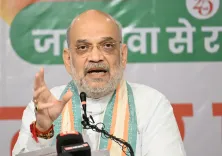
Union Home Minister Amit Shah on Sunday, June 14, 2026, credited Prime Minister Narendra Modi with delivering historic transformation in India's healthcare sector over the past twelve years, citing a sweeping list of achievements ranging from free treatment coverage for over 50 crore citizens to the construction of 1.86 lakh Arogya Mandirs across the country.
Context
Posting under the hashtag #12YearsOfSwasthBharat, Shah wrote that Modi has established 'a global model of health security' by providing free treatment of up to ₹5 lakh to more than 50 crore people. The post enumerates a broad range of health interventions — from affordable medicines and new medical institutions to digital health platforms and cancer care centres — framing them as a unified policy achievement of the Modi government since 2014.
The enumeration includes 546 crore-plus vaccinations administered, 20 critical cancer centres established, and 31.74 lakh dialysis treatments provided, alongside the expansion of MBBS and postgraduate medical seats and the scaling of the eSanjeevani telemedicine platform.
Policy Backdrop
The centrepiece of the health architecture Shah references is Ayushman Bharat PM-JAY, launched in 2018, which provides health insurance cover of up to ₹5 lakh per family per year for secondary and tertiary hospitalisation, targeting low-income households. The scheme is widely regarded as one of the world's largest government-funded health insurance programmes by beneficiary count.
Alongside PM-JAY, the Ayushman Bharat Health and Wellness Centres — rebranded as Arogya Mandirs — were rolled out to extend comprehensive primary care to rural and semi-urban populations, reducing dependence on district hospitals for routine ailments. The Pradhan Mantri Swasthya Suraksha Yojana has driven the approval and construction of new AIIMS campuses since 2015, addressing longstanding regional imbalances in tertiary care access.
India's COVID-19 vaccination drive, launched in January 2021, became the backbone of the vaccination figure Shah cites, with doses subsequently integrated into routine immunisation programmes. The eSanjeevani platform, scaled aggressively during the pandemic, has since become a mainstream telemedicine channel for remote consultations across states.
Stakeholders and Impact
The primary beneficiaries of these programmes are low-income households, rural populations, and patients requiring high-cost interventions such as cancer treatment and dialysis — groups historically excluded from formal health financing. The expansion of MBBS and PG seats in medical colleges addresses a supply-side gap, aiming to increase the doctor-to-patient ratio over the coming decade.
Cancer patients, in particular, stand to benefit from the 20 critical cancer centres cited by Shah, as oncology care has traditionally been concentrated in a handful of metropolitan hospitals, forcing patients from smaller towns and villages to travel long distances at significant personal cost. The 31.74 lakh dialysis treatments figure points to the Pradhan Mantri National Dialysis Programme, which offers free dialysis at district hospitals to patients with chronic kidney disease.
What's Next
Attention will now turn to the next Union Health Budget for allocation signals on PM-JAY expansion and the operationalisation timelines of newly sanctioned AIIMS campuses. Parliamentary committee assessments of Arogya Mandir utilisation rates and quality of care will be closely watched as indicators of whether the infrastructure build-out has translated into measurable health outcomes. Shah's post, timed to mark twelve years of the Modi government, is also widely read as part of the BJP's broader political communication ahead of state electoral cycles, reinforcing the party's health-governance credentials at the national level.
Point of View
Timed to the twelfth anniversary of the Modi government, that bundles supply-side investments — new AIIMS, medical seats — with demand-side financing through PM-JAY into a single narrative of systemic reform. The framing of Ayushman Bharat as a 'global model' signals an intent to position India's public health architecture as an exportable governance template, a recurring theme in BJP's international outreach. The enumeration of granular figures such as dialysis sessions and cancer centres is designed to shift the health debate from input metrics to outcome-adjacent outputs, pre-empting opposition critiques centred on per-capita spending. Taken together, the post reinforces the BJP's long-running effort to anchor its electoral identity in welfare delivery at scale.
NationPress
14 Sept 2026
Frequently Asked Questions
What is Ayushman Bharat PM-JAY and who benefits from it?
Ayushman Bharat PM-JAY is India's flagship government health insurance scheme, launched in 2018, that provides free hospitalisation cover of up to ₹5 lakh per family per year for secondary and tertiary care. It primarily targets low-income households and has enrolled more than 50 crore beneficiaries according to the government.
What are Arogya Mandirs and how many exist in India?
Arogya Mandirs, formerly called Health and Wellness Centres, are government primary healthcare facilities under the Ayushman Bharat programme. Amit Shah's post states that 1.86 lakh such centres have been constructed, extending comprehensive primary care to rural and semi-urban populations across India.
How many vaccines has India administered under the Modi government?
According to Amit Shah's June 14, 2026 post, India has administered more than 546 crore vaccine doses. The bulk of this figure is driven by the COVID-19 vaccination drive that began in January 2021 and was subsequently integrated with routine immunisation programmes.
What is eSanjeevani and how does it work?
eSanjeevani is the Indian government's national telemedicine platform that allows patients to consult doctors remotely via video or audio calls. It was scaled significantly during the COVID-19 pandemic and has since become a mainstream digital health service, particularly benefiting patients in rural areas who lack easy access to hospitals.
Why did Amit Shah post about healthcare achievements on June 14, 2026?
Shah's post was made under the hashtag #12YearsOfSwasthBharat, marking twelve years of the Narendra Modi government since it came to power in 2014. The post is part of the BJP's broader political communication effort to highlight the administration's governance record across sectors, with health chosen as a key pillar.