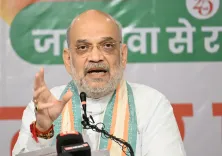
Amit Shah highlights 12 years of Modi govt's youth, startup push
Synopsis
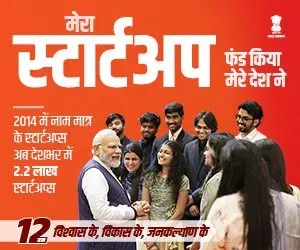
Home Minister Amit Shah on 13 June 2026 highlighted 12 years of Modi government policies on education and startups, citing 2 lakh startups, 12 crore Mudra loans, 6 crore skilled youth, and 1,213 new universities as proof that Indian youth are becoming job creators.
Key Takeaways
Home Minister Amit Shah posted on 13 June 2026 crediting 12 years of Modi government policies for India's youth and startup growth.
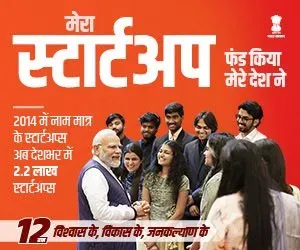
India is claimed to be the world's third-largest startup ecosystem with over 2 lakh (200,000) startups and a leading AI talent pool .
Over 6 crore (60 million) youth have received skill development training and over 12 crore (120 million) Mudra loans have been disbursed.
More than 300 space startups have emerged following space-sector liberalisation since 2020.
1,213 new universities — including new IITs and AIIMS — plus 1,045 Khelo India Centres have been established across the country.
The post was shared under the hashtag #12YearsOfYuvaShakti , part of a broader BJP communication campaign marking the government's 12-year milestone.
Union Home Minister Amit Shah on Saturday, 13 June 2026, credited the Narendra Modi government's 12-year record with transforming India's education, skill development, and startup landscape, asserting that Indian youth are transitioning from job-seekers to job-creators.
Context
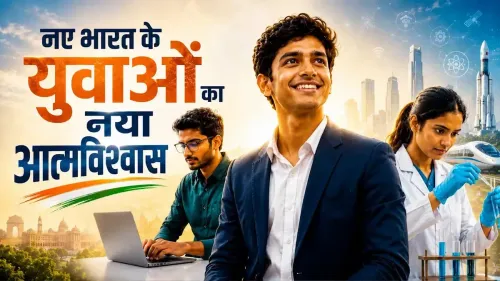
Posting under the hashtag #12YearsOfYuvaShakti (12 Years of Youth Power), Shah cited a set of figures to argue that policy choices made since 2014 have structurally altered opportunities for young Indians. He claimed India is now the world's second-largest higher education network, hosts the third-largest startup ecosystem with over 2 lakh (200,000) startups, and ranks among the top nations for AI talent.
Shah also pointed to more than 6 crore (60 million) youth trained under skill development programmes, over 12 crore (120 million) Mudra loans disbursed, and more than 300 space startups as evidence of the government's integrated approach to youth empowerment.
Policy Backdrop
The claims correspond to a cluster of flagship Central schemes launched in the early years of the Modi government. The Pradhan Mantri Mudra Yojana, launched in April 2015, provides collateral-free loans of up to Rs 10 lakh to micro and small enterprises, directly enabling first-generation entrepreneurs. The Skill India Mission and the National Skill Development Mission, both launched in July 2015, set out to train hundreds of millions of workers across sectors.
The Startup India initiative, announced in January 2016, offered tax incentives, regulatory relaxations, and a fund-of-funds structure to catalyse venture activity. Reforms in space policy from 2020 onward, culminating in the Indian Space Policy 2023, opened launch and satellite services to private firms, providing the regulatory foundation for the space-startup count Shah referenced.
On the infrastructure side, Shah cited the addition of 1,213 new universities — including new IITs and AIIMS campuses — alongside 1,045 Khelo India Centres and 34 State Centres of Excellence to support sports development. The Khelo India programme was approved in September 2017 to revive grassroots sports culture and identify athletic talent.
Stakeholders and Impact
The primary beneficiaries of the programmes Shah cited are Indian youth — students, aspiring entrepreneurs, athletes, and first-generation business owners, particularly from smaller towns and rural areas who have accessed Mudra loans or Skill India training. Startup founders and investors operating within the recognised ecosystem also benefit from the regulatory and fiscal architecture built since 2016.
The expansion of higher education institutions — new IITs, AIIMS, and over a thousand universities — has broadened access to quality education across states, while Khelo India infrastructure has created competitive pathways for young athletes outside metropolitan centres.
What's Next
The National Education Policy 2020 sets medium-term targets for multidisciplinary learning, research output, and gross enrolment ratios that will serve as the next benchmark for assessing progress. Continued private participation under the Indian Space Policy 2023 is expected to further grow the space-startup count. The government's ability to sustain Mudra loan quality — ensuring credit reaches productive enterprises rather than generating non-performing assets — will be a key indicator watched by policymakers and economists in the months ahead.
Point of View
Data-forward contribution to a BJP-coordinated campaign marking twelve years in government, using the hashtag #12YearsOfYuvaShakti to anchor the narrative around youth empowerment rather than welfare. By foregrounding metrics — startup counts, Mudra loan volumes, skill-training numbers — the messaging attempts to shift the political conversation from employment generation to entrepreneurship creation, a subtle but significant reframing ahead of future electoral cycles. The invocation of space startups alongside traditional Mudra beneficiaries signals an effort to appeal simultaneously to aspirational urban youth and rural micro-entrepreneurs. Whether the figures cited withstand independent scrutiny will determine how durable this narrative proves in a competitive information environment.
NationPress
14 Sept 2026
Frequently Asked Questions
What is #12YearsOfYuvaShakti about?
#12YearsOfYuvaShakti is a BJP social-media campaign marking twelve years of the Narendra Modi government, highlighting achievements in education, skill development, and the startup ecosystem for Indian youth.
How many startups does India have according to Amit Shah's post?
Amit Shah's post states India has over 2 lakh (200,000) startups, making it the world's third-largest startup ecosystem.
What is the Pradhan Mantri Mudra Yojana?
The Pradhan Mantri Mudra Yojana, launched in April 2015, provides collateral-free loans of up to Rs 10 lakh to micro and small enterprises. Shah's post claims over 12 crore such loans have been disbursed over twelve years.
How many youth have been trained under Skill India?
According to Shah's post, more than 6 crore (60 million) young people have received skill development training under programmes linked to the Skill India Mission launched in 2015.
What are Khelo India Centres?
Khelo India Centres are sports infrastructure facilities set up under the Khelo India programme, approved in 2017. Shah's post states 1,045 such centres and 34 State Centres of Excellence have been established to support grassroots sports talent.