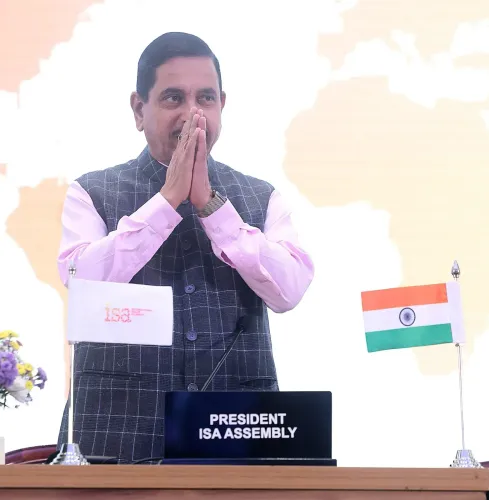
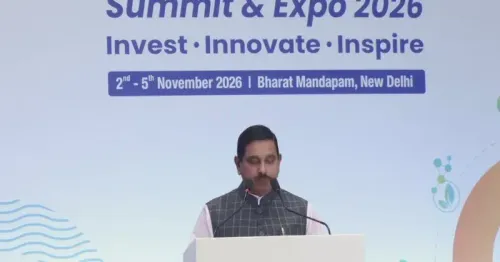
Pralhad Joshi Launches ISA GCC SHINE and ISA Academy at BRE Summit 2026

Synopsis
At the Bharat Renewable Energy Summit 2026, Union Minister Pralhad Joshi launched the ISA GCC SHINE and ISA Academy, two capacity-building initiatives of the International Solar Alliance that integrate AI tools and hands-on training to accelerate solar deployment across member countries.
Key Takeaways
GCC SHINE and the ISA Academy were officially launched at the Bharat Renewable Energy Summit 2026 on 4 November 2026 .
The initiatives integrate AI-based digital tools , knowledge exchange, and practical training for ISA member countries .
The goal is to close the gap between solar energy knowledge and real-world implementation in developing nations.
The International Solar Alliance was co-founded by India and France at COP21 in 2015 and is headquartered in India.
Minister Joshi stressed the importance of international cooperation in scaling up solar energy expansion globally.
At a moment when solar diplomacy is quietly reshaping global energy geopolitics, Union Minister for New and Renewable Energy Pralhad Joshi took the stage at the Bharat Renewable Energy Summit 2026 on Wednesday, 4 November 2026 to inaugurate two landmark International Solar Alliance initiatives — the GCC SHINE (Global Capability Centre) and the ISA Academy — designed to close the gap between solar knowledge and real-world deployment across the developing world.
What GCC SHINE and ISA Academy Are Built to Do
Minister Joshi, addressing the #9ISAssembly gathering, described the dual launch as an effort to 'bridge the distance between learning and effective implementation.' The GCC SHINE platform integrates AI-based digital tools, structured knowledge exchange, and domain-specific expertise under a single global capability roof. The ISA Academy complements it with hands-on training modules aimed directly at ISA member countries — many of them sun-rich but capital- and capacity-constrained developing nations across Africa, South Asia, and the Pacific.
Together, the two initiatives are designed to do what spreadsheets and pledges alone cannot: equip frontline energy planners and technicians in member states with the practical skills to actually build, run, and scale solar infrastructure.
India's Solar Diplomacy, From COP21 to 2026
The International Solar Alliance was born at COP21 in Paris in 2015, a joint initiative of India and France to mobilise solar investment across countries located between the Tropics of Cancer and Capricorn — the so-called 'sunshine belt.' Headquartered in India, the treaty-based intergovernmental body has since grown into one of New Delhi's most visible instruments of multilateral influence, sitting at the intersection of climate commitment and South-South cooperation.
India's own solar ambitions — anchored since 2010 in the Jawaharlal Nehru National Solar Mission — have given it credibility as a solar leader. That domestic track record now underpins what Joshi described as the indispensable role of international cooperation in accelerating solar expansion globally.
AI Tools and the Last-Mile Problem in Solar Deployment
The integration of AI-based digital tools inside GCC SHINE marks a deliberate shift in strategy. For years, international capacity-building in energy has been criticised for producing well-attended workshops and forgotten reports. By embedding intelligent diagnostic and planning tools alongside training, the ISA is betting that member-country officials will leave with instruments they can actually use the next morning — not just certificates.
Joshi's framing at the summit was clear: knowledge sharing, practical training, and specialised expertise must work together if solar adoption is to move at the speed the climate crisis demands. This 'shared effort,' he said, would make a 'significant contribution to building a sustainable energy future.'
The world's solar capacity race is no longer just about who installs the most panels — it is about who can build the human infrastructure to keep them running. India just made its next move.
Point of View
New Delhi is converting the ISA from a pledge-making forum into an operational delivery mechanism — a subtle but significant upgrade. This move fits a broader pattern in Indian foreign policy: use climate multilateralism to build durable influence among developing-world partners, particularly in Africa and South Asia, where energy access remains a live political issue. The 9th ISA Assembly provides the ideal stage for Joshi to frame this as a collective win while keeping India firmly at the initiative's centre of gravity.
NationPress
4 Nov 2026
Frequently Asked Questions
What is GCC SHINE under the International Solar Alliance?
GCC SHINE is the International Solar Alliance's Global Capability Centre, launched at the Bharat Renewable Energy Summit 2026. It brings together AI-based digital tools, specialised expertise, and knowledge-sharing frameworks to help ISA member countries plan and deploy solar energy more effectively.
What is the ISA Academy and who is it for?
The ISA Academy is a capacity-building and training initiative under the International Solar Alliance, aimed at equipping energy planners and technicians in ISA member countries with practical solar deployment skills through structured, hands-on programmes.
What is the International Solar Alliance and where is it headquartered?
The International Solar Alliance is a treaty-based intergovernmental organisation co-founded by India and France at COP21 in Paris in 2015. It is headquartered in India and works to mobilise solar investment and cooperation, primarily among sun-rich developing countries.
What did Pralhad Joshi say at the Bharat Renewable Energy Summit 2026?
Pralhad Joshi highlighted the ISA's efforts to empower global solar capabilities through GCC SHINE and the ISA Academy, stressing the importance of international cooperation, AI-driven tools, and practical training to accelerate solar expansion among ISA member nations.
What is India's role in the International Solar Alliance?
India is a founding member and host country of the International Solar Alliance. It has used the ISA as a platform for solar diplomacy, combining its domestic renewable energy track record with technical and institutional support for developing-country members.