CM Saini: Village Growth, Farmer Self-Reliance Key to India's Progress
Synopsis
Haryana Chief Minister Nayab Singh Saini declared on 17 June 2026 that India's holistic development depends on prosperous, self-reliant farmers and developed villages — reaffirming the BJP's rural-first policy philosophy and signalling potential state-level action on agricultural welfare.
Key Takeaways
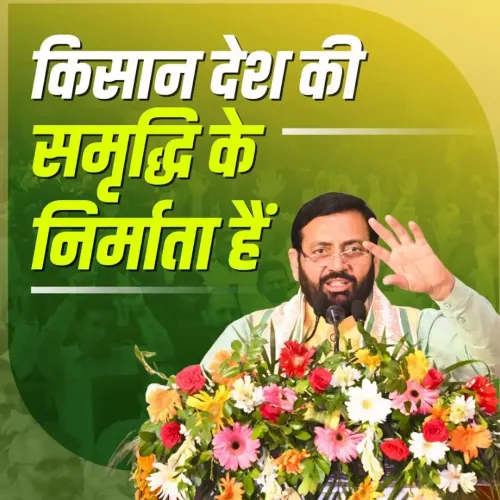
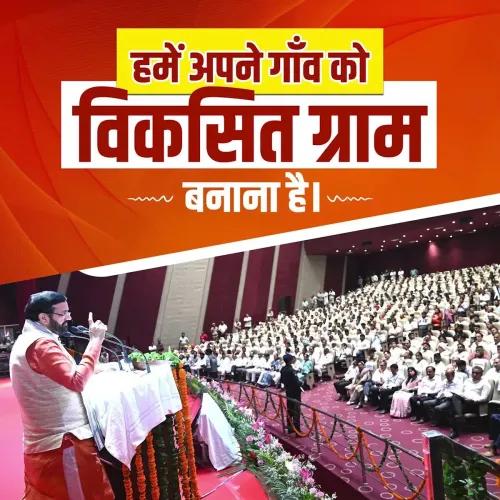
Haryana CM Nayab Singh Saini posted on 17 June 2026 that India's overall development is possible only when villages are developed and farmers are prosperous and self-reliant.
The statement invokes the Atmanirbhar Bharat framework, linking village-level prosperity directly to national economic resilience.
The PM-KISAN scheme provides ₹6,000 annually to eligible farmer families and forms a key plank of the central government's rural income-support architecture.
A national target to double farmers' income by 2022 was announced in the 2016 Union Budget , keeping rural welfare central to policy discourse for years.
State budget allocations for rural infrastructure and any new Haryana -specific farmer schemes in the coming fiscal cycle will be the key follow-through indicators.
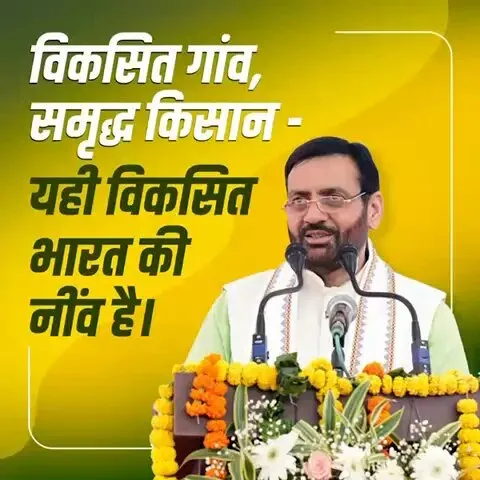
Haryana Chief Minister Nayab Singh Saini on Wednesday, 17 June 2026, underscored that India's holistic development is possible only when its villages are developed and its farmers are prosperous and self-reliant. The statement, shared on his official X account, reflects the broader rural-first policy philosophy that has anchored the BJP-led government's development agenda at both the central and state levels.
Context
Saini's post, originally in Hindi, reads: 'Bharat ka samagra vikas tabhi sambhav hai, jab hamare gaon viksit hon aur kisan samriddh evam atmanirbhar hon' — translated as, 'India's overall development is possible only when our villages are developed and farmers are prosperous and self-reliant.' The framing directly invokes the concept of Atmanirbhar Bharat (Self-Reliant India), a flagship ideological pillar of the central government since 2020. By tying village development to national progress, Saini positions rural welfare not as a subsidy issue but as a structural prerequisite for growth.
As Chief Minister of Haryana — a predominantly agrarian state where farming communities form a significant electoral and economic constituency — Saini's remarks carry immediate policy weight. Haryana is home to a large population of small and marginal farmers, and rural infrastructure remains a key determinant of the state's economic output.
Policy Backdrop
The sentiment expressed by Saini aligns with a decade-long policy lineage at the national level. The Pradhan Mantri Kisan Samman Nidhi (PM-KISAN) scheme, launched in 2019, provides an annual direct benefit transfer of ₹6,000 to eligible landholding farmer families, and has been one of the central government's most visible instruments for rural income support. The scheme represents the kind of direct-transfer mechanism that underpins the 'prosperous farmer' goal Saini references.
Earlier, the 2016 Union Budget had set a national target to double farmers' income by 2022 — a goal that kept rural welfare at the centre of political and policy discourse through successive years. State governments, including Haryana, have been expected to complement central schemes with their own allocations for irrigation, crop insurance, and rural road connectivity. Saini's statement can be read as a reaffirmation of that complementary state-level commitment.
Stakeholders and Impact
Haryana's farming community — spanning wheat, paddy, and horticulture growers across districts such as Karnal, Hisar, Sirsa, and Ambala — stands as the most immediate stakeholder. Rural households dependent on agricultural income, daily-wage farm labour, and allied rural enterprises are equally implicated in any policy shift that flows from this stated priority. The emphasis on atmanirbharta (self-reliance) signals a preference for income-generating capacity over dependency on relief measures alone.
For the broader rural economy, the linkage between village development and national growth has implications for public investment in rural infrastructure — roads, water supply, digital connectivity, and cold-chain logistics — that enable farmers to access markets and reduce post-harvest losses. Any new Haryana-specific farmer income-support measures announced in the coming fiscal cycle will be watched as a concrete follow-through on this stated vision.
What's Next
Political observers will track whether Saini's statement precedes a specific policy announcement — such as a revised state budget allocation for rural infrastructure or a new direct-benefit scheme for Haryana farmers. The post arrives at a time when state governments across India are recalibrating rural spending priorities ahead of budget cycles. If translated into programmatic action, the emphasis on farmer self-reliance could shape Haryana's agricultural policy direction through the remainder of 2026 and into the next fiscal year.
Point of View
Not delivered top-down. By invoking both 'samriddh' (prosperous) and 'atmanirbhar' (self-reliant), he signals a preference for structural empowerment over short-term relief, echoing the ideological register of the Atmanirbhar Bharat campaign. For a state like Haryana, where agrarian distress and farmer mobilisation have been recurring political flashpoints, this framing serves a dual purpose: policy signalling and constituency consolidation. The real test will be whether the rhetoric is followed by measurable budget commitments in the upcoming fiscal cycle.
NationPress
16 Sept 2026
Frequently Asked Questions
What did Haryana CM Nayab Singh Saini say about farmers and India's development?
CM Saini stated on 17 June 2026 that India's overall development is possible only when its villages are developed and farmers are prosperous and self-reliant, underlining rural welfare as a prerequisite for national progress.
What is PM-KISAN and how does it support Haryana farmers?
PM-KISAN is a central government scheme launched in 2019 that provides ₹6,000 annually in direct benefit transfers to eligible landholding farmer families across India, including those in Haryana.
What is the Atmanirbhar Bharat vision for farmers?
Atmanirbhar Bharat, or Self-Reliant India, frames farmer self-sufficiency and village development as foundational to economic resilience, moving beyond subsidy dependence toward income-generating capacity and market access.
What is Haryana's role in India's agricultural economy?
Haryana is a major agrarian state producing wheat and paddy, with farming communities across districts like Karnal, Hisar, Sirsa, and Ambala forming a significant part of its economic and social fabric.
What policy actions could follow CM Saini's statement on rural development?
Observers will watch for new Haryana-specific farmer income-support schemes or increased state budget allocations for rural infrastructure — roads, irrigation, and cold-chain logistics — as concrete follow-through on Saini's stated vision.