Haryana CM Nayab Saini Clears Rs 5,715 Cr World Bank Water Project
Synopsis
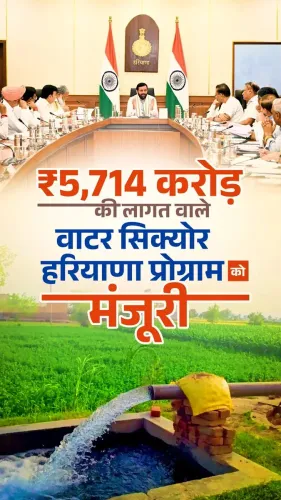
Chief Minister Nayab Saini chaired the SFC-C meeting on 8 August 2026, approving the Rs 5,714.80 crore 'Jal Sanrakshit Haryana' project. Backed by a Rs 4,000 crore World Bank loan, it will develop 15 water management clusters across 48.94 lakh acres and rehabilitate 104 canals between 2026 and 2032.
Key Takeaways
Total project cost: Rs 5,714.80 crore — Rs 4,000 crore from the World Bank and Rs 1,714.80 crore from the Haryana state government.
Timeline: Phased implementation from 2026 to 2032 across six years.
15 water management clusters will be developed covering approximately 48.94 lakh acres of agricultural land.
104 canals will be rehabilitated at a cost of Rs 2,484.87 crore with World Bank support.
The project targets water conservation, irrigation efficiency, and reduced groundwater dependence for Haryana's farmers.
It builds on the Atal Bhujal Yojana , a World Bank-assisted groundwater programme active in Haryana since 2020 .
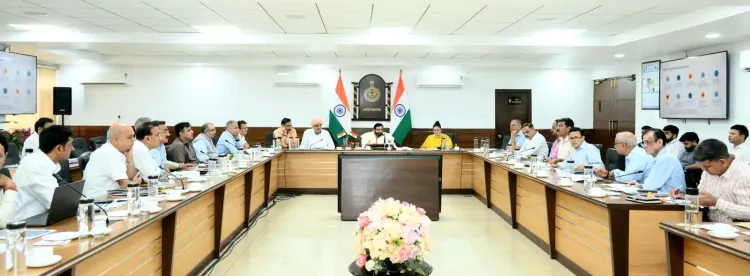
Haryana's groundwater crisis just got a Rs 5,714.80 crore answer. Chief Minister Nayab Saini on Saturday, 8 August 2026, chaired the Standing Finance Committee-C (SFC-C) meeting for the 'Jal Sanrakshit Haryana' project — a World Bank-backed overhaul of the state's battered water infrastructure that will reshape irrigation across nearly 49 lakh acres of farmland.
The money, the mission, and who foots the bill
The financing split is decisive. The World Bank commits Rs 4,000 crore — roughly 70 percent of the total — while the Haryana state government contributes the remaining Rs 1,714.80 crore. The project runs in phases from 2026 to 2032, giving the administration a six-year runway to execute what is one of the largest single water-sector investments the state has seen.
The Chief Minister's Office confirmed the sanction following the SFC-C meeting, describing the initiative as 'an important step towards ensuring water conservation, irrigation efficiency and better water management for farmers' (jal sanrakshan, sinchai dakshata aur kisanon ke liye behtar jal prabandhan).
15 clusters, 104 canals — what the project actually builds
On the ground, the project has two headline deliverables. First, 15 water management clusters covering approximately 48.94 lakh acres will be developed across the state — a cluster-based model designed to bring coordinated, localised water governance rather than top-down canal management. Second, 104 canals will be rehabilitated at a cost of Rs 2,484.87 crore, funded through World Bank support, targeting the ageing canal network that has long leaked water and reliability.
Haryana's canal system, much of it built decades ago, has suffered from siltation, breaches, and poor lining — losses that push farmers deeper into groundwater dependency. The rehabilitation push directly targets that cycle.
Why Haryana's water problem is a farming emergency
The state sits at the heart of India's wheat-paddy belt. That productivity comes at a steep cost: Haryana is among the most groundwater-stressed states in the country, with water tables falling sharply in districts like Kurukshetra, Karnal, and Fatehabad due to paddy cultivation's enormous water appetite. The Atal Bhujal Yojana, a World Bank-assisted groundwater management programme, has been active in the state since 2020 — 'Jal Sanrakshit Haryana' is the next, larger escalation of that effort.
Similar World Bank-supported water projects have been executed in other Indian states facing comparable irrigation stress, but the scale of this Haryana package — both in funding and geographic coverage — marks it as a significant commitment.
Six years to prove it works
The phased timeline through 2032 is both the project's strength and its test. Cluster development and canal rehabilitation are physical, measurable targets — progress reports and state budgetary allocations will be the real scorecard. For Haryana's farmers, the promise is simple: more water reaching fields through canals, less water pumped desperately from a shrinking aquifer below. Whether the execution matches the ambition will define CM Saini's water legacy.
Point of View
Externally-financed infrastructure overhauls. For the Saini government, securing a Rs 4,000 crore World Bank commitment is a political and fiscal win that insulates the project from state budget volatility. The cluster-based model also signals a shift from centralised canal bureaucracy toward localised water governance, a reform that has shown promise in comparable World Bank projects elsewhere. The real test will be whether physical execution between 2026 and 2032 keeps pace with the financial architecture now in place.
NationPress
23 Sept 2026
Frequently Asked Questions
What is the 'Jal Sanrakshit Haryana' project?
'Jal Sanrakshit Haryana' is a Rs 5,714.80 crore water sector project approved by the Haryana government with World Bank funding, aimed at developing 15 water management clusters and rehabilitating 104 canals to improve irrigation efficiency and reduce groundwater depletion across the state.
How much is the World Bank contributing to Haryana's water project?
The World Bank is contributing Rs 4,000 crore — approximately 70 percent of the total project cost of Rs 5,714.80 crore. The remaining Rs 1,714.80 crore will be provided by the Haryana state government.
When will the Jal Sanrakshit Haryana project be completed?
The project will be implemented in phases from 2026 to 2032, giving a six-year window for developing water management clusters and completing canal rehabilitation works across the state.
How many canals will be rehabilitated under this Haryana water project?
A total of 104 canals will be rehabilitated at a cost of Rs 2,484.87 crore under the World Bank-supported component of the 'Jal Sanrakshit Haryana' project.
Why does Haryana need a major water management project?
Haryana is one of India's most groundwater-stressed states due to intensive paddy-wheat cultivation, which has caused water tables to fall sharply in several districts. The project aims to improve canal-based irrigation so farmers rely less on rapidly depleting groundwater reserves.