Giriraj Singh flags India-UK CETA export boom ahead of 2026
Synopsis
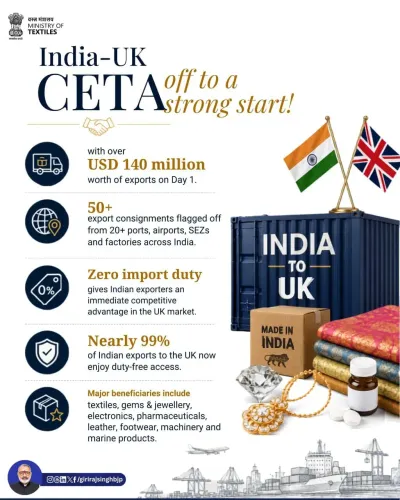
Union Textiles Minister Giriraj Singh flagged a report showing Indian companies are expanding capacity ahead of the India-UK CETA, with CFOs anticipating a sharp jump in exports once the trade agreement takes effect in 2026.
Key Takeaways
Union Textiles Minister Giriraj Singh shared a report on 7 July 2026 highlighting corporate India's preparations for the India-UK CETA.
Indian CFOs are anticipating a sharp export surge and are already expanding capacities ahead of the deal's expected implementation.
India and the UK began formal trade negotiations in January 2022 following the UK's exit from the European Union.
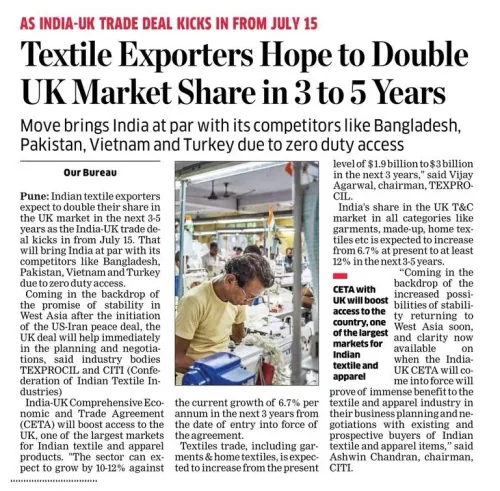
The textiles sector — including apparel, home textiles, and technical textiles — is among the primary beneficiaries of anticipated tariff reductions.
India has previously concluded FTAs with the UAE and Australia in 2022 , providing a policy blueprint for the UK deal.
Final implementation depends on completion of the agreement text and parliamentary processes in both countries.
Union Textiles Minister Giriraj Singh on Tuesday, 7 July 2026 shared a report highlighting that Indian companies — particularly in the textiles and export sectors — are ramping up capacity ahead of the proposed India-UK Comprehensive Economic and Trade Agreement (CETA), with chief financial officers anticipating a significant surge in exports once the deal takes effect.
Context
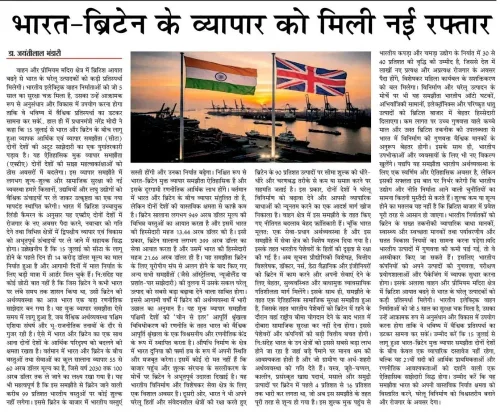
The post, shared via the NaMo App, points to corporate India's growing confidence in the India-UK CETA's potential. The minister's decision to amplify the report signals the Union Ministry of Textiles' active interest in positioning Indian exporters to capitalise on the deal. The report cited by Singh notes that CFOs across sectors are already expanding production capacities in anticipation of the agreement's implementation.
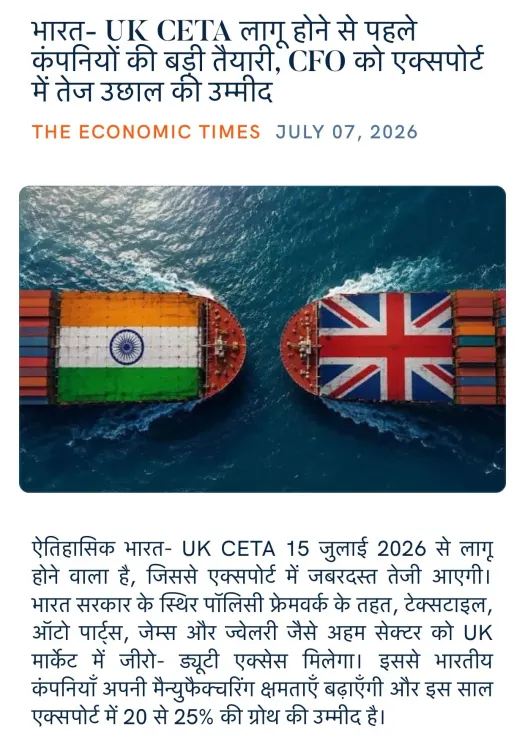
In Hindi, the post reads: 'भारत-UK CETA लागू होने से पहले कंपनियों की बड़ी तैयारी, CFO को एक्सपोर्ट में तेज उछाल की उम्मीद' — meaning, 'Big corporate preparations before India-UK CETA comes into force; CFOs expect a sharp jump in exports.'
Policy Backdrop
India and the United Kingdom launched formal free trade agreement negotiations in January 2022, following the UK's post-Brexit drive to secure new bilateral trade partnerships. The proposed CETA is designed to reduce tariffs and open markets for goods and services across both economies. A reported implementation timeline of 2026 has been cited in industry discussions, though the final text, parliamentary scrutiny in both countries, and sector-specific tariff schedules — including for textiles — are still subject to completion.
India's approach to the UK deal follows a broader outward-looking trade strategy. The country concluded Free Trade Agreements with the UAE and Australia in 2022, both of which included phased tariff reductions on textiles and apparel, providing a policy template for the current negotiations with London.
Stakeholders and Impact
The Indian textiles sector — spanning apparel, home textiles, and technical textiles — is among the industries with the most to gain from duty reductions under the CETA. Lower tariffs on Indian textile exports entering the UK market would directly improve price competitiveness against rivals such as Bangladesh and Vietnam, which already benefit from preferential UK access.
MSME manufacturers and large textile exporters alike are watching the deal closely. Industry CFOs, as noted in the report Singh shared, are not waiting for the final text — capacity expansion decisions are already being made, reflecting confidence that a deal will materialise and that the window to scale up ahead of implementation is now.
What's Next
For the India-UK CETA to deliver on its promise, both governments must finalise the agreement's text and complete their respective parliamentary or legislative processes. Sector-specific tariff schedules — particularly those governing textiles, pharmaceuticals, and services — remain the most closely watched elements of the negotiation. Giriraj Singh's ministry is expected to continue advocating for favourable terms for Indian textile exporters as talks progress.
If the deal reaches implementation as anticipated, India's textiles export industry could see a structural shift in its access to the United Kingdom market, reinforcing the government's broader goal of integrating Indian manufacturers into global value chains and diversifying export destinations beyond traditional partners.
Point of View
While positioning the Textiles Ministry as a proactive stakeholder in the outcome. The post fits a broader pattern in which Indian ministers use social media to frame trade policy wins before they are formally secured, shaping market expectations and political credit simultaneously. For the textiles sector specifically, the India-UK CETA represents the most significant potential tariff liberalisation since the UAE and Australia deals of 2022. The minister's engagement also reflects the political salience of textiles employment — concentrated in states like Gujarat, Tamil Nadu, and Maharashtra — as the government heads into the final stretch of negotiations.
NationPress
6 Oct 2026
Frequently Asked Questions
What is the India-UK CETA?
The India-UK Comprehensive Economic and Trade Agreement (CETA) is a proposed bilateral trade deal aimed at reducing tariffs and expanding market access for goods and services between India and the United Kingdom, with negotiations launched in January 2022 after the UK's exit from the EU.
How will the India-UK CETA benefit Indian textile exporters?
Lower tariffs on Indian textiles entering the UK market would improve price competitiveness against rivals like Bangladesh and Vietnam, potentially driving a significant increase in apparel, home textiles, and technical textiles exports.
What did Giriraj Singh post about India-UK CETA?
Union Textiles Minister Giriraj Singh shared a report on 7 July 2026 noting that Indian companies are expanding capacity ahead of the CETA's expected implementation, with CFOs anticipating a sharp jump in export volumes.
When is the India-UK CETA expected to be implemented?
Industry discussions have cited a 2026 implementation timeline, though the final agreement text and parliamentary processes in both countries must be completed before the deal can take effect.
Which Indian sectors benefit most from the India-UK free trade agreement?
The textiles and apparel sector is among the biggest potential beneficiaries, alongside pharmaceuticals and IT services, given the UK's significant demand for these Indian exports and the current tariff barriers that the CETA aims to reduce.