Rajasthan CM Bhajan Lal Sharma Calls on FM Sitharaman
Synopsis
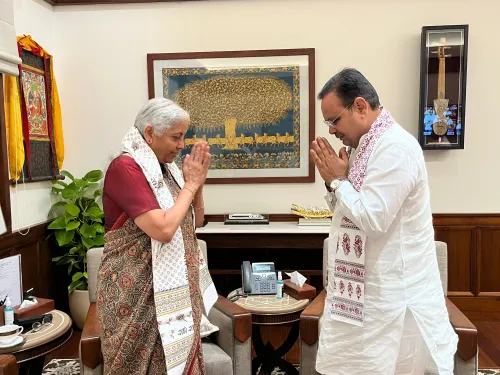
Rajasthan Chief Minister Bhajan Lal Sharma called on Union Finance Minister Nirmala Sitharaman in New Delhi on 7 July 2026. The meeting is part of routine centre-state coordination on fiscal transfers, scheme implementation, and project clearances for India's largest state by area.
Key Takeaways
Rajasthan Chief Minister Bhajan Lal Sharma called on Union Finance Minister Nirmala Sitharaman in New Delhi on 7 July 2026 .
Bhajan Lal Sharma has led the BJP government in Rajasthan since December 2023 , following the party's victory in state assembly elections.
Such meetings form part of standard centre-state coordination on budgetary allocations, project clearances, and scheme implementation.
Rajasthan operates under the fiscal transfer framework of the 15th Finance Commission , covering 2021 to 2026 — the final year of the current award period.
No specific agenda or outcomes from the meeting have been officially disclosed.
Follow-up announcements on Rajasthan-specific allocations or approvals may emerge ahead of the next Union Budget cycle.
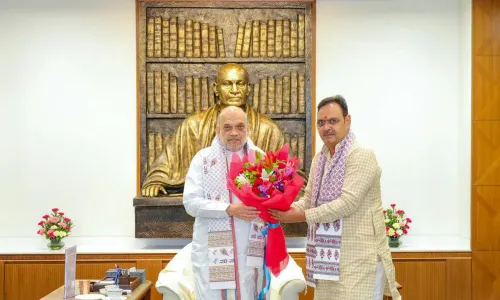
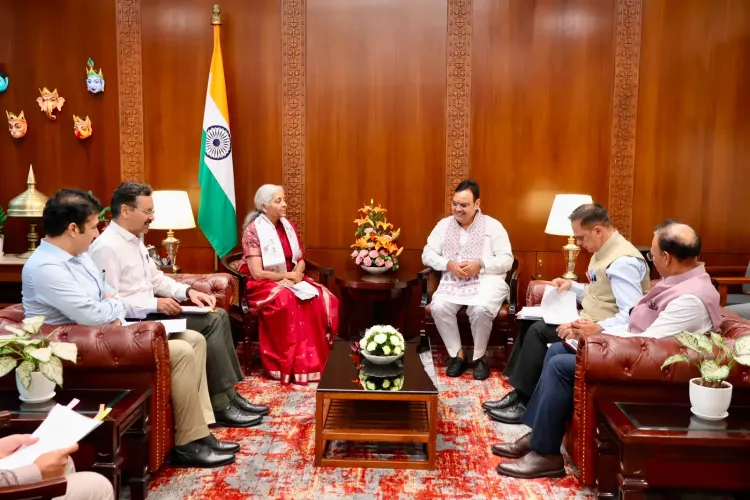
Union Finance Minister Nirmala Sitharaman received Rajasthan Chief Minister Bhajan Lal Sharma at her office in New Delhi on Tuesday, 7 July 2026, in a meeting that reflects ongoing centre-state engagement on fiscal and developmental priorities for the state.
Context
The meeting was confirmed by Finance Minister Sitharaman's official X account, which posted a photograph of the two leaders together. Bhajan Lal Sharma has served as Chief Minister of Rajasthan since December 2023, when the Bharatiya Janata Party returned to power in the state following assembly elections. Such calls on the Union Finance Minister by sitting chief ministers are a standard feature of centre-state governance, particularly when states seek to advance project clearances, discuss budgetary allocations, or align state schemes with central programmes.
Policy Backdrop
Rajasthan, India's largest state by area, operates within the fiscal transfer framework set by the 15th Finance Commission, which governs tax devolution and grants to states for the period 2021 to 2026. The current period is the final year of that award, making discussions around the transition to the next commission's framework particularly timely. State governments routinely engage the Union Finance Ministry to press for pending central assistance, infrastructure project approvals, and the implementation of centrally sponsored schemes.
The BJP-led government in Rajasthan has been working to advance large infrastructure, water, and road projects since taking office. Meetings of this nature provide an opportunity to flag state-specific funding requirements ahead of the next Union Budget cycle and supplementary demands for grants.
Stakeholders and Impact
The primary stakeholders in such engagements are the Rajasthan state government, its finance and planning departments, and the citizens who depend on centrally funded schemes for welfare, infrastructure, and employment. Decisions emerging from centre-state consultations can influence the pace of project implementation, the release of pending grants, and the prioritisation of new capital expenditure in the state.
For Rajasthan, which has historically relied on central transfers for a significant share of its budget, maintaining a productive working relationship with the Union Finance Ministry is of direct fiscal consequence. The state's development agenda — spanning irrigation, highways, and urban infrastructure — often requires central co-funding and administrative approvals.
What's Next
The specific agenda and outcomes of the 7 July 2026 meeting have not been officially disclosed. Observers will watch for any follow-up announcements regarding Rajasthan-specific allocations, project approvals, or policy concessions in forthcoming central government communications. The interaction may also inform the state's positioning ahead of consultations for the next Finance Commission award cycle, which will determine fiscal transfers beyond 2026.
Point of View
Fiscally dependent state like Rajasthan, direct access to the Union Finance Minister is a strategic asset. The interaction also reinforces the BJP's internal coordination advantage: shared party affiliation between the state and central governments smooths the path for alignment on budgetary priorities. Watchers of intergovernmental fiscal relations will note whether any Rajasthan-specific announcements follow in the near term.
NationPress
7 Jul 2026
Frequently Asked Questions
Why did Rajasthan CM Bhajan Lal Sharma meet Finance Minister Nirmala Sitharaman?
Chief Minister Bhajan Lal Sharma called on Finance Minister Sitharaman on 7 July 2026 as part of routine centre-state consultations. Such meetings typically cover fiscal transfers, central scheme implementation, and project approvals for the state.
Who is Bhajan Lal Sharma?
Bhajan Lal Sharma is the Chief Minister of Rajasthan and a senior BJP leader. He took office in December 2023 after the BJP won the Rajasthan state assembly elections.
What is the 15th Finance Commission and how does it affect Rajasthan?
The 15th Finance Commission set the framework for tax devolution and grants from the central government to states for the period 2021 to 2026. Rajasthan, as a large state with significant fiscal dependence on central transfers, is directly affected by these allocations.
What could be discussed in a meeting between a state CM and the Union Finance Minister?
Such meetings typically cover pending central grants, infrastructure project approvals, the status of centrally sponsored schemes, and state-specific budgetary requests ahead of the Union Budget cycle.
Is there a BJP government in Rajasthan?
Yes. The BJP has governed Rajasthan since December 2023, when Bhajan Lal Sharma was sworn in as Chief Minister following the party's victory in the state assembly elections.