India's Economic Growth: Resilience Amid Rising Global Risks, Says CEA Nageswaran
Synopsis
In a recent speech at the US-India Economic Forum 2026, Chief Economic Advisor V. Anantha Nageswaran discussed India's impressive economic growth while cautioning about rising global uncertainties. With a projected GDP growth of 7.6%, he emphasizes the need for vigilance amidst geopolitical tensions.
Key Takeaways
India's GDP growth is projected at 7.6% for the year ending March 2026.
Strong domestic demand and infrastructure investments support growth.
External risks such as geopolitical tensions and energy prices are rising.
Policymakers must respond swiftly to emerging risks.
India aims to sustain high growth as the world's fourth-largest economy .
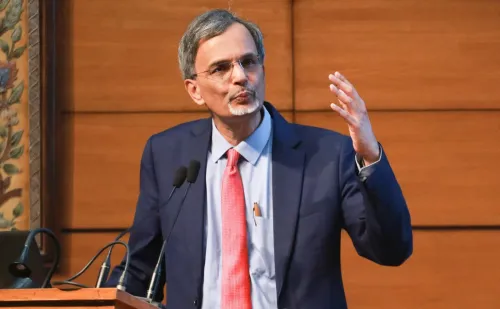
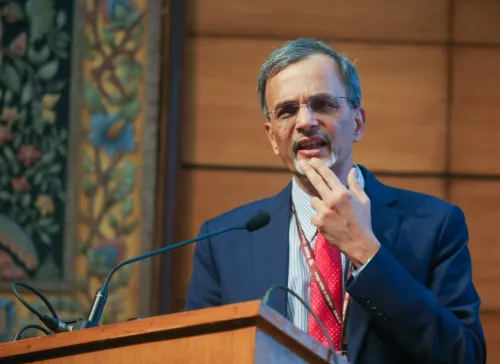
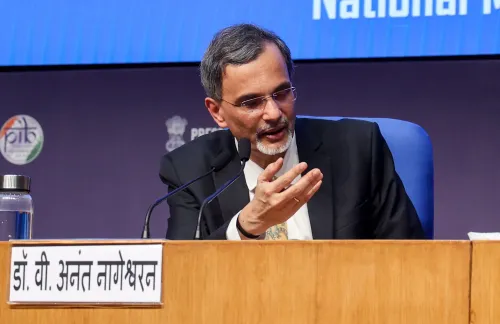
Washington, April 15 (NationPress) India's economic growth is exhibiting remarkable resilience; however, escalating global uncertainties may impact future projections, stated Chief Economic Advisor (CEA) V. Anantha Nageswaran on Wednesday.
During his address at the US-India Economic Forum 2026, Nageswaran highlighted India's sustained strong growth in recent years while cautioning that external risks have become more pronounced.
“It is crucial not to overlook the extensive uncertainty that currently exists,” he asserted, pointing to global conflicts and economic instability.
For the fiscal year concluding in March 2026, India's GDP growth is projected at 7.6 percent, maintaining a trend of over 7 percent growth in the post-COVID era.
“Post-COVID, India has consistently achieved over seven percent real GDP growth, which is a significant accomplishment in a world where economic growth is increasingly rare,” he remarked.
He emphasized that the momentum heading into the new financial year remains strong, with the agriculture, manufacturing, and services sectors all performing robustly.
Nonetheless, Nageswaran noted that the global landscape has shifted dramatically in recent weeks. “Everything changed on the morning of February 28,” he remarked, referring to heightened geopolitical tensions.
Potential risks include rising energy costs, supply chain disruptions, and capital flow volatility, all of which could influence growth, inflation, and external balances.
Despite these challenges, he asserted that India is well-equipped to handle the repercussions. “We are confronting these challenges from a position of macroeconomic strength,” he stated.
India's growth trajectory has been bolstered by strong domestic demand, infrastructure investments, and policy reforms that enhance supply-side capabilities.
Nageswaran also noted the progress in fiscal consolidation, with deficits decreasing even as public investment has risen significantly.
At the same time, he emphasized the need for policymakers to remain alert and respond swiftly to emerging risks.
“To some extent… a minor deviation from the business-as-usual forecast could be detrimental rather than beneficial,” he warned, highlighting the importance of realistic evaluations.
India's capacity to maintain high growth hinges on effectively managing external shocks while continuing structural reforms and investments.
Currently, India ranks as the world's fourth-largest economy and aims to sustain high growth to fulfill its long-term development objectives.
Point of View
It is crucial to balance optimism with caution. External risks are intensifying, and while the country is positioned strongly, the emphasis on realistic assessments and proactive governance remains paramount for navigating future uncertainties.
NationPress
16 Sept 2026
Frequently Asked Questions
What is India's projected GDP growth for the fiscal year ending March 2026?
India's GDP growth is estimated at 7.6 percent for the fiscal year ending March 2026.
What are the external risks mentioned by CEA Nageswaran?
The external risks include rising energy prices, supply disruptions, and volatility in capital flows.
How has India's economic growth performed post-COVID?
Post-COVID, India has consistently achieved over seven percent real GDP growth, marking a significant achievement.
What sectors are contributing to India's economic momentum?
The agriculture, manufacturing, and services sectors are all performing well, contributing to India's economic momentum.
Why is fiscal consolidation important for India?
Fiscal consolidation is vital as it helps in reducing deficits and supports increased public investment, essential for sustained growth.