Trump declares Iran war 'terminated' as 60-day War Powers deadline expires
Synopsis
Trump has formally declared the US-Iran war 'terminated' — not through a peace deal, but through a legal clock. The War Powers Resolution gave him 60 days from Congressional notification; with no exchange of fire since 7 April, the deadline expired on 1 May. Yet Trump simultaneously says he is 'not satisfied' with Iran's negotiating proposals, leaving the path ahead genuinely uncertain.
Key Takeaways
President Trump declared the US-Iran war "terminated" in a letter to congressional leaders, citing no exchange of fire since 7 April 2026 .
Hostilities began on 28 February 2026 , when the United States and Israel launched joint combat operations against Iran .
The War Powers Resolution of 1973 requires military action to end within 60 days of Congressional notification, absent formal authorisation.
Congress was notified on 2 March 2026 , making the legal deadline 1 May 2026 .
Trump said he is "not satisfied" with current Iranian proposals and described Iran's leadership as internally "disjointed." Trump claimed Iran now has "no navy" and "no air force" , though the assertions were not independently verified.
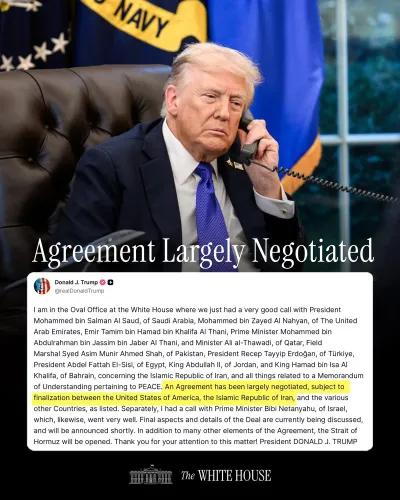
US President Donald Trump has formally notified congressional leaders that the military conflict against Iran has "terminated," as the operation — launched without prior Congressional approval — reached its 60-day legal deadline under the War Powers Resolution on 1 May 2026. The declaration comes amid continuing uncertainty over diplomatic negotiations, with Trump warning he remains "not satisfied" with current Iranian proposals.
The War Powers Deadline
In a letter to congressional leaders, Trump stated: "There has been no exchange of fire between the United States and Iran since April 7, 2026." He added, "The hostilities that began on February 28, 2026, have terminated." The letter was quoted by Politico and separately reported by Xinhua.
Under the War Powers Resolution of 1973, a US president must terminate military action within 60 days of notifying Congress, unless lawmakers formally authorise its continuation. The Trump administration notified Congress on 2 March 2026, setting the expiry at 1 May 2026. The move is widely seen as an effort to pre-empt a Congressional challenge over the legality of the conflict, according to the report.
How the Conflict Unfolded
The United States and Israel launched major combined combat operations against Iran on 28 February 2026, without seeking prior Congressional authorisation — a step that drew immediate scrutiny from lawmakers on both sides of the aisle. The formal notification to Congress followed two days later, on 2 March, triggering the statutory countdown. No exchange of fire has been reported since 7 April 2026, according to Trump's own letter.
Trump's Assessment of Iran's Military Capacity
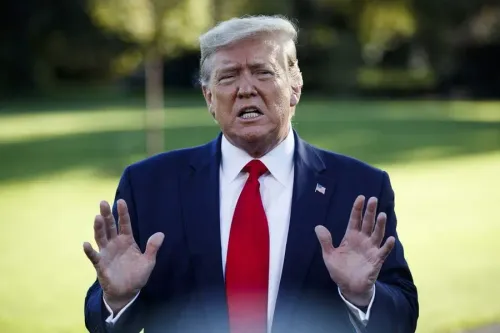
Speaking to reporters before departing on Marine One on Friday, Trump claimed Iran's military had been significantly degraded by the recent conflict. He asserted the country now has "no navy", "no air force", and limited defence capability. While the claims could not be independently verified, they reflect the administration's posture heading into any potential negotiations.
Diplomatic Talks Remain Uncertain
Despite the termination declaration, Trump made clear that diplomacy has not produced a satisfactory outcome. "They want to make a deal, but I'm not satisfied with it, so we'll see what happens," he told reporters. He described Iran's leadership as fragmented and internally divided, saying they are "all messed up" and "very disjointed," complicating any consensus on a deal.
Trump acknowledged both options remain on the table. "Do we want to go and just blast the hell out of him and finish him forever, or do we want to try and make a deal?" he said, adding, "I'd prefer not, on a human basis." Notably, this is the first formal acknowledgement from the administration that active hostilities have ceased, even as the diplomatic path forward remains deeply unclear.
Point of View
Trump is simultaneously claiming military victory, expressing dissatisfaction with diplomacy, and keeping escalation explicitly on the table. That is not the posture of a conflict that is truly over. The War Powers Resolution was designed to prevent exactly this kind of executive unilateralism, yet its 60-day clock has effectively been used here as an escape valve rather than a constraint. Whether Congress accepts the framing or pushes back will define the next phase of this standoff.
NationPress
19 Sept 2026
Frequently Asked Questions
Why did Trump declare the Iran war 'terminated'?
Trump declared the conflict terminated because the 60-day legal deadline under the War Powers Resolution of 1973 expired on 1 May 2026. The administration notified Congress of the military action on 2 March 2026, triggering the countdown, and cited no exchange of fire since 7 April 2026 as grounds for the declaration.
What is the War Powers Resolution and why does it matter here?
The War Powers Resolution, passed in 1973, requires the US president to notify Congress within 48 hours of deploying military force and to terminate the action within 60 days unless Congress formally authorises it. The US-Iran military operation was launched without prior Congressional approval, making the deadline legally significant.
When did the US and Israel begin military operations against Iran?
The United States and Israel launched major combined combat operations against Iran on 28 February 2026. The Trump administration formally notified Congress two days later, on 2 March 2026.
What is the current status of US-Iran diplomatic negotiations?
Negotiations remain uncertain. Trump said on Friday he is 'not satisfied' with current Iranian proposals, while describing Iran's leadership as fragmented and internally divided. He kept both diplomacy and military action explicitly on the table.
What did Trump say about Iran's military capability?
Trump claimed Iran's military had been significantly degraded, asserting the country now has 'no navy,' 'no air force,' and limited defence capability following the conflict. These claims have not been independently verified.