PM Modi Hails Skyroot Aerospace's Vikram-1 Launch as Defining Moment
Synopsis
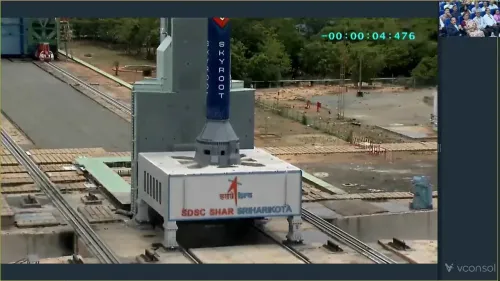
Prime Minister Narendra Modi personally congratulated Hyderabad-based Skyroot Aerospace on the successful launch of Vikram-1 on 18 July 2026, calling it a defining moment for India's space journey and praising the private sector's growing role in driving innovation under the Atmanirbhar Bharat framework.
Key Takeaways
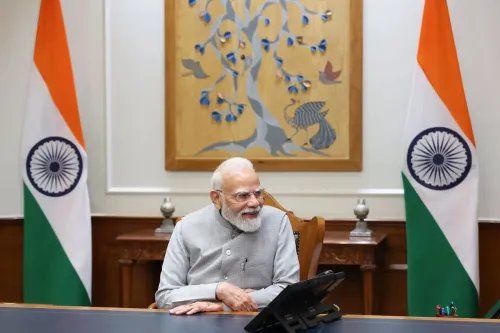
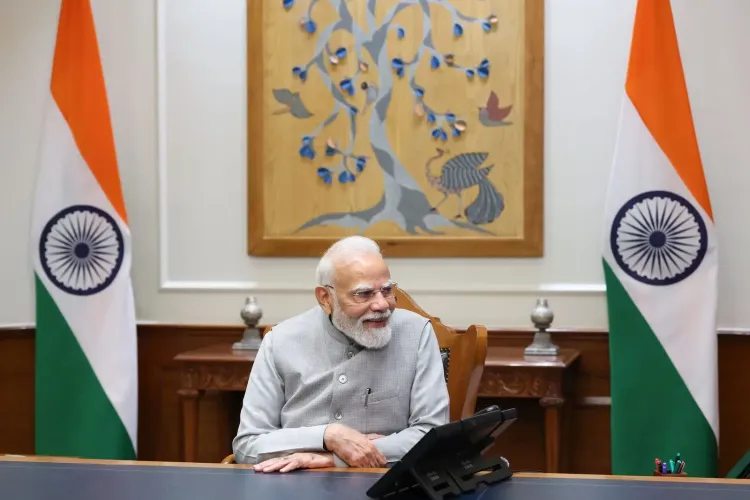
Prime Minister Narendra Modi personally called the Skyroot Aerospace team on 18 July 2026 to congratulate them on the successful launch of Vikram-1 .
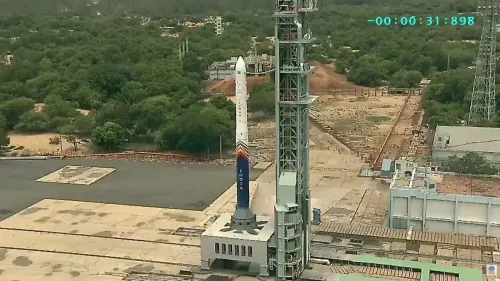
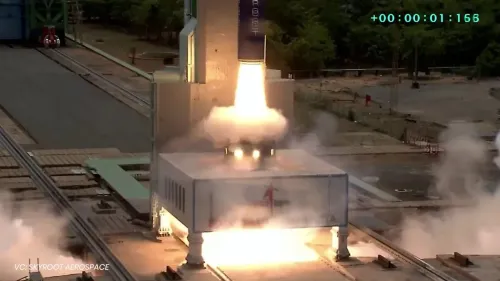
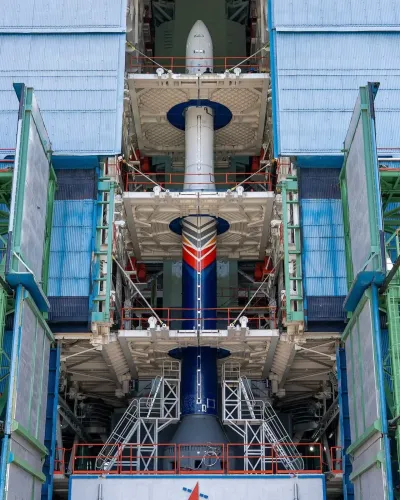
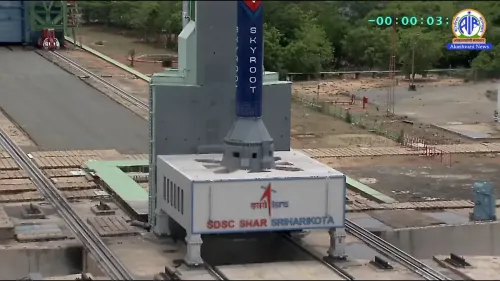
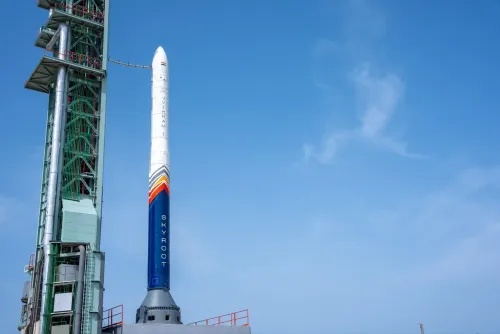
Vikram-1 is India's first privately developed launch vehicle to achieve a successful launch, built by Hyderabad -based Skyroot Aerospace , founded in 2018 .
The government's IN-SPACe framework, created around 2020 , provided the regulatory foundation that enabled private firms to enter India's space launch market.
Modi described the achievement as 'a defining moment in India's space journey,' linking it to the broader Atmanirbhar Bharat self-reliance agenda.
The launch is expected to boost investor confidence in India's private space-tech sector and accelerate the development timelines of other domestic rocket startups.
ISRO now has a complementary private-sector partner, potentially allowing the agency to redirect focus toward scientific and deep-space missions.
Prime Minister Narendra Modi on Saturday, 18 July 2026, spoke directly with the team at Skyroot Aerospace and congratulated them on the successful launch of Vikram-1, calling it 'a defining moment in India's space journey' and highlighting the growing role of the private sector in accelerating innovation.
Context
Skyroot Aerospace, a Hyderabad-based private space startup founded in 2018, developed the Vikram series of launch vehicles as part of India's emerging commercial space ecosystem. The successful launch of Vikram-1 marks a significant milestone, representing India's first privately built orbital-class rocket reaching its mission objective. The Prime Minister's direct call to the team underscored the political and strategic importance the government attaches to this achievement.
Policy Backdrop
The launch is the clearest demonstration yet of a policy shift that began taking shape around 2020, when the government established IN-SPACe — the Indian National Space Promotion and Authorisation Centre — to regulate and actively encourage private sector participation in space activities. This move was designed to increase India's launch cadence, attract private investment, and reduce the sole dependence on ISRO, the Indian Space Research Organisation, for all missions. The Vikram-1 success is a direct product of that liberalisation, and it aligns squarely with the broader Atmanirbhar Bharat ('self-reliant India') framework that has guided high-technology policy under the Modi government since 2014.
Stakeholders and Impact
The achievement carries consequences well beyond a single launch. For India's growing cluster of private space startups, it serves as proof of concept that domestic private firms can independently conceive, build, and fly orbital-class rockets — a capability previously held only by a handful of nations and their state agencies. ISRO scientists, who have long been the backbone of India's space programme, now have a complementary private-sector partner capable of handling commercial payloads, potentially freeing the agency to focus on deep-space and scientific missions. Investors in India's space-tech sector are also watching closely, as a verified orbital success dramatically improves the risk profile for future funding rounds across the industry.
What's Next
The successful flight of Vikram-1 is expected to accelerate the licensing pipeline under IN-SPACe, with other private launch-vehicle developers likely to fast-track their own test schedules. Observers will watch for any formal updates to India's Space Policy framework and whether the government announces fresh incentives or dedicated infrastructure support for commercial launch operations. Prime Minister Modi's personal outreach to the Skyroot team signals that the government views private space as a flagship sector — one likely to feature prominently in future policy announcements and budget allocations.
Point of View
Not mere protocol — it places private space firmly within the government's flagship Atmanirbhar Bharat narrative ahead of what are likely to be competitive electoral cycles. The Vikram-1 success gives the administration a tangible, high-visibility win in deep-technology manufacturing, a domain where India has historically lagged behind China and the United States. By framing this as 'opening new frontiers,' the Prime Minister is also laying the rhetorical groundwork for expanded IN-SPACe licensing and possible budgetary support for commercial space infrastructure. The broader arc is clear: India is repositioning its space programme from a purely state-led endeavour to a mixed model, with private firms expected to shoulder an increasing share of launch activity over the next decade.
NationPress
18 Jul 2026
Frequently Asked Questions
What is Vikram-1 and who made it?
Vikram-1 is a launch vehicle developed by Skyroot Aerospace, a Hyderabad-based private space startup founded in 2018. It is India's first privately built launch rocket to achieve a successful launch, marking a historic step for the country's commercial space sector.
Why did PM Modi call Skyroot Aerospace?
Prime Minister Narendra Modi called the Skyroot Aerospace team on 18 July 2026 to personally congratulate them on the successful launch of Vikram-1, describing it as 'a defining moment in India's space journey.'
What is IN-SPACe and what role does it play?
IN-SPACe, or the Indian National Space Promotion and Authorisation Centre, was established around 2020 to regulate and promote private sector participation in India's space activities. It created the licensing framework that enabled companies like Skyroot Aerospace to develop and launch their own rockets.
How does Vikram-1's launch relate to Atmanirbhar Bharat?
The Vikram-1 launch is seen as a direct outcome of the Atmanirbhar Bharat ('self-reliant India') policy, which encourages domestic high-technology manufacturing. It demonstrates that Indian private firms can independently build and fly orbital-class rockets without relying on foreign technology.
What does this mean for India's space sector going forward?
The success of Vikram-1 is expected to accelerate India's commercial space ecosystem by encouraging other private launch-vehicle developers, attracting investor confidence, and potentially freeing ISRO to focus on deeper scientific and exploration missions.