CM Bhajan Lal: Daytime Power Now in 26 Rajasthan Districts
Synopsis
The Chief Minister's Office of Rajasthan announced on 18 July 2026 that farmers in 26 districts now receive daytime electricity, with CM Bhajan Lal Sharma pledging to extend the facility to the entire state. The move follows a national pattern of agricultural feeder separation pioneered by Gujarat's Jyotigram Yojana.
Key Takeaways
The Rajasthan CMO confirmed on 18 July 2026 that farmers in 26 districts are now receiving electricity during daytime hours.
Chief Minister Bhajan Lal Sharma pledged to extend daytime farm power to the remaining districts statewide.
The initiative follows the agricultural feeder-separation model pioneered by Gujarat's Jyotigram Yojana and replicated in Maharashtra, Telangana and Madhya Pradesh.
Daytime supply reduces farmers' dependence on diesel generators and allows irrigation to be managed during daylight hours.
Feeder separation also helps state discoms cut distribution losses and manage subsidy costs more efficiently.
No specific statewide rollout deadline was announced; budget allocations and solar-feeder tenders will be key indicators of progress.
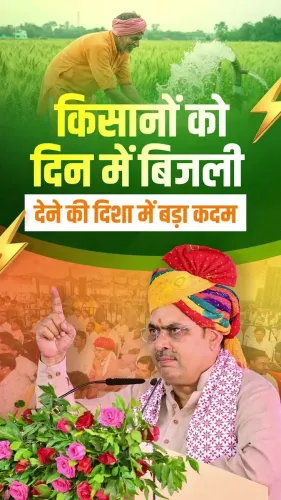
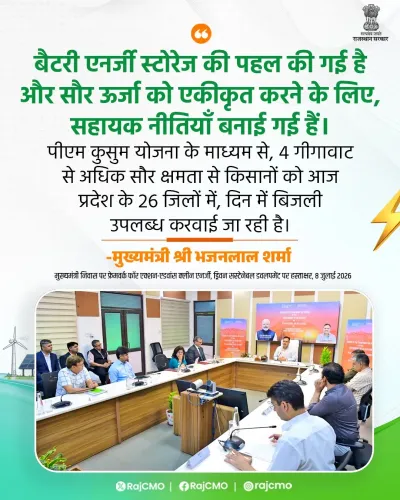
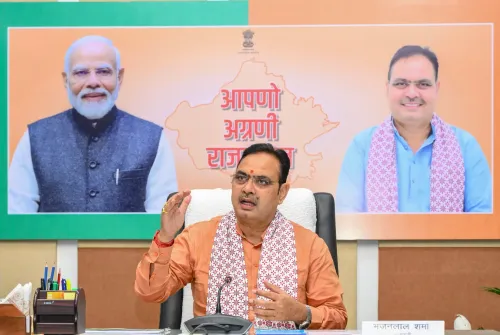
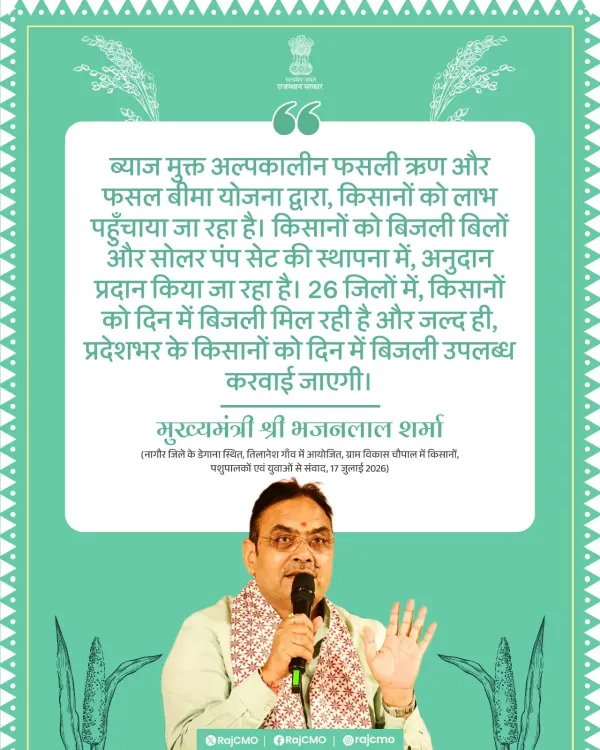
The Chief Minister's Office of Rajasthan announced on Saturday, 18 July 2026 that farmers across 26 districts of the state are now receiving electricity during daytime hours, with a commitment to extend the facility statewide in the near future.
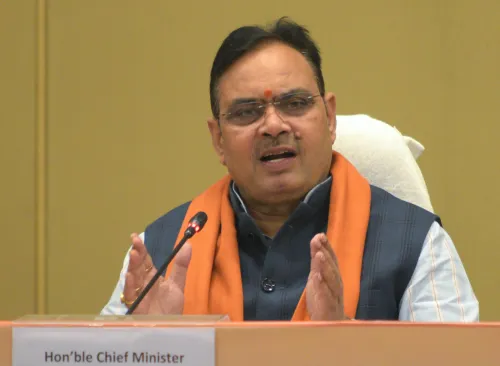
The post, attributed to Chief Minister Bhajan Lal Sharma, stated in Hindi: '26 jilon mein, kisanon ko din mein bijli mil rahi hai' ('In 26 districts, farmers are receiving electricity during the day'), adding that the supply would soon be made available to farmers across the entire state.
Context
For decades, agricultural electricity supply in Rajasthan — as in most Indian states — was routed through the same feeders as domestic and commercial consumers, resulting in erratic, largely nocturnal supply to farms. Farmers were forced to run irrigation pumps at night, raising safety risks and reducing cropping efficiency. The shift to dedicated daytime agricultural supply addresses a long-standing grievance of the farming community. The hashtag #आपणो_अग्रणी_राजस्थान ('Our Pioneering Rajasthan') used in the post reflects the BJP state government's branding of its development agenda since taking office in December 2023.Policy Backdrop
The effort to separate agricultural feeders and deliver daytime power to farmers has a well-established lineage in Indian infrastructure policy. Gujarat's Jyotigram Yojana, launched in the early 2000s, became the national template: by physically separating rural domestic and agricultural feeders, the state was able to guarantee round-the-clock power to villages and scheduled daytime supply to farms. Maharashtra, Telangana and Madhya Pradesh subsequently scaled similar feeder-separation programmes. Rajasthan's approach follows this model. Feeder separation, combined with the integration of solar capacity, aligns irrigation pumping with daylight hours — reducing distribution losses for state electricity distribution companies (discoms), curbing subsidy burdens and supporting higher cropping intensity by giving farmers predictable windows for irrigation.Stakeholders and Impact
Rajasthan is one of India's largest states by area, with agriculture forming a critical pillar of its economy. A large share of the state's farmers depend on groundwater irrigation through electric pump sets. Reliable daytime power directly translates into lower diesel generator costs, reduced drudgery, and the ability to monitor irrigation — benefits that compound across the kharif and rabi cropping seasons. For the state's discoms, feeder separation reduces aggregate technical and commercial losses by channelling agricultural load into defined windows, making demand more predictable. Solar-linked feeder programmes additionally allow the state to offset the cost of subsidised farm power with renewable generation.What's Next
The Chief Minister's Office has signalled that the remaining districts will be brought under the daytime supply scheme, though no specific deadline was mentioned in the post. Observers will watch for state budget allocations, solar-feeder tenders and grid-upgrade contracts that would operationalise the statewide rollout. The pace of expansion will also be a marker of the Bhajan Lal Sharma government's infrastructure delivery record ahead of future electoral cycles.Point of View
Echoing a well-worn but electorally potent infrastructure narrative in Indian state politics. Feeder separation is technically unglamorous but operationally transformative — states that have implemented it credibly, such as Gujarat, have reaped both agrarian and fiscal dividends. The statewide extension pledge, without a firm timeline, is characteristic of phased rollout communications designed to sustain political momentum. The real test will be whether grid-upgrade investment and solar-feeder tenders follow at the pace the announcement implies.
NationPress
18 Jul 2026
Frequently Asked Questions
Which districts in Rajasthan are getting daytime electricity for farmers?
The Rajasthan CMO announced that farmers in 26 districts are receiving daytime electricity, but the specific names of those districts were not listed in the official post.
What is the Rajasthan government's plan for statewide daytime farm power?
Chief Minister Bhajan Lal Sharma has stated that daytime electricity will be extended to farmers across all districts of Rajasthan, though a specific deadline has not been announced.
What is agricultural feeder separation and how does it help farmers?
Agricultural feeder separation involves creating dedicated power lines for farm use, separate from domestic supply. This allows the government to schedule daytime electricity for irrigation pump sets, reducing farmers' reliance on costly diesel generators and improving cropping efficiency.
Which Indian states have successfully implemented daytime power for farmers?
Gujarat's Jyotigram Yojana was the earliest large-scale model. Maharashtra, Telangana and Madhya Pradesh have since implemented similar feeder-separation programmes to deliver scheduled daytime power to agricultural consumers.
How does daytime farm power benefit Rajasthan's electricity distribution companies?
By channelling agricultural electricity demand into defined daytime windows, feeder separation makes load more predictable, reduces distribution losses, and helps discoms manage the cost of subsidised farm power more efficiently.