Giriraj Singh hails Madhubani daughter featured on Mann ki Baat
Synopsis
Union Textiles Minister Giriraj Singh shared a success story of a young woman from Madhubani, Bihar, praised by PM Modi on Mann ki Baat, highlighting the district's GI-tagged folk art tradition and the government's push to empower rural women artisans through cultural recognition.
Key Takeaways
Giriraj Singh shared the story of a Madhubani woman called 'Sweety' on 18 July 2026 via the NaMo App.
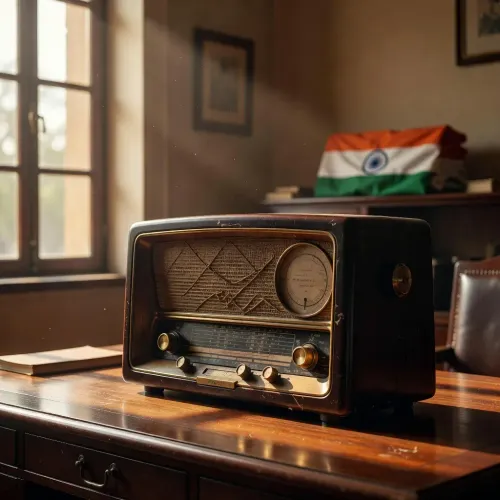
PM Modi praised her on Mann ki Baat , the monthly radio programme launched in October 2014 .
Madhubani is renowned for its GI-tagged traditional paintings, practised largely by women artisans.
The Ministry of Textiles under Giriraj Singh has focused on marketing and export linkages for Bihar's traditional craft clusters.
A Mann ki Baat feature can significantly boost market visibility and demand for the artisan community highlighted.
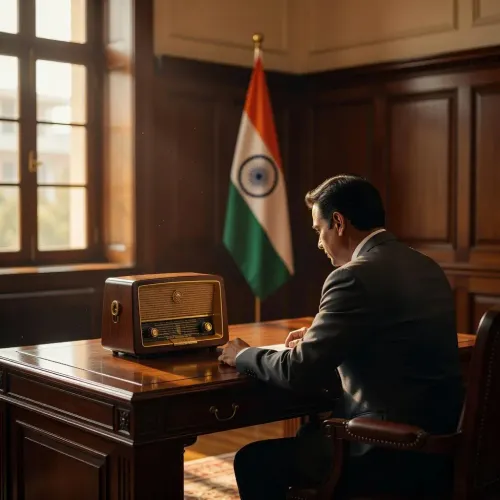
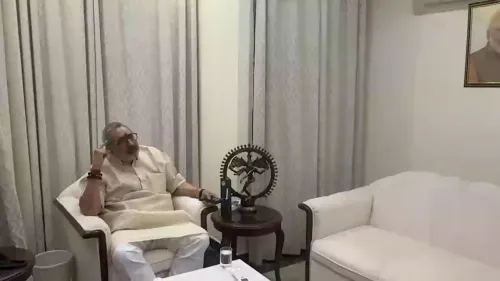
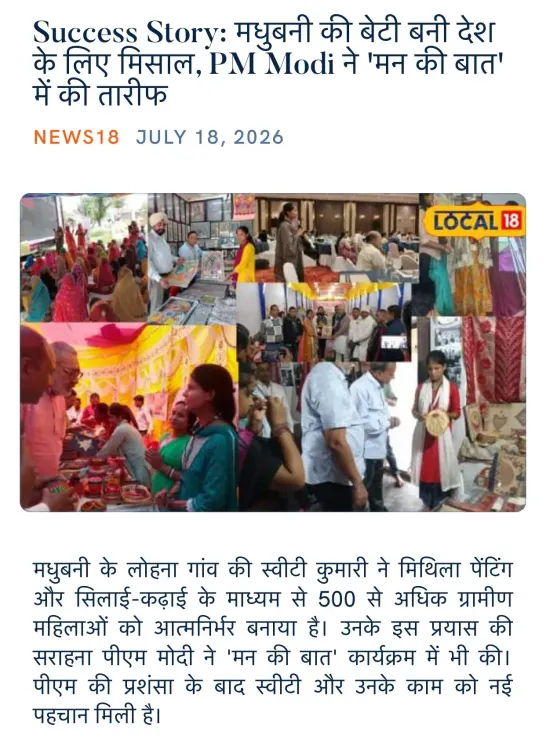
Union Textiles Minister Giriraj Singh on Saturday, 18 July 2026 shared a success story of a young woman from Madhubani, Bihar, referred to as 'Sweety', whose work was praised by Prime Minister Narendra Modi on the monthly radio programme Mann ki Baat, calling her an inspiration for the nation.
Context
The post, shared by Giriraj Singh via the NaMo App, carries the caption: 'Madhubani ki beti bani desh ke liye misal, PM Modi ne Mann ki Baat mein ki tarif' — loosely translated as 'Madhubani's daughter becomes an example for the nation, PM Modi praised her on Mann ki Baat'. The minister amplified the story as a symbol of grassroots achievement from his home state of Bihar.
Mann ki Baat, launched by PM Modi in October 2014, is a monthly radio address that regularly spotlights ordinary citizens — particularly from rural and artisan communities — as examples of self-reliance and national pride. The programme has been used repeatedly to draw national attention to individual achievers who might otherwise remain invisible to mainstream discourse.
Policy Backdrop
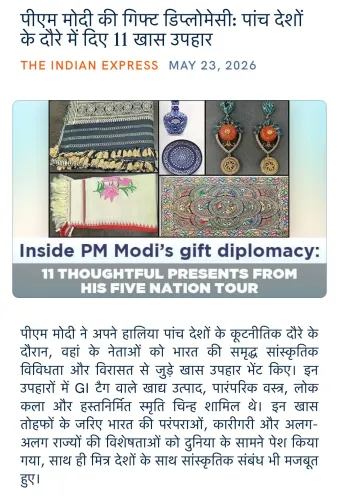
Madhubani district is globally recognised for its traditional Madhubani paintings, a Geographical Indication (GI)-tagged folk art form practised predominantly by women artisans on textiles, handmade paper, and walls. The GI tag offers these artisans legal protection and a premium identity in domestic and export markets.
The Ministry of Textiles, under Giriraj Singh, has prioritised marketing and export linkages for traditional painting and weaving clusters across Bihar. Central schemes such as the National Handloom Development Programme have channelled support to such clusters, aiming to convert cultural heritage into sustainable livelihoods for women practitioners.
Stakeholders and Impact
Women artisans and Madhubani painters stand to benefit most directly when stories like this receive national visibility. A mention on Mann ki Baat — which reaches tens of millions of listeners across India — can translate into increased demand, better market access, and wider recognition for the entire artisan cluster, not just the individual featured.
For Giriraj Singh, amplifying such stories from Bihar serves a dual purpose: it reinforces the government's narrative of empowering rural women through traditional crafts, and it connects the Textiles Ministry's policy work to tangible human outcomes that resonate with voters and policymakers alike.
What's Next
Attention will now turn to whether subsequent Mann ki Baat episodes continue to spotlight artisans from Bihar's handloom and handicraft clusters, and whether the Ministry of Textiles follows up with concrete support — such as market linkages, export facilitation, or branding initiatives — for the Madhubani painting community. Such follow-through would signal that the recognition is more than symbolic. The broader pattern of using cultural success stories to anchor policy momentum in artisan-heavy states like Bihar is expected to intensify ahead of future electoral cycles.
Point of View
Such moments are low-cost, high-visibility opportunities to demonstrate impact without announcing new spending. The real test, as always, will be whether recognition on air translates into sustained institutional support for Madhubani's artisan clusters.
NationPress
18 Jul 2026
Frequently Asked Questions
Who is 'Sweety' from Madhubani praised by PM Modi on Mann ki Baat?
She is a young woman from Madhubani district in Bihar whose work was highlighted by PM Modi on Mann ki Baat as a national success story. Her specific identity and achievements have not been officially detailed beyond what was shared in the broadcast.
What is Mann ki Baat and when did it start?
Mann ki Baat is a monthly radio programme hosted by Prime Minister Narendra Modi that was launched in October 2014. It is used to share inspirational stories of ordinary citizens and highlight grassroots achievements from across India.
Why is Madhubani famous in India?
Madhubani, a district in Bihar, is famous for its traditional Madhubani paintings — a GI-tagged folk art form practised mainly by women artisans. The art is applied on textiles, handmade paper, and walls, and has significant domestic and international market value.
What is Giriraj Singh's role in promoting Bihar's textiles?
As Union Minister of Textiles, Giriraj Singh has focused on marketing and export linkages for traditional painting and weaving clusters in Bihar, including Madhubani, under schemes such as the National Handloom Development Programme.
What is the NaMo App used for?
The NaMo App is a BJP-aligned digital platform used by party leaders and the Prime Minister's office to share news, policy updates, and inspirational content directly with supporters and the public.