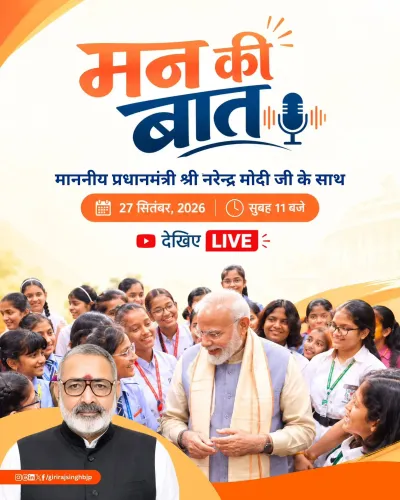
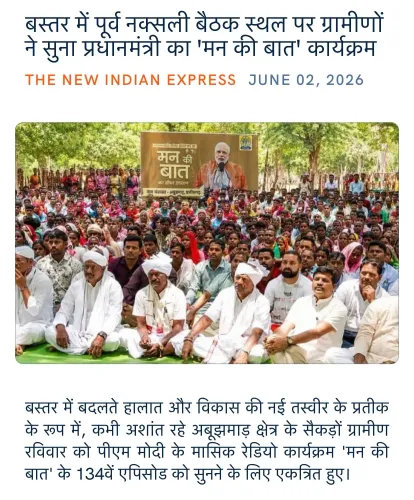
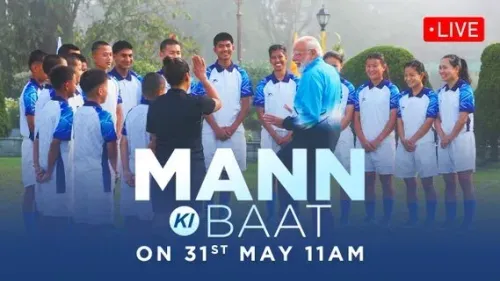
Giriraj Singh hails PM Modi's Mann Ki Baat Episode 134
Synopsis
Union Textiles Minister Giriraj Singh on 31 May 2026 lauded PM Modi's 134th Mann Ki Baat episode, which covered youth empowerment, sports achievements, Gangetic dolphin conservation, Chola-era heritage repatriation, and public participation in India's development journey.
Key Takeaways
Union Textiles Minister Giriraj Singh publicly praised PM Modi's 134th Mann Ki Baat episode on 31 May 2026 .
The episode covered themes including youth empowerment, sports achievements, water and environmental conservation, and cultural heritage .
PM Modi highlighted sprinter Gurinderveer Singh and other emerging Indian athletes.
Saji from Kerala was recognised for teaching swimming to children with disabilities.
The repatriation of Chola-era copper plates to India was cited as a point of national pride.
Gangetic dolphin conservation was discussed, linking to the ongoing Namami Gange programme launched in 2015 .
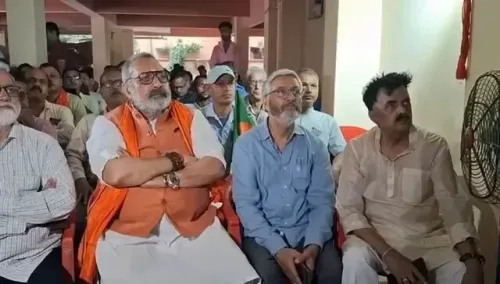
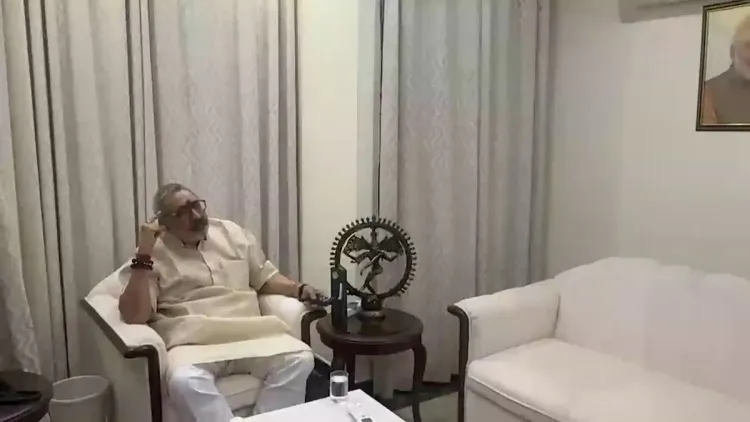
Union Textiles Minister Giriraj Singh on Sunday, 31 May 2026 shared his reflections on the 134th episode of Prime Minister Narendra Modi's monthly radio address Mann Ki Baat, calling the programme a source of inspiration for realising the vision of a developed India.
Context
In his post on X, Singh wrote that he had the opportunity to listen to 'Aadarniya Pradhanmantri Shri Narendra Modi ji ke prerak vicharon' — 'the inspiring thoughts of the honourable Prime Minister Narendra Modi' — through the Mann Ki Baat programme. He noted that the 134th episode covered a wide range of themes including youth empowerment, sports achievements, water and environmental conservation, India's cultural heritage, Gangetic dolphin conservation, learning new skills during summer holidays, and public participation in national development.
Singh specifically highlighted the Prime Minister's mention of sprinter Gurinderveer Singh and other emerging athletes, the commendable efforts of Saji from Kerala in teaching swimming to children with disabilities, the repatriation of historic Chola-era copper plates to India, and the diversity of mango varieties as a symbol of India's agricultural richness.
Policy Backdrop
Mann Ki Baat was launched by Prime Minister Modi in October 2014 as a monthly All India Radio address aimed at direct communication with citizens on themes spanning development, culture, environment, and grassroots participation. The programme has consistently served as a platform to amplify flagship government initiatives and citizen-led achievements.
The mention of Gangetic dolphin conservation aligns with the Namami Gange programme, launched in 2015, which targets the rejuvenation of the Ganga river system and the protection of its biodiversity, including India's national aquatic animal. The reference to Chola-era copper plates connects to India's ongoing diplomatic and cultural efforts to secure the repatriation of heritage artefacts from abroad.
Stakeholders and Impact
The episode's themes resonate across multiple constituencies: young athletes and sports aspirants, environmentalists working on river conservation, historians and cultural organisations engaged in heritage repatriation, and disability-rights advocates. By publicly amplifying these stories, the Prime Minister's address — and ministerial endorsements such as Singh's — extend the reach of these narratives beyond the radio audience.
The spotlight on Saji from Kerala and his work with differently-abled children reflects a recurring pattern in Mann Ki Baat of recognising unsung grassroots contributors, reinforcing the programme's positioning as a people-first communication exercise.
What's Next
Subsequent episodes of Mann Ki Baat are expected to continue tracking progress on sports development, the Namami Gange initiative, and cultural heritage initiatives as the government approaches key budgetary and parliamentary milestones. Singh's public endorsement underscores the BJP's broader messaging strategy of using the programme as a bridge between central policy and citizen action, with the Viksit Bharat — 'Developed India' — vision as the overarching frame.
Point of View
Converting a radio address into a multi-platform policy signal. Singh's post reinforces the 'Viksit Bharat' narrative by associating the programme with tangible sectoral wins — sports, ecology, heritage — rather than abstract ideology. The breadth of themes in the 134th episode, from dolphin conservation to disability inclusion, reflects the programme's deliberate design to speak to diverse voter constituencies simultaneously. Sustained ministerial endorsement also serves to maintain the programme's relevance as a flagship soft-power tool ahead of parliamentary and budgetary cycles.
NationPress
14 Oct 2026
Frequently Asked Questions
What is Mann Ki Baat and when did it start?
Mann Ki Baat is Prime Minister Narendra Modi's monthly radio address on All India Radio, launched in October 2014, in which he speaks directly to citizens on themes of development, culture, environment and public participation.
What topics did PM Modi cover in Mann Ki Baat episode 134?
According to Union Minister Giriraj Singh's post, the 134th episode covered youth empowerment, sports achievements, water and environmental conservation, cultural heritage, Gangetic dolphin conservation, learning new skills in summer holidays, and public participation in national development.
Who is Gurinderveer Singh mentioned in Mann Ki Baat?
Gurinderveer Singh is an emerging Indian sprinter whom PM Modi cited in the 134th episode of Mann Ki Baat as an example of the country's rising sporting talent.
What are the Chola copper plates referenced in Mann Ki Baat?
The Chola copper plates are historic artefacts from the medieval South Indian Chola dynasty that have been repatriated to India; their mention in Mann Ki Baat highlights the government's ongoing cultural heritage recovery efforts.
What is the Namami Gange programme connected to Gangetic dolphin conservation?
Namami Gange is a flagship river rejuvenation programme launched in 2015 that aims to clean and restore the Ganga river system, including protecting the Gangetic dolphin, India's national aquatic animal.