Giriraj Singh shares Mann Ki Baat at Bastar Maoist site
Synopsis
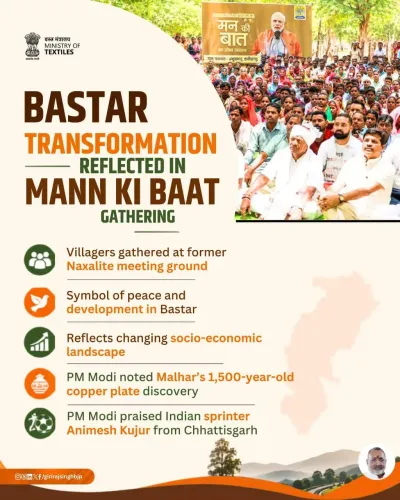
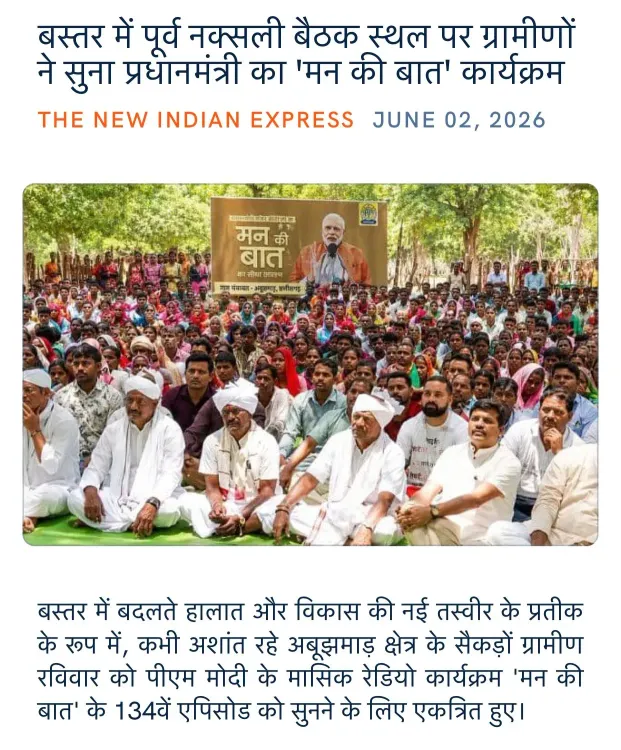
Villagers in Bastar, Chhattisgarh, gathered at a former Naxal meeting ground to listen to PM Modi's Mann Ki Baat — a moment Union Textiles Minister Giriraj Singh highlighted as emblematic of the region's transformation from insurgency to civic engagement.
Key Takeaways
Union Textiles Minister Giriraj Singh shared the post on June 2, 2026 via the NaMo App.
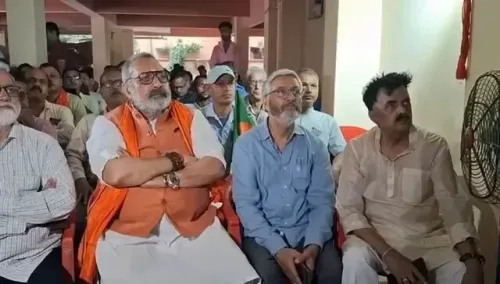
Villagers in Bastar, Chhattisgarh assembled at a former Naxal meeting site to listen to Mann Ki Baat .
Mann Ki Baat is PM Narendra Modi 's monthly radio address, launched in October 2014 .
Bastar has long been a centre of left-wing extremism and Maoist activity in central India.
The event reflects the government's strategy of pairing security operations with civic outreach in tribal districts.
The gathering carries symbolic significance as a site of insurgent control now used for democratic engagement with the state.
Union Textiles Minister Giriraj Singh on Tuesday, June 2, 2026, shared a report highlighting that villagers in Bastar, Chhattisgarh — once a stronghold of left-wing extremism — had gathered at a former Naxal meeting ground to listen to Prime Minister Narendra Modi's monthly radio programme, Mann Ki Baat.
Context
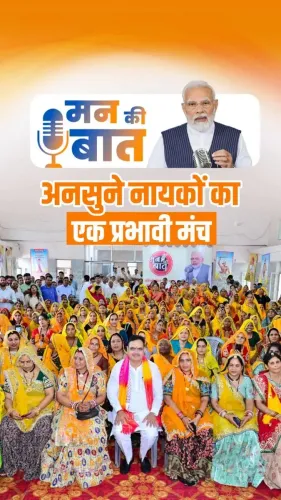
The post, shared via the NaMo App, carries a Hindi caption that translates to: 'Bastar mein poorv Naxali baithak sthal par graminon ne suna Pradhanmantri ka Mann ki Baat karyakram' ('Villagers in Bastar listened to the Prime Minister's Mann Ki Baat programme at a former Naxal meeting site'). The image accompanying the post depicts residents assembled at a location that was historically used by Maoists for their own gatherings, now repurposed as a site for democratic engagement with the state.
Bastar has for decades been at the centre of India's conflict with left-wing extremism, with large swathes of its forested terrain serving as operational zones for the Communist Party of India (Maoist). The symbolic weight of this gathering — citizens listening to the Prime Minister at a site once controlled by insurgents — is central to the narrative being amplified by the minister.
Policy Backdrop
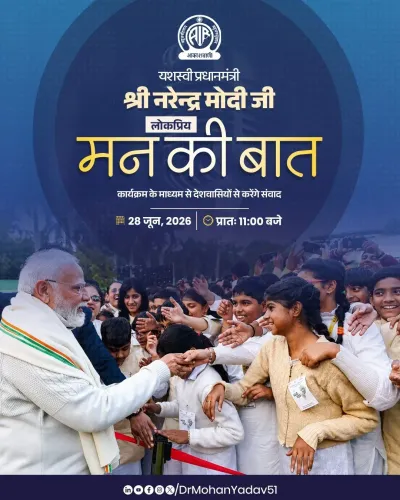
Mann Ki Baat was launched by Prime Minister Narendra Modi in October 2014 as a monthly unscripted radio address, broadcast on All India Radio, aimed at direct communication between the executive and ordinary citizens. The programme covers themes ranging from governance achievements and social initiatives to cultural milestones and citizen stories.
The outreach into conflict-affected tribal regions of Chhattisgarh reflects a broader government strategy that pairs security operations with communication and development efforts. Authorities have increasingly sought to integrate former Maoist-influenced areas into the mainstream by extending state services, infrastructure, and symbolic gestures of inclusion into those communities.
Stakeholders and Impact
The primary stakeholders are the tribal villagers of Bastar — communities that for years lived under the shadow of Maoist influence and were often cut off from state outreach. Their participation in a Mann Ki Baat listening session signals a shift in the social landscape of the region, even as rehabilitation and development work continues.
For the BJP and the central government, events like this carry both governance and political significance. They are used to demonstrate that security gains in Chhattisgarh — where anti-Naxal operations have intensified in recent years — are being followed by tangible civic reintegration. Giriraj Singh, a senior BJP leader and Lok Sabha MP from Begusarai, Bihar, amplifying this story reflects the party's interest in projecting the narrative of a reclaimed Bastar.
What's Next
Subsequent episodes of Mann Ki Baat are likely to remain a vehicle for the government to spotlight stories of transformation from former insurgency zones. Observers will watch whether organised listening sessions in Bastar and similar districts in Chhattisgarh are accompanied by announcements of rehabilitation schemes, infrastructure projects, or formal surrender-and-rehabilitation programmes for former Maoists.
The broader arc of counter-insurgency paired with civic outreach in central India's tribal belt will continue to be a key measure of whether lasting peace can be consolidated in regions that have seen decades of conflict.
Point of View
Not merely a law-and-order achievement. It fits a broader pattern in which the ruling party uses communication programmes and grassroots events to convert counter-insurgency progress into a political narrative of inclusive governance. The optics matter as much as the policy: a site once associated with anti-state mobilisation now hosting a direct address from the Prime Minister is a powerful inversion. Whether it is followed by measurable development outcomes in Bastar will determine how durable that narrative proves to be.
NationPress
20 Sept 2026
Frequently Asked Questions
What is Mann Ki Baat and when was it started?
Mann Ki Baat is a monthly radio address by Prime Minister Narendra Modi, launched in October 2014, in which he speaks directly to citizens on governance, social issues, and citizen stories. It is broadcast on All India Radio.
Why is the Bastar Mann Ki Baat event significant?
Bastar in Chhattisgarh has a long history of Maoist insurgency. Villagers gathering at a former Naxal meeting site to listen to the Prime Minister's programme symbolises a shift from insurgent influence to civic engagement with the state.
Who is Giriraj Singh and why did he share this post?
Giriraj Singh is the Union Minister of Textiles and a senior BJP leader serving as Lok Sabha MP from Begusarai, Bihar. He shared the post to highlight what the government presents as a transformation in formerly Maoist-dominated tribal areas of Chhattisgarh.
What is the government's strategy in Bastar and similar Naxal-affected areas?
The central government has combined intensified security operations against Maoists with development initiatives and communication outreach to reintegrate tribal communities in Chhattisgarh into the mainstream and reduce insurgent influence.
What should we watch for next regarding Bastar and Mann Ki Baat?
Observers will look for follow-up announcements on rehabilitation schemes, infrastructure projects, and formal surrender programmes in Bastar, as well as whether organised Mann Ki Baat listening events in conflict-affected zones become a regular feature of government outreach.