CM Himanta Pushes Grassroots Sport via Khel Maharan in Assam
Synopsis
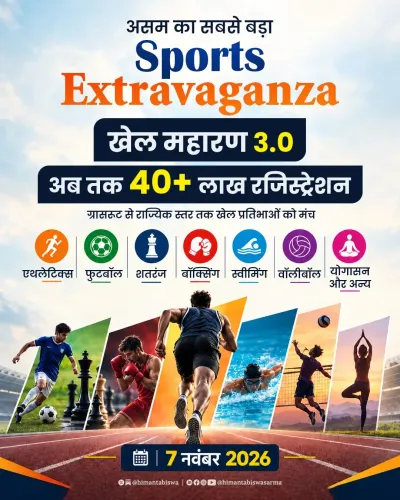
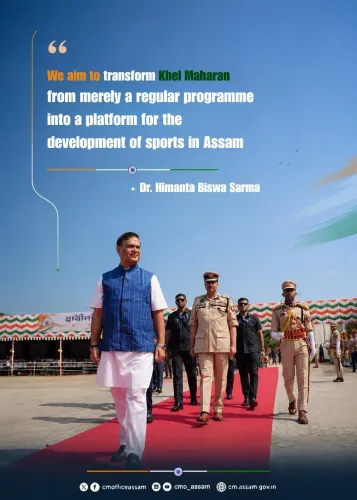
Assam Chief Minister Himanta Biswa Sarma highlighted Khel Maharan, a state initiative to bring competitive sport to local playgrounds, aiming to discover and nurture young athletic talent at the grassroots level across Assam.
Key Takeaways
Khel Maharan is the Assam government's initiative to promote sport at the local playground level and identify young talent early.
CM Himanta Biswa Sarma promoted the scheme on 4 November 2026 , emphasising grassroots access to play and competition.
The initiative complements the central Khelo India scheme, which has supported grassroots sports infrastructure across Indian states since 2017 .
Northeastern states , including Assam, have strong athletic traditions but have historically received limited formal sports infrastructure support.
Key details to watch include participation numbers, playground upgrade budgets, and a formal calendar for district-level competitions under Khel Maharan.
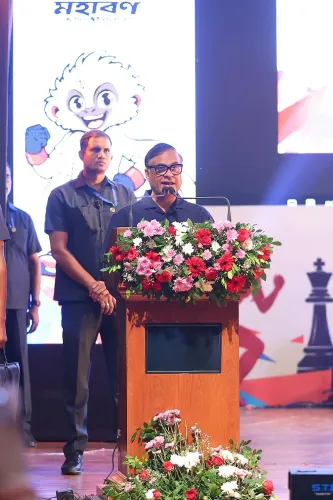
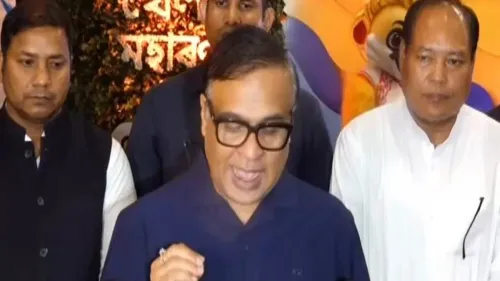
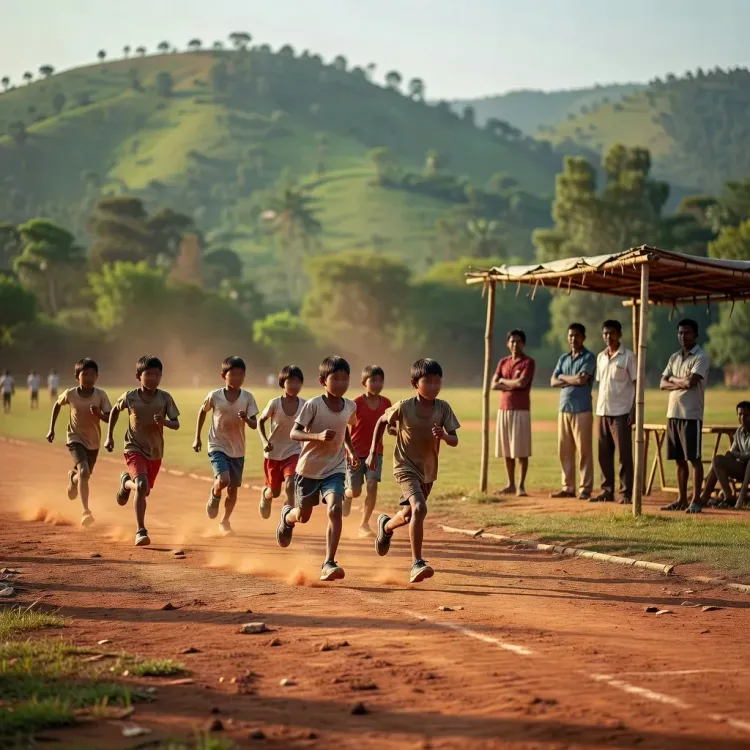
Every champion, the story goes, once kicked a ball on a dusty local ground — and Assam Chief Minister Himanta Biswa Sarma is betting that the next one is already out there, waiting for a stage. On Wednesday, 4 November 2026, Sarma took to X to champion Khel Maharan, the Assam government's initiative to carry competitive sport all the way down to the neighbourhood playground.
What Khel Maharan is trying to do
Khel Maharan is designed to give Assam's young athletes — particularly in rural and semi-urban pockets — structured access to play and competition at the most local level possible. The logic is simple: talent scouted at the district or state level often arrives too late; a grassroots circuit catches it earlier. Sarma framed it plainly: 'Every champion starts somewhere. Why not from your local playground?'
The initiative sits within a wider policy conversation that has gained momentum across Indian states since the central Khelo India scheme launched in 2017. That national programme seeded sports infrastructure and competitions across states, including Assam. Khel Maharan is the state's attempt to go even deeper — below the district, into the neighbourhood — to widen the funnel through which young talent flows upward.
Assam's bet on youth sport as a development lever
Under the current BJP-led government in Assam, sport has been framed as a youth-engagement and regional-development priority, not merely a recreational one. Northeastern states, historically underserved in national sporting infrastructure, have particular reason to invest: strong athletic traditions in disciplines ranging from football to combat sports have long outpaced the formal support systems available to young competitors in the region.
What to watch now: the rollout specifics — participation numbers, any state budget allocation for playground upgrades, and whether district-level competitions get a formal calendar under the Khel Maharan banner. Those details will determine whether the initiative is a durable programme or a well-intentioned signal.
The grassroots-to-podium pipeline
India's sporting ambitions at the national and international level increasingly depend on exactly this kind of early-identification infrastructure. When state schemes mesh effectively with central funding under Khelo India, the pipeline — local ground to state academy to national squad — becomes coherent. Assam's move reinforces that model and positions the state as an active participant in building it, one local playground at a time.
The champion, Sarma is saying, is already on that ground. The job now is to make sure the ground is good enough to find them.
Point of View
The political calculus is sharp: investing visibly in grassroots sport in a demographically young state signals both development intent and cultural ownership of a space that resonates deeply with voters. Whether Khel Maharan translates into durable infrastructure or remains a headline initiative will depend on whether budget allocations and implementation timelines follow the rhetoric.
NationPress
4 Nov 2026
Frequently Asked Questions
What is Khel Maharan in Assam?
Khel Maharan is an Assam government initiative designed to promote sport at the local playground level, giving young people across the state structured opportunities to play, compete, and get identified as talent early.
What did Himanta Biswa Sarma say about Khel Maharan?
CM Sarma said 'Every champion starts somewhere. Why not from your local playground?' — framing Khel Maharan as a programme to take sport to the grassroots and give Assam's young talent a chance to play and dream bigger.
How is Khel Maharan different from Khelo India?
Khelo India is a central government scheme launched in 2017 to support sports infrastructure and competitions nationally. Khel Maharan is Assam's state-level initiative aimed at going even deeper — to the neighbourhood playground — to widen the talent discovery funnel below the district level.
Which sports are covered under Khel Maharan Assam?
Specific sports covered under Khel Maharan have not been officially detailed in publicly available information; the scheme is broadly positioned as a grassroots multi-sport initiative targeting young athletes across Assam.
Why is grassroots sport important for northeast India?
Northeastern states like Assam have strong athletic traditions but have historically had limited formal sports infrastructure. Grassroots programmes help identify talent earlier, feeding state academies and eventually national squads, while also serving as a youth-engagement and regional-development tool.