Smriti Irani Highlights Citizen Stories from Mann Ki Baat 134
Synopsis
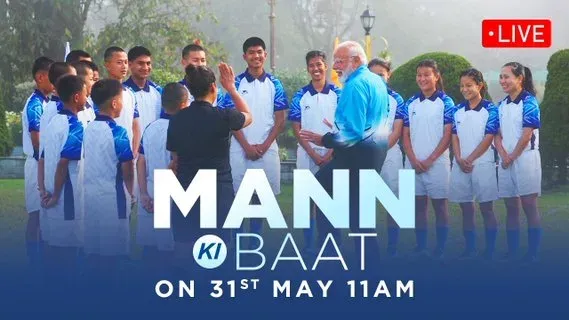
BJP leader Smriti Irani amplified highlights from the 134th Mann Ki Baat episode on 31 May 2026, spotlighting the Manorama river revival in Basti and educator Girija Amma's work, framing citizen resolve as the foundation of Viksit Bharat 2047.
Key Takeaways
BJP leader Smriti Irani shared highlights from the 134th Mann Ki Baat episode on 31 May 2026 .
The episode featured the Manorama river revival in Basti, Uttar Pradesh as an example of community-led environmental action.
Girija Amma was highlighted for instilling patriotism and service values among students.
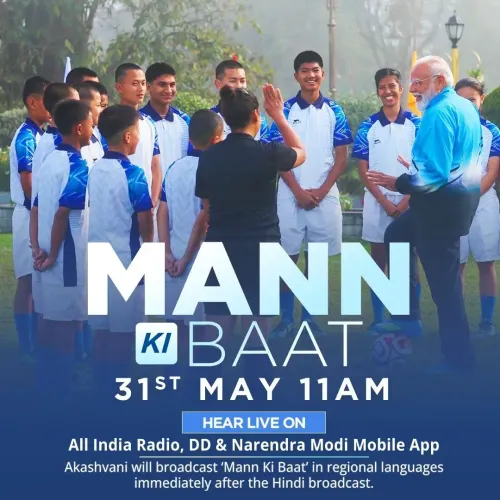
Mann Ki Baat has been a monthly programme since October 2014 , spotlighting grassroots citizen efforts.
The post ties local examples to the broader Viksit Bharat 2047 vision, emphasising Jan Bhagidari (people's participation) over resource-heavy state intervention.
Irani shared a YouTube livestream link of the episode, extending its reach on social media.
BJP leader Smriti Irani on Sunday, 31 May 2026, shared highlights from the 134th episode of Mann Ki Baat, Prime Minister Narendra Modi's monthly radio address, drawing attention to citizen-led initiatives across India that are driving grassroots change through resolve and collective participation.
Context
In her post, Irani summarised the episode's core message: that 'परिवर्तन की शुरुआत बड़े संसाधनों से नहीं, बल्कि एक दृढ़ संकल्प और सामूहिक प्रयास से होती है' ('change begins not with large resources, but with firm resolve and collective effort'). She cited two examples highlighted in the programme — the revival of the Manorama river in Basti, Uttar Pradesh, and the work of Girija Amma, who has been instilling values of patriotism and service among students.
Irani also shared a YouTube livestream link of the episode, amplifying the programme's reach through social media.
Policy Backdrop
Mann Ki Baat was launched by Prime Minister Modi in October 2014 as a monthly radio programme to spotlight citizen stories and connect government priorities with public participation. Over more than a decade, the programme has consistently featured local heroes — from environmental champions to educators — as embodiments of the government's Jan Bhagidari (people's participation) philosophy.
The river rejuvenation effort in Basti fits within a broader national push for community-driven environmental restoration, a theme that gained momentum alongside the Swachh Bharat Abhiyan launched in 2014. Value education initiatives like those attributed to Girija Amma reflect a recurring emphasis on instilling 'Rashtra Pratham' ('Nation First') sensibilities from the school level upward.
Stakeholders and Impact
The stories highlighted in the episode — and amplified by Irani — speak directly to local communities, students, and citizen volunteers who are positioned as the primary agents of the Viksit Bharat 2047 vision, the government's goal of making India a fully developed nation by its centenary of independence. By foregrounding individuals rather than institutional schemes, the narrative frames development as a shared civic responsibility.
Girija Amma's work among students and the community effort around the Manorama river serve as the episode's human anchors, illustrating how decentralised, low-resource initiatives can generate measurable local impact. Irani's post reinforces the view that such efforts are not peripheral but central to national progress.
What's Next
Future episodes of Mann Ki Baat are expected to continue surfacing similar citizen-led stories, deepening the programme's role as a platform for grassroots recognition. Parliamentary discussions on river rejuvenation funding and value-based education policy could reference examples like those from Basti as evidence of on-ground momentum. The consistent invocation of Viksit Bharat across such platforms signals that citizen participation will remain a central pillar of the government's communication ahead of key policy milestones.
Point of View
Which positions ordinary citizens — rather than government spending alone — as the engine of national development. By amplifying Mann Ki Baat's grassroots examples on social media, senior BJP leaders multiply the programme's reach beyond its radio audience, reinforcing the Viksit Bharat 2047 narrative at a retail level. The choice of a river revival and a value educator as exemplars is not incidental; both touch on environment and culture, two policy domains the government has consistently sought to associate with citizen ownership. This pattern suggests an ongoing effort to embed the 'Nation First' ethos in public discourse well ahead of future electoral and legislative cycles.
NationPress
14 Oct 2026
Frequently Asked Questions
What is Mann Ki Baat and how often does it air?
Mann Ki Baat is a monthly radio programme hosted by Prime Minister Narendra Modi, launched in October 2014, in which he highlights citizen stories and government priorities. It airs once a month and is broadcast nationally.
What did Smriti Irani post about Mann Ki Baat episode 134?
Smriti Irani shared highlights from the 134th Mann Ki Baat episode on 31 May 2026, drawing attention to the Manorama river revival effort in Basti, Uttar Pradesh, and the work of Girija Amma in instilling patriotism and service values among students.
What is the Manorama river revival project in Basti?
The Manorama river revival is a community-led effort in Basti district, Uttar Pradesh, aimed at restoring a local river through citizen participation, cited in Mann Ki Baat as an example of grassroots environmental action.
Who is Girija Amma and why was she mentioned in Mann Ki Baat?
Girija Amma was cited in the 134th Mann Ki Baat episode for her work in spreading values of patriotism and social service among students, representing the programme's focus on citizen-driven value education.
What is Viksit Bharat 2047?
Viksit Bharat 2047 is the Indian government's national vision to make India a fully developed country by 2047, the centenary of its independence, with citizen participation identified as a key pillar of achieving that goal.