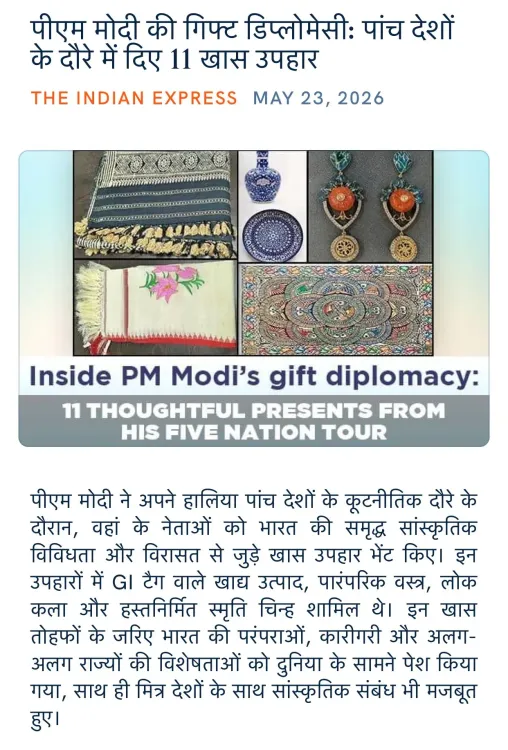
Giriraj Singh Highlights Modi's Gift Diplomacy on 5-Nation Tour
Synopsis
Union Textiles Minister Giriraj Singh on 23 May 2026 amplified PM Modi's gift diplomacy during a five-country tour, highlighting 11 specially chosen cultural gifts presented to foreign leaders — an approach that blends India's artisan heritage with high-level bilateral engagement.
Key Takeaways
Union Textiles Minister Giriraj Singh shared a post on 23 May 2026 spotlighting PM Modi's gift diplomacy during a five-country diplomatic tour.
PM Narendra Modi presented 11 specially chosen gifts to foreign counterparts during the tour, reflecting India's cultural heritage.
The post was shared via the NaMo App , the BJP-aligned platform used for official party and government communication.
India's practice of gifting culturally significant items during state visits has become more visible and systematised since 2014 .
As Textiles Minister , Singh has a direct institutional stake in promoting Indian handlooms and handicrafts through diplomatic channels.
Artisans, weavers, and craft cooperatives stand to benefit from the international visibility generated by such high-profile diplomatic gifting.
Union Textiles Minister Giriraj Singh on Saturday, 23 May 2026 shared a post spotlighting Prime Minister Narendra Modi's gift diplomacy during a five-country diplomatic tour, drawing attention to 11 specially chosen gifts presented to foreign counterparts as a reflection of India's cultural heritage and soft-power outreach.
Context
The post, shared via the NaMo App, highlighted the symbolic gifts PM Modi carried during a recent multi-nation foreign visit. Singh's amplification of the gesture underscores the ruling party's emphasis on cultural diplomacy as an instrument of statecraft. The practice of presenting handcrafted or regionally significant gifts during state visits has been a visible feature of India's foreign engagements under the current leadership.
As Union Textiles Minister, Giriraj Singh has a direct institutional interest in promoting Indian handicrafts, handlooms, and traditional artisanal products on the global stage — making his endorsement of gift-based diplomacy particularly resonant within his ministerial brief.
Policy Backdrop
India's use of culturally rooted gifts during bilateral visits traces back across successive governments, but has become more systematised and widely publicised since 2014, when the Modi government launched its 'Neighbourhood First' policy and began placing greater emphasis on high-level bilateral visits paired with cultural exchanges.
Gifts presented during state visits have typically drawn from India's traditional craft clusters — ranging from handwoven textiles and brassware to miniature paintings and indigenous artefacts — serving a dual purpose of relationship-building and export promotion for artisan communities. The Ministry of Textiles has been a key stakeholder in curating such outreach, given the sector's deep roots in India's cultural identity.
Successive diplomatic tours by PM Modi have attracted attention for the deliberate selection of gifts that reflect the host country's ties with specific Indian states or craft traditions, reinforcing a broader soft-power narrative.
Stakeholders and Impact
The beneficiaries of a robust gift-diplomacy framework extend well beyond the diplomatic corps. Artisans, weavers, and craft cooperatives across India gain visibility and potential market access when their products are presented at the highest levels of international engagement. The Ministry of Textiles, under Singh, has consistently advocated for greater integration of handloom and handicraft products into India's diplomatic toolkit.
For bilateral partners, the gesture signals cultural respect and an intent to deepen people-to-people ties alongside strategic or economic agreements. Diplomatic observers note that the choice of gifts often carries carefully calibrated messaging about shared history, trade interests, or regional connectivity.
What's Next
Details of the specific five-country itinerary and the complete list of 11 gifts are expected to generate further discussion in parliamentary and policy circles, particularly around protocols governing diplomatic expenditure and the role of Indian craft institutions in curating such selections. As India continues to expand its diplomatic footprint across multiple regions, the intersection of cultural promotion and foreign policy is likely to remain a prominent theme in the government's outreach strategy.
Point of View
He has a direct policy interest in projecting Indian handlooms and handicrafts onto the global stage, and state visits provide the most prestigious showcase available. The post fits into a broader BJP communication pattern of framing foreign policy achievements through a cultural-nationalist lens, reinforcing the idea that India's diplomatic identity is inseparable from its artisan heritage. For the government, gift diplomacy serves a dual purpose: it strengthens bilateral goodwill while simultaneously functioning as export promotion for craft clusters that are politically significant in states like Bihar, Uttar Pradesh, and West Bengal. Analysts will watch whether this renewed focus on cultural gifting translates into concrete policy support — such as GI-tag promotion or artisan procurement frameworks — for the sectors being showcased abroad.
NationPress
7 Oct 2026
Frequently Asked Questions
What is PM Modi's gift diplomacy?
PM Modi's gift diplomacy refers to the practice of presenting carefully chosen culturally significant items — such as handwoven textiles, traditional crafts, and indigenous artefacts — to foreign leaders during state visits, projecting India's soft power and artisan heritage on the global stage.
What gifts did PM Modi give during the five-nation tour?
According to the post shared by Union Textiles Minister Giriraj Singh, PM Modi presented 11 specially chosen gifts during a five-country diplomatic tour. The specific details of each gift and the countries visited have not been independently verified from established public records as of the post date.
Why did Giriraj Singh share this post about Modi's gifts?
As Union Textiles Minister, Giriraj Singh has a direct interest in promoting Indian handlooms and handicrafts internationally. Highlighting PM Modi's use of culturally significant gifts during diplomatic tours aligns with his ministry's mandate to elevate Indian craft traditions on the global stage.
How does India use gifts in diplomacy?
India has a long tradition of presenting gifts drawn from its traditional craft clusters — including handlooms, brassware, miniature paintings, and regional artefacts — during bilateral visits. This practice has become more systematised since 2014, serving both relationship-building and soft-power objectives.
What is the NaMo App?
The NaMo App is a BJP-aligned digital platform used for official party and government communication. Giriraj Singh shared the post about PM Modi's gift diplomacy via this platform on 23 May 2026 .