Giriraj Singh highlights Modi's 4,399 days and Bihar's transformation
Synopsis
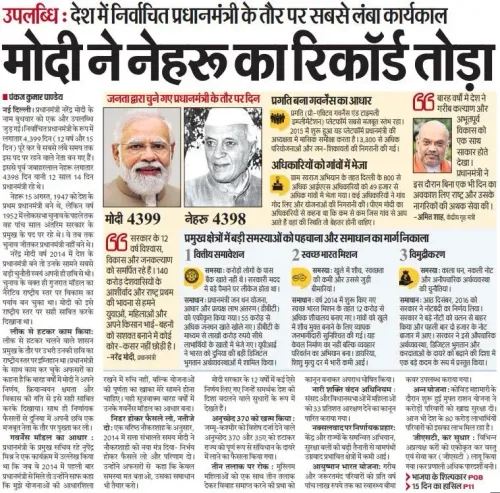
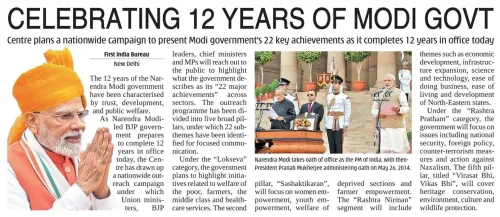
Union Textiles Minister Giriraj Singh on 12 June 2026 highlighted PM Modi's 4,399-day governance record through the lens of Mithila and Bihar, linking central schemes in roads, power and handlooms to the state's broader transformation narrative ahead of assembly elections.
Key Takeaways
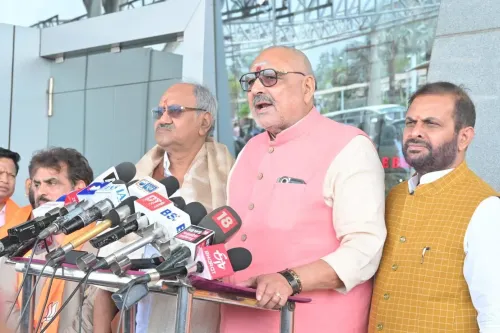
Union Textiles Minister Giriraj Singh shared the post on 12 June 2026 via the NaMo App .
The post frames PM Modi 's 4,399 days in office as a period of 'comprehensive transformation' for Bihar .
Mithila , known for Madhubani art and traditional handlooms, is positioned as a symbol of Bihar's rise to global relevance.
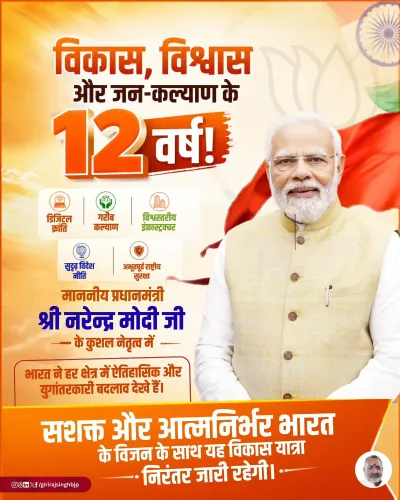
Central schemes such as Pradhan Mantri Gram Sadak Yojana , Make in India , and the National Handloom Development Programme underpin the development narrative cited.
Bihar assembly elections are anticipated in the near term, adding electoral significance to the messaging.
As Textiles Minister, Singh oversees the ministry directly responsible for handloom and MSME support schemes in Mithila .
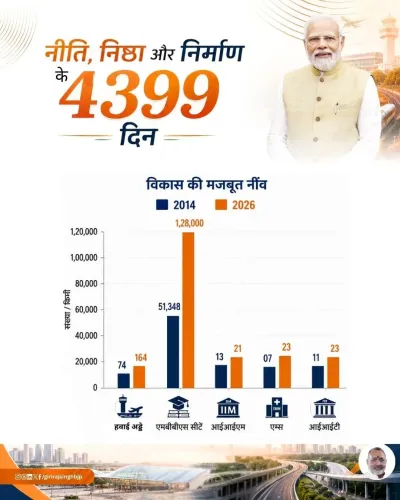
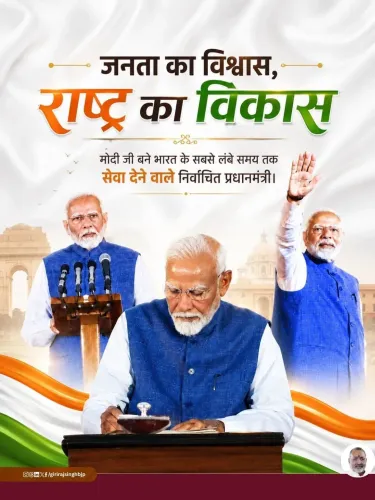
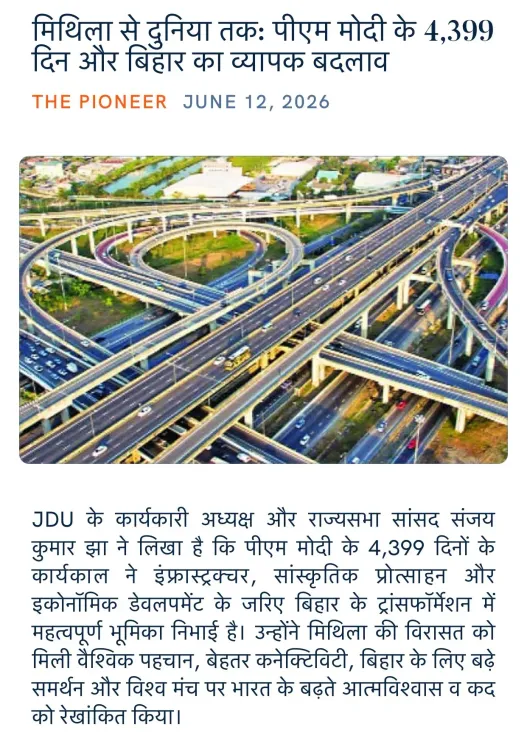
Union Textiles Minister Giriraj Singh on Friday, 12 June 2026 shared a piece tracing what he described as Prime Minister Narendra Modi's governance record over 4,399 days in office, anchoring the narrative in the cultural heartland of Mithila, Bihar, and projecting its reach to a global stage.
The post, shared via the NaMo App, carried the headline 'Mithila se duniya tak: PM Modi ke 4,399 din aur Bihar ka vyapak badlav' ('From Mithila to the world: PM Modi's 4,399 days and Bihar's comprehensive transformation'), signalling a deliberate effort to link Bihar's developmental arc directly to central governance since May 2014.
Context
Mithila is a culturally distinct region spanning northern Bihar and parts of Nepal, long celebrated for Madhubani art and traditional handloom weaving. Historically, the broader Bihar region has been associated with low industrialisation and high out-migration, making it a recurring focus of central government schemes aimed at reversing economic marginalisation in eastern India.
Singh, who represents Begusarai in the Lok Sabha, has consistently championed Bihar's development credentials in his public communications, often drawing a direct line between central policy and on-ground change in the state.
Policy Backdrop
Since 2014, successive central budgets have channelled resources into Bihar through programmes such as the Pradhan Mantri Gram Sadak Yojana for rural road connectivity and large-scale power-sector reforms aimed at universal electrification. The Make in India initiative, launched in September 2014, also targeted textiles and manufacturing clusters across eastern states.
For handloom weavers in Mithila specifically, schemes including the National Handloom Development Programme and PowerTex India, introduced between 2015 and 2017, provided financial and technical support to traditional craft clusters. As Textiles Minister, Singh oversees the ministry responsible for these very programmes, giving his messaging an institutional weight beyond routine political commentary.
Stakeholders and Impact
The communities most directly implicated in the narrative Singh invokes are Bihar's handloom weavers, MSME exporters, and rural residents who have been the stated beneficiaries of infrastructure and electrification drives over the past decade. Mithila's artisans, in particular, have seen growing international interest in Madhubani textiles, with export-oriented cluster development forming part of the Textiles Ministry's stated agenda.
The framing of local craft traditions within a 'world stage' narrative also carries soft-power implications, positioning Bihar's cultural output as a national export asset rather than a regional curiosity.
What's Next
With Bihar assembly elections anticipated in the near term, communications of this kind are likely to intensify, reinforcing the BJP's governance record in a key electoral state. Observers will watch for fresh Textiles Ministry allocations or new cluster development announcements for Mithila handlooms in the next Union Budget, which would give the political messaging a concrete policy anchor. Any such announcement would be significant for the estimated lakhs of weavers and artisans whose livelihoods depend on sustained central support.
Point of View
Tying a specific numerical milestone — 4,399 days — to tangible regional identity in order to make abstract policy feel locally rooted. By centering Mithila, a culturally resonant and geographically distinct sub-region, the messaging goes beyond generic Bihar development claims and targets a specific community with historical pride and electoral weight. As Textiles Minister, Singh brings institutional credibility to the handloom dimension of the narrative, blurring the line between ministerial communication and political campaigning. With Bihar elections on the horizon, expect this 'Mithila to the world' framing to become a recurring motif in BJP's eastern India outreach.
NationPress
29 Jul 2026
Frequently Asked Questions
What did Giriraj Singh post about PM Modi and Bihar?
Giriraj Singh shared a post on 12 June 2026 highlighting PM Modi's 4,399 days in office and describing Bihar's transformation during that period, with a focus on the Mithila region's cultural and economic rise.
What is the significance of Mithila in Bihar's development story?
Mithila is a culturally distinct region in northern Bihar known for Madhubani art and traditional handloom weaving. It has been a focus of central handloom schemes such as the National Handloom Development Programme and PowerTex India, which aim to support weavers and promote exports.
Which central schemes have supported Bihar's transformation since 2014?
Key schemes include the Pradhan Mantri Gram Sadak Yojana for rural roads, power-sector electrification drives, Make in India, the National Handloom Development Programme, and PowerTex India, all of which have had a presence in Bihar.
Why is Giriraj Singh talking about Bihar's development?
As Union Textiles Minister and Lok Sabha MP from Begusarai in Bihar, Singh frequently highlights central government achievements in his home state. The messaging also comes ahead of anticipated Bihar assembly elections, making it politically significant.
What are Bihar assembly election expectations in 2026?
Bihar assembly elections are expected in the near term, and political communications from BJP leaders emphasising central government achievements in the state are widely seen as part of the party's electoral groundwork.