EU's GSP+ warning to Pakistan puts $837mn trade lifeline at risk
Synopsis
The EU has put USD 837 million in trade privileges on the line for Pakistan over human rights failures — and the timing could not be worse. With China reportedly pulling back on CPEC disbursements and Washington being courted as a replacement, Pakistan's rulers are scrambling across three financial fronts while ordinary citizens in Balochistan, PoJK, and KP pay the price of decades of civil-military mismanagement.
Key Takeaways
The European Commission has warned Pakistan that USD 837 million in GSP+ tariff relief is at risk unless human rights conditions are met.
China has reportedly grown more cautious about disbursing funds for CPEC projects following security incidents involving Chinese officials in Pakistan.
Pakistan is actively seeking financial and strategic support from the United States to offset economic uncertainties.
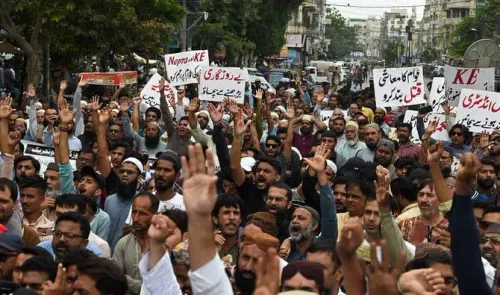
Citizens in Balochistan , PoJK , and Khyber-Pakhtunkhwa face chronic deprivation, infrastructure deficits, and restricted access to education and healthcare.
Critics argue that military dominance over civilian institutions has weakened democratic processes, judicial independence, and effective governance across Pakistan.
The European Commission has issued a formal warning that Pakistan risks losing preferential trade access under the Generalised Scheme of Preferences Plus (GSP+) unless it demonstrates measurable improvement in its human rights record, placing USD 837 million in annual tariff relief under threat, according to reports. The caution, directed at Islamabad, underscores Brussels' resolve to enforce conditionality on trade privileges — and arrives at a moment when Pakistan's economic foundations are already under severe stress.
What the EU Warning Means for Pakistan
The GSP+ framework grants developing nations reduced or zero tariffs on exports to the European Union in exchange for adherence to international conventions on human rights, labour standards, and governance. For Pakistan, the scheme is a critical lifeline for its textile sector, which accounts for a substantial share of the country's export earnings. A suspension or downgrade of GSP+ access could disrupt these flows, weaken fiscal inflows, and deepen an already fragile economic situation.
By linking tariff access to human rights compliance, Brussels is not merely asserting a procedural condition — it is, in effect, incentivising structural governance reforms that Islamabad has repeatedly deferred. Notably, this is not the first time the EU has flagged concerns; Pakistan has faced periodic scrutiny under the scheme for issues ranging from blasphemy laws to curbs on political opposition.
China Pulls Back, Washington Courted
The EU warning coincides with a reported cooling in China's financing posture toward Pakistan. Beijing, long Islamabad's primary infrastructure and funding partner through the China-Pakistan Economic Corridor (CPEC), has reportedly grown more cautious following security incidents involving Chinese officials on Pakistani soil. According to reports, this has led to delays and reassessments in the disbursement of funds for several critical projects.
Facing a narrowing of options, Islamabad is actively courting Washington for financial and strategic support, seeking to offset mounting economic uncertainties. Pakistan is thus left navigating a complex web of multilateral dependencies — maintaining EU trade privileges, managing a more guarded China, and pursuing American goodwill — all simultaneously.
The Human Cost of Governance Failure
While Pakistan's policymakers manoeuvre through international finance corridors, the burden of decades of administrative failure and civil-military mismanagement falls squarely on ordinary citizens. Rising inflation, erratic energy supplies, unemployment, and stalled social services have transformed poverty from a statistic into a daily lived reality for millions.
The dominance of military influence over civilian institutions has, critics argue, weakened democratic processes and judicial independence. Frequent crackdowns on political opposition — reportedly through arbitrary detention and military courts — have eroded public trust in governance and inhibited civic participation and free expression.
Bureaucratic inefficiency, corruption, and policy inconsistency further reduce the effectiveness of social programmes, according to reports. The underlying tension between Islamabad's civilian government and military headquarters at Rawalpindi frequently produces contradictory policies, where national projects, even when launched, fail to reach intended beneficiaries.
Regional Flashpoints: PoJK, Balochistan, and KP
The situation in Pakistan-occupied Jammu and Kashmir (PoJK) illustrates how local populations become entangled in broader geopolitical and administrative failures. The region has been cited for infrastructure deficits, limited access to education, and inadequate healthcare, compounded by military operations. Children miss schooling, livelihoods remain unstable, and communities endure prolonged insecurity — reflecting a stark disconnect between national priorities and ground-level needs.
In Balochistan, Pakistan's largest province by area, the paradox of resource wealth amid human deprivation is stark. Despite abundant reserves of minerals and natural gas, local communities suffer from chronic underdevelopment. Healthcare and educational institutions remain underfunded, infrastructure development is slow, and the security environment is tense due to ongoing insurgency and counterinsurgency operations. Ordinary Baloch citizens face economic exclusion compounded by the social impact of continuous military presence — a combination that has produced cycles of unrest, displacement, and deep-seated distrust.
Khyber-Pakhtunkhwa (KP), bordering conflict-prone tribal areas, mirrors many of these pressures. The region copes with the aftermath of prolonged conflict, volatile security conditions, and irregular developmental initiatives. Residents face inconsistent access to public services and limited economic opportunity, with historical underinvestment in human capital making ordinary life a struggle for basic dignity.
What Comes Next
The convergence of external financial pressure — from the EU's GSP+ conditionality, China's reported caution, and the uncertain outcome of overtures to Washington — leaves Pakistan's economic trajectory deeply uncertain. For the country's rulers, the immediate challenge is diplomatic and fiscal. For its citizens, particularly those in marginalised regions, the challenge is far more elemental: access to healthcare, education, employment, and security. Unless structural reforms translate into tangible improvements in governance and service delivery, economic growth — if and when it comes — is unlikely to reach those who need it most.
Point of View
Chinese caution, and American unpredictability — is not a crisis of bad luck but of structural dependency built over decades of deferred reform. The GSP+ warning is particularly pointed: Brussels is essentially telling Islamabad that trade access and governance are inseparable, a linkage Pakistan's civil-military establishment has resisted acknowledging. What mainstream coverage underplays is that the citizens of Balochistan, PoJK, and KP are not collateral damage in these geopolitical manoeuvres — they are the primary evidence that the system is failing. Until the power balance between Rawalpindi and Islamabad is honestly addressed, no amount of external financing will translate into durable development.
NationPress
17 Oct 2026
Frequently Asked Questions
What is the EU's GSP+ scheme and why does it matter for Pakistan?
The Generalised Scheme of Preferences Plus (GSP+ ) is an EU trade arrangement that grants developing countries reduced or zero tariffs on exports in exchange for compliance with international human rights and governance standards. For Pakistan, it provides access to USD 837 million in annual tariff relief, making it critical for the textile sector and overall export earnings.
Why has the European Commission warned Pakistan over GSP+?
The European Commission has cautioned that Pakistan's continued eligibility for GSP+ benefits is under review due to insufficient improvement in its human rights record at home, according to reports. A failure to meet required standards could result in suspension or downgrading of the trade privileges.
How has China's stance toward Pakistan changed recently?
China has reportedly become more cautious about disbursing funds for critical infrastructure projects in Pakistan, including under the China-Pakistan Economic Corridor (CPEC), following security incidents involving Chinese officials on Pakistani soil. This has led to delays and reassessments in project financing, according to reports.
How are ordinary Pakistanis affected by these governance and economic failures?
Millions of ordinary Pakistanis face rising inflation, erratic energy supplies, unemployment, and stalled social services as a result of decades of political instability and civil-military mismanagement. Citizens in regions such as Balochistan, PoJK, and Khyber-Pakhtunkhwa bear the heaviest burden, with limited access to healthcare, education, and economic opportunity.
What is the situation in Balochistan despite its natural resource wealth?
Balochistan, Pakistan's largest province by area, holds abundant mineral and gas reserves yet its population suffers from chronic underdevelopment, underfunded healthcare and education, slow infrastructure growth, and a tense security environment due to insurgency and counterinsurgency operations. Critics describe it as a paradox of plenty amid pervasive deprivation.