EU warns Pakistan: GSP+ trade access at risk over human rights failures
Synopsis
The EU has put Pakistan on formal notice: shape up on human rights or lose GSP+ trade privileges from 2027. A damning joint monitoring report documents regression on enforced disappearances, judicial independence, press freedom, and minority rights — with no prosecution of false blasphemy accusations on record. The economic stakes are significant, and the clock is now ticking.
Key Takeaways
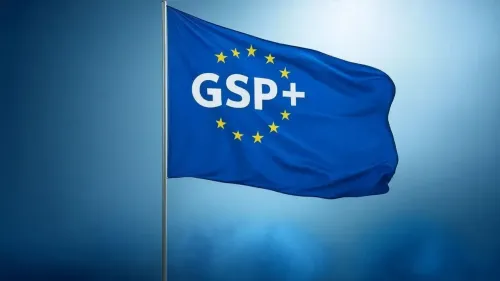
The European Union warned Pakistan on 17 July that its GSP+ trade benefits are at risk under revised rules effective from 2027 .
The EU's joint monitoring report covering 2023–2025 found Pakistan 'regressed in a number of areas' on human rights compliance.
Enforced disappearances and extrajudicial killings increased, with no accountability for perpetrators, according to the report.
Amendments to the Anti-Terrorism Act in Balochistan and Punjab were flagged for enabling arbitrary detention without trial or judicial review.
Blasphemy laws continue to be misused, disproportionately affecting minorities; no false accusation has ever been prosecuted.
Press freedom deteriorated despite nominal legal protections, with journalists facing intimidation, harassment, and violence.
The European Union has issued a formal warning to Pakistan, stating that the country's continued access to preferential trade benefits under the Generalised Scheme of Preferences Plus (GSP+) is contingent on meaningful compliance with its international human rights commitments, with revised rules taking effect from 2027. The warning, issued from Brussels on 17 July, follows the release of the EU's joint monitoring report covering the 2023–2025 period.
Key Findings of the EU Report
The joint assessment by the European Commission and the EU High Representative for Foreign Affairs and Security Policy found that Pakistan had 'regressed in a number of areas while positive change was limited' during the review period. Specific concerns were raised over the rule of law, shrinking civil society space, and a deteriorating environment for journalists and minorities.
According to the report, enforced disappearances and extrajudicial killings increased without accountability for perpetrators. Freedom of expression deteriorated further following amendments to cybercrime, anti-terrorism, and blasphemy laws — provisions that, the report noted, have been used against 'dissidents, human rights defenders, journalists, minorities and ordinary citizens,' including through criminal proceedings that may result in imprisonment, financial confiscation, or denial of travel.
Judicial Independence and Detention Concerns
The EU report criticised recent constitutional amendments in Pakistan for 'further undermining judicial independence,' compounding existing obstacles to fair trial and access to justice. It flagged amendments to the Anti-Terrorism Act and related provincial legislation in Balochistan and Punjab as particularly alarming, stating they 'appear to authorise preventive, arbitrary detention without charge or trial and without meaningful judicial review or effective remedies.'
The report warned that such legislation — combined with the Actions (in Aid of Civil Power) Regulation — risks 'blurring the line between legitimate law enforcement measures and enforced disappearances,' and could be applied in a discriminatory manner against minorities, political dissidents, journalists, students, and family members of victims.
Press Freedom and Blasphemy Law Misuse
Despite legislation nominally aimed at protecting journalists, media freedom in Pakistan continued to deteriorate, with the working environment described as 'increasingly hostile and dangerous.' The report cited documented cases of intimidation, administrative and judicial harassment, and physical violence against journalists covering sensitive issues.
On blasphemy laws, the EU assessment found that they continued to be misused for personal gain, with a 'negative impact' on freedom of expression and a disproportionate effect on religious minorities. Authorities cited existing legal safeguards and provincial Standard Operating Procedures as corrective measures, but the report found these 'prove to be ineffective,' noting persistent procedural delays, intimidation, and extrajudicial violence. Notably, there has been no prosecution of false accusations of blasphemy to date, according to the report.
Minority Persecution and Impunity
The report documented that religious, ethnic, and linguistic minorities in Pakistan continue to face discrimination, individual attacks, mob violence, and destruction of places of worship. Prosecution of hate crimes against minorities remained limited, the EU said, 'fostering impunity for perpetrators and fear among victims.' Pakistan's legal framework was assessed as failing to adequately recognise or protect minority communities.
What Happens Next
Under the revised GSP rules effective from 2027, Pakistan's preferential trade access to EU markets will be formally reviewed against its compliance record. The GSP+ framework provides significant tariff advantages to eligible countries, making it a substantial economic lever. Failure to demonstrate measurable progress on the cited shortcomings could place Pakistan's trade relationship with the EU under serious strain in the years ahead.
Point of View
And the 2027 revised rules remove the ambiguity that previously allowed inaction to go unpunished. What is striking is the specificity: the report names legislation, provinces, and categories of victims rather than offering vague concerns. Islamabad's standard response — citing legal safeguards and SOPs — was directly addressed and dismissed as ineffective. The real question is whether the threat of lost trade access will move a Pakistani establishment that has, so far, treated international human rights pressure as manageable noise.
NationPress
16 Oct 2026
Frequently Asked Questions
What is GSP+ and why does it matter for Pakistan?
GSP+ is the European Union's Generalised Scheme of Preferences Plus, which grants eligible developing countries significantly reduced or zero tariffs on exports to the EU. For Pakistan, it covers a wide range of goods including textiles, making it a major economic benefit. Loss of GSP+ access would substantially raise the cost of Pakistani exports to Europe.
Why has the EU warned Pakistan over its GSP+ status?
The EU's joint monitoring report for 2023–2025 found that Pakistan regressed on multiple human rights obligations tied to GSP+ eligibility, including increases in enforced disappearances, deteriorating press freedom, misuse of blasphemy laws, and arbitrary detention under anti-terrorism legislation. Under revised GSP rules effective from 2027, continued non-compliance could result in suspension of trade benefits.
What specific human rights violations did the EU report highlight?
The report flagged enforced disappearances and extrajudicial killings without accountability, amendments to cybercrime and anti-terrorism laws used against journalists and dissidents, arbitrary detention provisions in Balochistan and Punjab, misuse of blasphemy laws against minorities, and a hostile environment for media. It also cited constitutional amendments as undermining judicial independence.
What do the revised GSP rules from 2027 mean for Pakistan?
From 2027, the EU's revised GSP framework introduces stricter compliance benchmarks for beneficiary countries. Pakistan will need to demonstrate measurable progress on the shortcomings identified in the monitoring report to retain its preferential trade access. The 2027 deadline effectively sets a countdown for Islamabad to address the EU's concerns.
How has Pakistan responded to the EU's concerns?
According to the report, Pakistani authorities cited existing legal safeguards, provincial Standard Operating Procedures for blasphemy case handling, and judicial oversight as measures to address misuse. However, the EU assessment found these measures 'prove to be ineffective,' pointing to persistent procedural delays, intimidation, and the absence of any prosecution for false blasphemy accusations.