EU Report Questions Pakistan's Trade Status Amid Human Rights Concerns
Synopsis
A new report raises critical issues regarding Pakistan's human rights practices, suggesting the EU could suspend its GSP+ trade status if improvements are not made. The findings highlight serious violations affecting religious minorities and the overall human rights landscape in the country.
Key Takeaways
Pakistan's human rights record is under scrutiny .
Potential suspension of GSP+ trade status based on non-compliance.
Serious violations against religious minorities continue.
Concerns over Afghan refugees highlight broader human rights issues.
International commitments are being overlooked by Pakistani authorities.
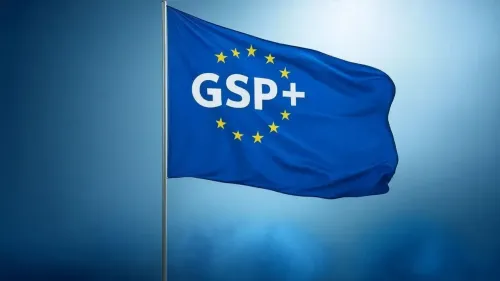
Brussels, April 4 (NationPress) A recent report underscores that Pakistan has consistently struggled to showcase sustained and structural improvements in its human rights practices, which is a crucial prerequisite of the European Union’s Generalised Scheme of Preferences Plus (GSP+) program. This situation persists even after over a decade of enjoying preferential trade access.
The findings from the 'European Times' indicate that, given the current trends, there is substantial justification for considering the suspension of Pakistan’s GSP+ status until it fulfills its obligations effectively.
The report references EU assessments and parliamentary inquiries, emphasizing Pakistan's ongoing violations, especially regarding blasphemy laws, enforced disappearances, the application of military courts to civilians, and the persecution of religious minorities.
It also highlights the severe circumstances faced by religious and other minorities in Pakistan, raising significant alarms. “EU monitoring reports and inputs from European civil society illustrate a pattern of systematic discrimination, harassment, and violence against groups such as Christians, Ahmadis, Hindus, and Shia Muslims, often exacerbated by incitement and a lack of legal accountability. The EU's GSP+ review pointed out that freedoms related to religion or belief and minority rights are regularly infringed upon, urging Islamabad to take decisive measures against blasphemy-related discrimination, false accusations, and instances of mob violence,” the report elaborates.
However, it notes that no substantial reforms regarding the blasphemy laws have been implemented, and high-profile cases continue to emerge, indicating that the state is either incapable or unwilling to safeguard its most vulnerable populations. Continuing to grant tariff privileges under these circumstances implies that the persecution of minorities does not incur any significant economic repercussions.
The report also draws attention to Pakistan’s disregard for its human rights commitments, mentioning ongoing issues like enforced disappearances, extrajudicial killings, and maltreatment in regions such as Balochistan and Khyber Pakhtunkhwa.
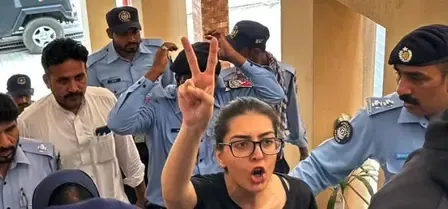
“International and EU-related evaluations characterize Balochistan as a 'human rights black hole', where security forces are alleged to systematically target political activists, students, and human rights defenders through abductions and clandestine detentions. Amnesty International's submission to the UN Human Rights Committee for 2024 emphasized continued enforced disappearances, torture, and crackdowns on peaceful protests, including the harassment of notable Baloch activist Mahrang Baloch,” the report states.
Such actions clearly violate commitments under the International Covenant on Civil and Political Rights (ICCPR) and the Convention Against Torture (CAT), yet these have gone unaddressed by Pakistani authorities despite ongoing international scrutiny.
The report also points out recent developments concerning Afghan refugees and migration policies, showcasing Pakistan's failure to meet crucial international obligations. “In late 2024 and 2025, authorities initiated a widespread campaign to forcibly return undocumented Afghans, including long-term residents and registered asylum seekers, under the threat of arrest, detention, and deportation. By December 2026, over 4.5 million Afghans had been expelled, amidst reports of police extortion, abuse, and denial of due process,” it added.
Point of View
It's imperative to highlight the ongoing struggle for human rights in Pakistan. The report sheds light on significant violations that undermine the country's international commitments. This situation necessitates a critical reassessment of trade privileges to ensure accountability and protection for vulnerable populations.
NationPress
10 Oct 2026
Frequently Asked Questions
What is the GSP+ status?
The GSP+ status is a trade arrangement that allows developing countries to export products to the EU with reduced tariffs, provided they adhere to certain human rights and environmental standards.
What are the main human rights concerns in Pakistan?
Key concerns include enforced disappearances, extrajudicial killings, blasphemy laws, and discrimination against religious minorities.
How does this report affect Pakistan's trade relations with the EU?
The report suggests that Pakistan's failure to improve its human rights record could lead to the suspension of its GSP+ status, impacting its trade relations with the EU.
What actions have been highlighted regarding Afghan refugees in Pakistan?
The report indicates a mass campaign to forcibly return undocumented Afghans, raising concerns about adherence to international obligations.
What international standards are Pakistan failing to meet?
Pakistan is failing to meet obligations under the International Covenant on Civil and Political Rights (ICCPR) and the Convention Against Torture (CAT).