EU split over Pakistan GSP+ status despite human rights failures
Synopsis
The EU has allowed Pakistan to double its exports to Europe under a human-rights-conditioned trade scheme since 2014 — yet critics and the European Parliament say Islamabad has failed the very conditions that justified the privilege. The Commission's reluctance to act, analysts argue, exposes a quiet trade-off: human rights accountability sacrificed for a security partnership.
Key Takeaways
Pakistan has held GSP+ status since 1 January 2014 , allowing roughly 66% of its EU-bound exports to enter duty-free.
Pakistan has reportedly doubled its exports to the EU since receiving the preferential arrangement.
The European Parliament has called for a reassessment of Pakistan's GSP+ status since 2021 , citing persistent human rights violations.
The European Commission has so far concluded it is satisfied with Pakistan's progress, creating an institutional split within the EU.
Independent reports indicate human rights conditions in Pakistan have deteriorated rather than improved since 2014, according to analysis by Eve Register on 9DASHLINE.com .
Analysts argue the EU is prioritising its counter-terrorism and counter-narcotics security partnership with Islamabad over GSP+ conditionality.
The European Union remains publicly divided over whether to revoke or suspend Pakistan's access to the Generalised Scheme of Preferences Plus (GSP+), a preferential trade arrangement that has allowed Islamabad to double its exports to Europe since the scheme's grant on 1 January 2014. Critics argue the EU is prioritising strategic interests over the integrity of its own human rights framework.
What GSP+ Gives Pakistan
Under the GSP+ arrangement, approximately 66 per cent of Pakistan's exports to the EU enter duty-free, a concession that has significantly boosted Islamabad's trade revenues over the past decade. The scheme is conditioned on beneficiary countries demonstrating measurable progress on 27 international conventions covering human rights, labour standards, and environmental protection.
The Human Rights Gap
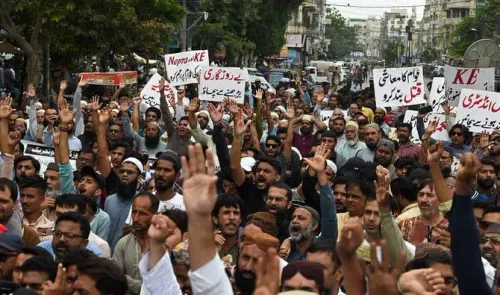
According to analysis published by the 9DASHLINE.com platform, authored by Eve Register, most independent assessments indicate that human rights conditions inside Pakistan have deteriorated rather than improved since the country secured GSP+ access. While Islamabad has ratified several reforms and established new institutional bodies on paper, implementation has reportedly lagged far behind commitments. The article notes that it is the enforcement of reform — not its ratification — that sits at the heart of the GSP+ bargain.
The Divide Inside the EU
The European Parliament has been calling for a formal reassessment of Pakistan's GSP+ status since 2021, citing persistent violations. Yet European Commission representatives have concluded, contrary to Parliament's concerns, that they are broadly satisfied with Pakistan's progress. This institutional divergence exposes a fundamental tension: whether Pakistan's perceived strategic value to Europe should override the conditions under which the trade privilege was granted.
Notably, this selective enforcement sets a precedent that could weaken the GSP+ framework's credibility for all other beneficiary nations currently bound by the same conditions.
The Strategic Calculus
The analysis argues that the EU views Pakistan as a critical partner in a volatile region, whose cooperation is considered essential for managing security threats — particularly in counter-terrorism and counter-narcotics trafficking. This geopolitical calculus has, according to the article, led to a softer application of GSP+ conditionality in Pakistan's case.
'The EU's reluctance to apply further pressure by leveraging Pakistan's GSP+ status suggests an ulterior motive — preserving its security partnership with Islamabad,' the article stated.
What Comes Next
The tension between the European Parliament and the European Commission over Pakistan's status is unlikely to resolve quickly. Rights groups and analysts are watching whether the EU's next periodic GSP+ review — which assesses all beneficiary countries — will compel the Commission to take a harder line, or whether strategic considerations will again prevail. A failure to act, critics warn, risks turning the GSP+ framework into a tool of selective diplomacy rather than a genuine human rights lever.
Point of View
The scheme's credibility as a human rights instrument is effectively finished.
NationPress
26 Oct 2026
Frequently Asked Questions
What is the EU's GSP+ scheme and why was Pakistan granted access?
The GSP+ is a preferential trade arrangement under which the EU grants duty-free access to exports from developing nations in exchange for their commitment to upholding 27 international conventions on human rights, labour rights, and environmental standards. Pakistan was granted GSP+ status on 1 January 2014, and has since doubled its exports to the EU, with around 66% of those exports entering free of European import duties.
Why is Pakistan's GSP+ status under scrutiny?
Pakistan's GSP+ status is under scrutiny because most independent reports indicate that human rights conditions inside the country have deteriorated rather than improved since 2014. The European Parliament has been calling for a formal reassessment since 2021, arguing that Islamabad has failed to meet the implementation standards — not just the ratification of reforms — that the scheme requires.
Why has the EU not revoked Pakistan's GSP+ status despite the concerns?
The European Commission has so far concluded it is broadly satisfied with Pakistan's progress, diverging from the European Parliament's position. Analysts argue the EU views Pakistan as a strategic partner for counter-terrorism and counter-narcotics cooperation, and that preserving this security relationship has taken precedence over strict enforcement of GSP+ human rights conditions.
What is the risk of the EU's selective enforcement of GSP+ conditions?
Selective enforcement undermines the credibility of the entire GSP+ framework. Other beneficiary nations that are held to the same conditions may question why the rules apply unevenly, weakening the scheme's value as a genuine human rights instrument and turning it into a tool of strategic diplomacy.
What happens at the next GSP+ review?
The EU conducts periodic reviews of all GSP+ beneficiary countries. Rights groups and analysts are watching whether the next review will compel the European Commission to take a harder line on Pakistan, or whether geopolitical considerations will again lead to a continuation of the status quo.