European Leaders Demand Enhanced Oversight of Pakistan's GSP Plus Trade Status
Synopsis
Amid increasing concerns about human rights abuses, European politicians at the UN Human Rights Council have called for a thorough review of Pakistan's GSP Plus status. Key figures highlight systemic violations and the plight of minorities, raising urgent questions about the country's trade privileges.
Key Takeaways
European leaders are urging a review of Pakistan's GSP Plus status.
Human rights violations, particularly against minorities, are a major concern.
Imran Khan's detention exemplifies broader repression in the country.
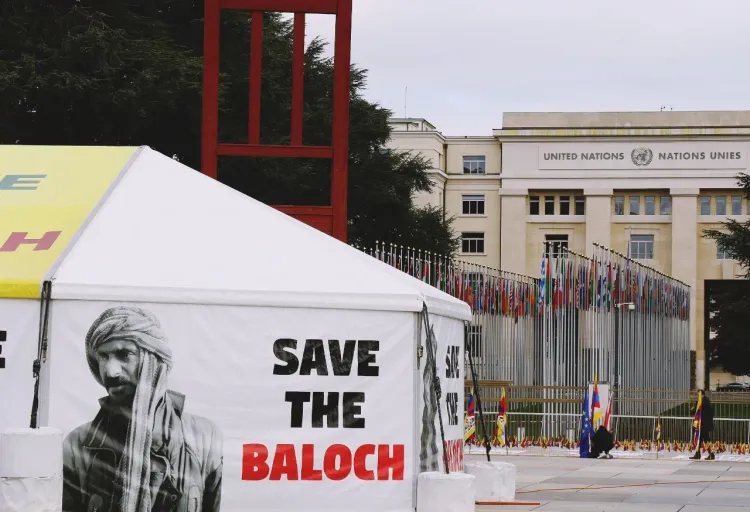
Balochistan suffers severe human rights abuses that persist across administrations.
Calls for accountability highlight the intersection of trade and human rights.
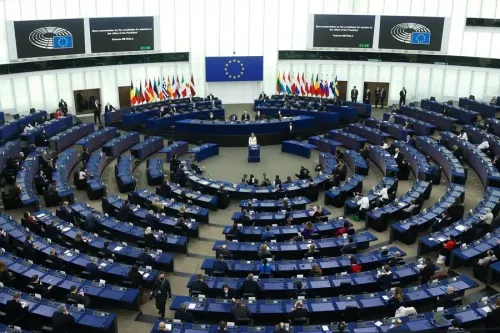
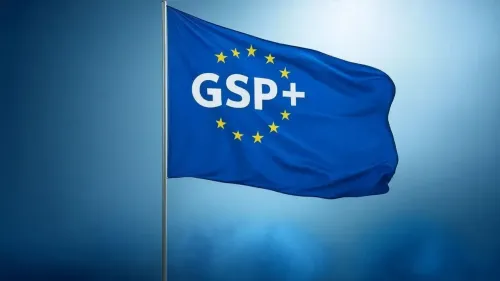
Geneva, March 28 (NationPress) A coalition of European lawmakers, activists, and political figures at the 61st session of the UN Human Rights Council in Geneva has advocated for more stringent oversight of Pakistan's unique trade privileges under the Generalised Scheme of Preferences Plus (GSP Plus), amid rising alarm over the country's deteriorating human rights situation.
According to a report from EU Today, a discussion named ‘Pakistan’s GSP+ status: human rights conditionality, treaty obligations and accountability’ revealed serious allegations concerning religious discrimination, political oppression, enforced disappearances, and the persistent failure of successive Pakistani administrations to protect fundamental rights.
Nikolaos Vrettos, a parliamentarian from Greece, emphasized the dire circumstances faced by religious minorities, particularly Christians, asserting that Pakistan's blasphemy laws serve as a tool that can incite mob violence, wrongful imprisonment, and a climate of perpetual fear, as reported.
“The situation in Pakistan is exceptional and warrants our focused attention, especially given the violence and the impunity enshrined in laws and policies that the government refuses to amend,” Vrettos was quoted as saying by EU Today.
During the session, Kasim Khan, the son of former Pakistani Prime Minister Imran Khan, also voiced his concerns and described his father's imprisonment in stark detail.
“My father, Imran Khan, has been incarcerated for over 960 days in a cramped solitary confinement cell, filled with insects and under constant surveillance,” Kasim stated.
Kasim argued that his father's predicament should not be perceived as an isolated case, but rather as a prominent example of a broader trend of repression in Pakistan since 2022.
He pointed out that “arbitrary detention, lack of family contact, inadequate medical care, and the trial of civilians in military courts” contradict Pakistan's commitments under the GSP+ framework.
Geopolitical analyst Raphael Kalyviotis focused his remarks on the ongoing persecution of Christians and the implications of blasphemy laws, stating, “The systematic targeting of Christians in Pakistan is not merely a local issue; it represents a fracture in global peace, a spreading contagion of intolerance.”
The report highlights that the “most politically sensitive intervention” came from Naseem Baloch, chairman of the Baloch National Movement, who expanded the dialogue beyond religious freedom and the ongoing tensions between Imran Khan's supporters and the Pakistani government.
“For decades, those in Balochistan have endured systematic and extensive human rights violations,” he remarked.
He referenced enforced disappearances, extrajudicial killings, arbitrary detentions, and torture, presenting data that documented 1,355 enforced disappearances and 229 extrajudicial killings in 2025 alone in Balochistan, with additional cases already reported this year.
Baloch emphasized that the oppression in Balochistan has continued under various administrations, irrespective of who held power in Islamabad, adding that during Imran Khan's tenure, “the suffering of Balochistan's population did not cease.”
The weight of these statements was further accentuated by the presence of Khan's son and one of his former ministers during the discussion.
Baloch stressed that many members of Khan's political party are now facing similar abuses that Baloch activists, students, and political workers have experienced for years.
“When injustice is overlooked because the victims are marginalized or politically inconvenient, it does not disappear; it proliferates,” EU Today reported Baloch as stating.
Point of View
It is clear that the international community is increasingly concerned about the implications of Pakistan's GSP Plus status in light of its human rights record. This situation calls for a careful examination of trade privileges and accountability mechanisms to ensure that human rights are upheld.
NationPress
20 Sept 2026
Frequently Asked Questions
What is the GSP Plus status?
The GSP Plus status is a trade scheme provided by the EU that allows developing countries to benefit from reduced tariffs on their exports, contingent upon their adherence to human rights and environmental standards.
Why are European politicians concerned about Pakistan's GSP Plus status?
Concerns have emerged due to allegations of severe human rights violations, including religious persecution and political repression, which contradict the conditions required for GSP Plus eligibility.
What are blasphemy laws in Pakistan?
Blasphemy laws in Pakistan are legal provisions that impose severe penalties for actions considered disrespectful towards religious sentiments, often leading to mob violence and wrongful imprisonment.
What are the human rights issues in Balochistan?
Balochistan faces systemic human rights violations, including enforced disappearances, extrajudicial killings, and arbitrary detention, as highlighted by activists and human rights organizations.