CM Fadnavis Signals Advanced Cancer Care Push for Maharashtra
Synopsis
The Chief Minister's Office of Maharashtra on 17 July 2026 signalled that state residents will receive access to advanced cancer treatment, tagging CM Devendra Fadnavis. The move points to a push to decentralise cutting-edge oncology care beyond Mumbai to districts across the state.
Key Takeaways
The Chief Minister's Office of Maharashtra posted on 17 July 2026 promising advanced cancer treatment access for the state.
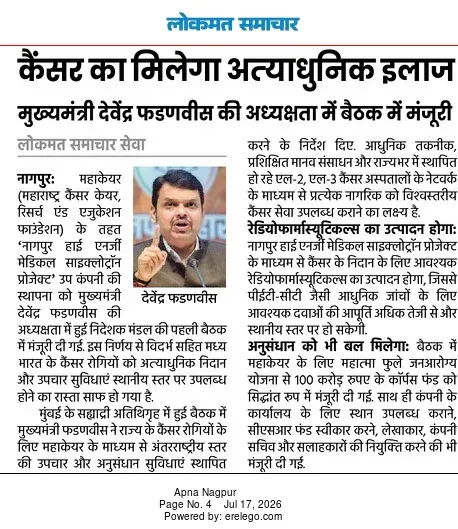
The post used the phrase 'कैंसर का मिलेगा अत्याधुनिक इलाज' — 'Advanced treatment for cancer will be available.' Chief Minister Devendra Fadnavis was directly tagged, indicating top-level ownership of the initiative.
Maharashtra has historically collaborated with central institutes such as Tata Memorial Centre to decentralise oncology services.
Patients in interior regions like Vidarbha , Marathwada , and the Konkan belt stand to benefit most from any district-level rollout.
Formal details on facilities, equipment, and budget allocations are yet to be announced by the state health department.
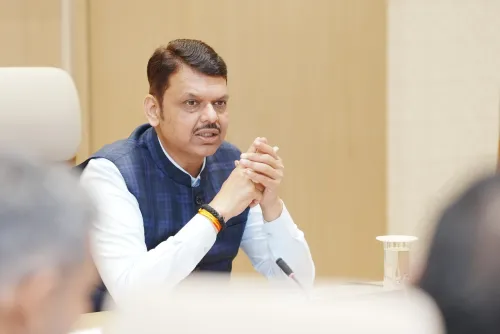
The Chief Minister's Office of Maharashtra posted on X (formerly Twitter) on Friday, 17 July 2026, signalling that residents of the state will gain access to cutting-edge cancer treatment, tagging Chief Minister Devendra Fadnavis in the announcement. The post, which carried one image, used the phrase 'कैंसर का मिलेगा अत्याधुनिक इलाज' — translated as 'Advanced treatment for cancer will be available' — indicating a forthcoming push to upgrade oncology care in Maharashtra.
Context
The announcement arrives as Maharashtra grapples with a significant burden of cancer cases spread across its urban and rural populations. While Mumbai hosts world-class institutions, patients from districts far from the metro have long faced the hardship of travelling hundreds of kilometres for specialised oncology care. The CMO's post signals intent to address this disparity by bringing advanced treatment closer to patients across the state.
Chief Minister Devendra Fadnavis has, across his terms in office, emphasised infrastructure upgrades and health-sector improvements as pillars of Maharashtra's governance agenda. The tagging of his personal handle alongside the CMO account underscores that this initiative carries direct political and administrative ownership at the highest level.
Policy Backdrop
India's National Cancer Control Programme, established in 1975, laid the foundation for expanding cancer registries, early detection drives, and treatment facilities across states. Maharashtra has historically built on this framework by collaborating with central institutes to decentralise advanced oncology services beyond Mumbai. Tata Memorial Centre, the premier autonomous cancer research and treatment institute in Mumbai, has been a key anchor in the state's oncology ecosystem, offering advanced radiotherapy, chemotherapy, and surgical oncology.
State governments across India have incrementally established regional cancer centres and upgraded radiotherapy units to reduce the patient load on metropolitan hospitals. A renewed push by the Maharashtra government would align with this broader national pattern of decentralising specialised care to tier-2 and tier-3 cities.
Stakeholders and Impact
The most direct beneficiaries of any expanded cancer-care infrastructure would be patients in Maharashtra's interior districts — including those in Vidarbha, Marathwada, and the Konkan belt — who currently depend on referrals to Mumbai or Pune for advanced treatment. District health services would also see their capacity strengthened if new equipment or trained oncology staff are deployed at the regional level.
For the state's public health system, improved access to radiotherapy and chemotherapy units at district hospitals could translate into earlier-stage diagnoses and better survival outcomes. Civil society groups working in cancer awareness have long argued that geography should not determine a patient's prognosis.
What's Next
Observers will watch closely for formal announcements from the Maharashtra health department detailing specific facilities, equipment upgrades, or budgetary allocations tied to this initiative. State budget sessions and health department press briefings are the most likely forums where concrete timelines and district-level rollout plans would be disclosed.
If the government follows through with a structured programme, it could set a benchmark for other large Indian states seeking to decentralise advanced oncology care — and reinforce CM Fadnavis's governance credentials ahead of future electoral cycles.
Point of View
The government frames advanced cancer care as a flagship commitment rather than a routine departmental update. This fits a wider pattern among state governments of using social media to stake out health-sector credentials before formal scheme launches. The focus on 'advanced' treatment signals an ambition to go beyond primary-care upgrades and invest in radiotherapy and surgical oncology infrastructure — a costlier but electorally resonant promise. Whether the announcement translates into measurable district-level outcomes will depend on budget follow-through and inter-departmental coordination with central health bodies.
NationPress
15 Oct 2026
Frequently Asked Questions
What did the Maharashtra CMO announce about cancer treatment?
The Chief Minister's Office of Maharashtra posted on 17 July 2026 that advanced cancer treatment will be made available in the state, tagging CM Devendra Fadnavis in the announcement. Specific details of the scheme or facilities have not yet been formally disclosed.
Which cancer treatment facilities are available in Maharashtra?
Maharashtra's most prominent cancer facility is Tata Memorial Centre in Mumbai, a premier autonomous institute offering advanced radiotherapy, chemotherapy, and surgical oncology. The state also has regional cancer centres and district hospitals with varying oncology capabilities.
Will advanced cancer treatment be available outside Mumbai in Maharashtra?
The CMO's announcement suggests an intent to expand access beyond Mumbai, which aligns with Maharashtra's broader policy of decentralising specialised health services to tier-2 and tier-3 cities. Formal rollout details for districts are awaited.
What is the National Cancer Control Programme in India?
The National Cancer Control Programme was established by the Government of India in 1975 to expand cancer registries, promote early detection, and strengthen treatment facilities across states. Maharashtra has built on this framework through collaborations with central institutes.
Who is Devendra Fadnavis and what is his role in Maharashtra health policy?
Devendra Fadnavis is the Chief Minister of Maharashtra, having served multiple terms focused on state governance, infrastructure, and health-sector improvements. He was directly tagged in the CMO's cancer care announcement, indicating personal ownership of the initiative.