CM Rekha Gupta Hails Launch of India's First Hydrogen Train from Jind
Synopsis
Delhi Chief Minister Rekha Gupta on 17 July 2026 hailed the launch of India's first indigenous hydrogen train from Jind, Haryana — her childhood home — crediting PM Modi's leadership and linking the milestone to Delhi's own green mobility push through metro expansion and EV infrastructure.
Key Takeaways
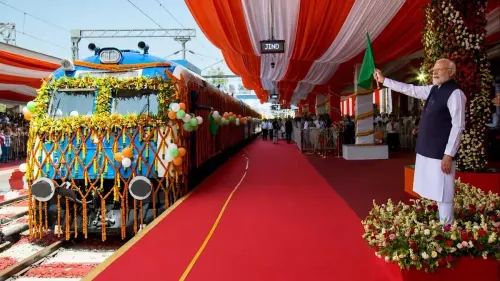
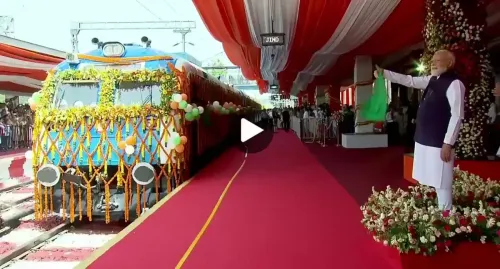
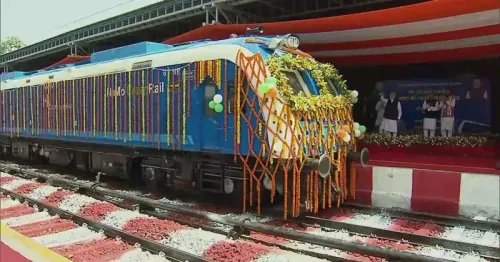
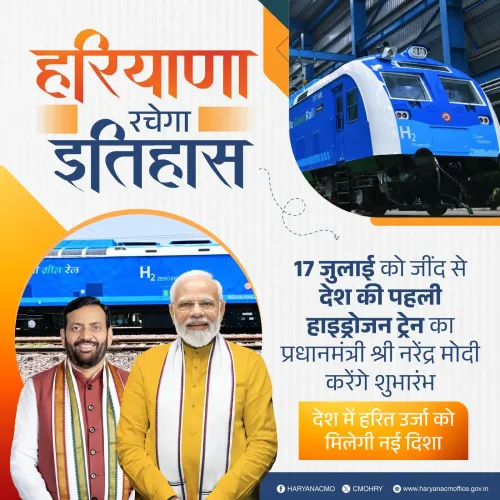
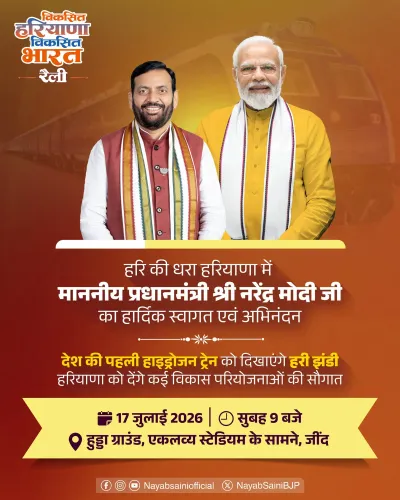
India's first indigenous hydrogen train was launched from Jind, Haryana on 17 July 2026 .
Delhi CM Rekha Gupta congratulated Haryana residents and called Jind her childhood hometown, adding personal significance to the occasion.
The launch is aligned with the National Green Hydrogen Mission , introduced in January 2023 to scale green hydrogen in transport.
Indian Railways has been developing hydrogen fuel-cell technology through R&D programmes since 2021 .
CM Gupta linked the milestone to Delhi's parallel green push: metro expansion , electric buses , and EV infrastructure .
The initiative sits within the Atmanirbhar Bharat framework and India's net-zero target of 2070 .
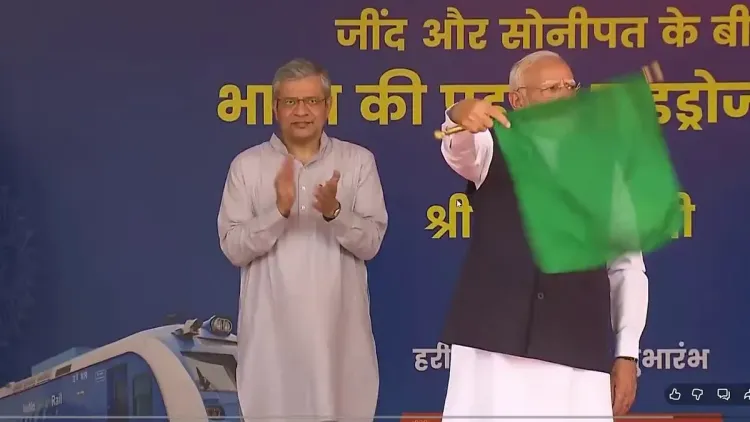
Delhi Chief Minister Rekha Gupta on Friday, 17 July 2026, congratulated residents of Haryana on the launch of what she described as India's first indigenous hydrogen train, flagged off from Jind — a district she called her hometown — calling it a historic moment for the nation's green energy journey.
Context
Posting on X, CM Gupta wrote: 'समस्त हरियाणावासियों को भारत की पहली स्वदेशी हाइड्रोजन ट्रेन के शुभारंभ पर हार्दिक बधाई' ['Heartfelt congratulations to all residents of Haryana on the launch of India's first indigenous hydrogen train']. She added a personal note, saying the soil of Jind, where she spent her childhood, had become the starting point of a new journey for India's future. The post carried the hashtags #HydrogenTrain and #भारत_की_पहली_हाइड्रोजन_ट्रेन.
Gupta credited Prime Minister Narendra Modi's 'visionary leadership' for steering India into a new era of innovation, self-reliance, and green energy, describing the hydrogen train from Jind as a symbol of 'Viksit Bharat's pace, resolve, and capability.'
Policy Backdrop
The launch aligns with the National Green Hydrogen Mission, unveiled in January 2023, which set out to scale domestic production and deployment of green hydrogen across sectors including transport. Indian Railways has been developing hydrogen fuel-cell technology for passenger services through successive R&D programmes and budget allocations since 2021.
India's decarbonisation strategy for rail transport is part of the broader Atmanirbhar Bharat framework, which links indigenous manufacturing capability with the country's commitment to reaching net-zero emissions by 2070. A domestically developed hydrogen train would mark a significant milestone in that trajectory.
Stakeholders and Impact
Haryana residents and railway passengers stand to be the immediate beneficiaries of cleaner, emission-free rail connectivity if the hydrogen train enters regular service. The launch from Jind — a tier-2 Haryana district — signals an intent to extend green mobility beyond metropolitan corridors.
CM Gupta also drew a direct line to Delhi, noting that the capital is reinforcing the Viksit Bharat vision through metro expansion, electric buses, EV infrastructure, and cleaner public transport — all under the Prime Minister's leadership. Delhi commuters and the broader Delhi-NCR region are therefore positioned as parallel stakeholders in this green mobility push.
What's Next
Attention will now turn to whether Indian Railways announces further hydrogen train rakes on additional routes, and how quickly the technology can be scaled beyond the initial demonstration. Integration of Delhi-NCR's expanding EV charging network and metro extensions with emerging green-hydrogen supply chains will be a key marker of policy follow-through.
For CM Gupta, the post also serves as a political bridge between her Delhi portfolio and her Haryana roots — a signal that the BJP's green infrastructure narrative is being woven across both state and national platforms ahead of future electoral cycles.
Point of View
Electric buses, and EV infrastructure is not incidental; it positions her administration as an active co-author of the Centre's green mobility narrative rather than a passive beneficiary. This pattern of state-level leaders amplifying central schemes while inserting local colour has become a defining feature of BJP's coordinated communication strategy ahead of urban elections. The hydrogen train launch, if it sustains operational credibility, could become a durable symbol in that playbook.
NationPress
17 Jul 2026
Frequently Asked Questions
What is India's first indigenous hydrogen train and where was it launched?
India's first indigenous hydrogen train was launched from Jind, Haryana on 17 July 2026 . It uses domestically developed hydrogen fuel-cell technology and is operated by Indian Railways as part of the country's green transport push.
What did Delhi CM Rekha Gupta say about the hydrogen train launch?
CM Rekha Gupta congratulated all Haryana residents and called the launch a 'historic moment of pride and confidence' for Haryana and India. She noted personal significance as Jind is her childhood hometown, and credited PM Narendra Modi's leadership for the milestone.
What is the National Green Hydrogen Mission?
The National Green Hydrogen Mission was launched by the Central government in January 2023 to accelerate domestic production and use of green hydrogen across sectors including transport, supporting India's net-zero goal by 2070.
How is Delhi connected to the hydrogen train initiative?
CM Rekha Gupta stated that Delhi is reinforcing the same Viksit Bharat vision through metro expansion , electric buses , and EV infrastructure , positioning the capital as a parallel driver of India's green mobility agenda.
What is Viksit Bharat and how does the hydrogen train relate to it?
Viksit Bharat ('Developed India') is the Central government's overarching development vision. The hydrogen train from Jind has been described by CM Gupta as a symbol of 'Viksit Bharat's pace, resolve, and capability,' linking indigenous transport technology to national self-reliance goals.