Chirag Paswan addresses GNIOT PGDM orientation in Greater Noida
Synopsis
Union Food Processing Minister Chirag Paswan attended the PGDM 2026–28 orientation at GNIOT Institute of Management Studies in Greater Noida as chief guest on 18 July 2026, urging students to embrace quality education, innovation and ethical leadership as pillars of the Viksit Bharat vision.
Key Takeaways
Chirag Paswan attended the PGDM batch 2026–28 orientation at GNIOT Institute of Management Studies, Greater Noida on 18 July 2026 as chief guest.
He addressed students, parents and faculty, calling youth power, quality education, innovation and ethical leadership the 'greatest assets of a developed India.' His remarks aligned with the Viksit Bharat vision targeting India's transformation into a developed nation by 2047 .
The address connects to the National Education Policy 2020 , which prioritises multidisciplinary learning, skill integration and values-based education.
As LJP (Ram Vilas) national president, Paswan's campus outreach also reflects sustained NDA engagement with youth and higher-education audiences in Uttar Pradesh .
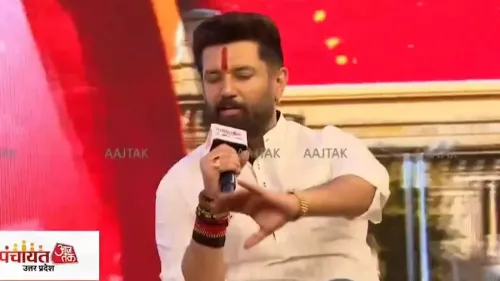
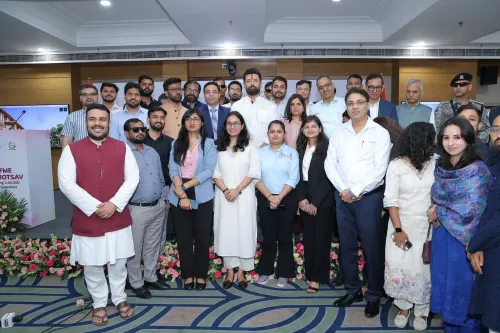
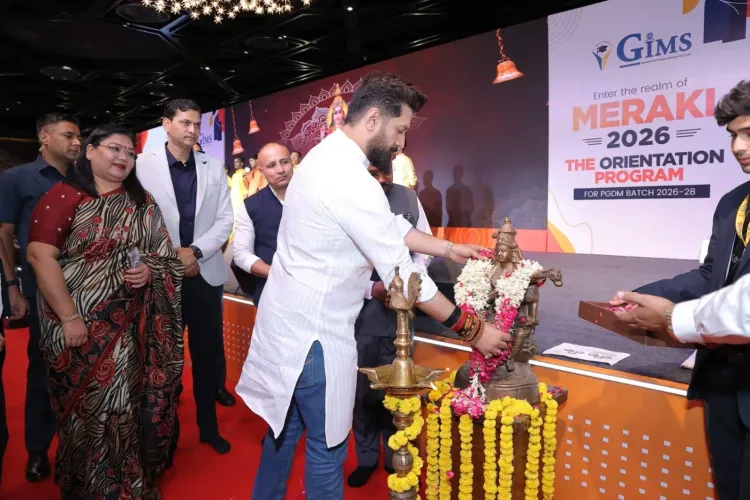
Union Food Processing Minister Chirag Paswan attended the orientation programme of the PGDM batch 2026–28 at GNIOT Institute of Management Studies in Greater Noida as chief guest on Saturday, 18 July 2026, addressing students, parents and faculty on the role of youth in national development.
Speaking at the event, Paswan said, 'Yuva shakti, guṇavattāpūrṇa śikṣā, navācār aur naitik netṛtva' — 'Youth power, quality education, innovation and ethical leadership are the greatest assets of a developed India.' He expressed confidence that the incoming batch would contribute meaningfully to nation-building through knowledge, skill and resolve, and extended his best wishes to all newly enrolled students for a bright and successful future.
Context
GNIOT Institute of Management Studies is a private management institution based in Greater Noida, Uttar Pradesh, offering PGDM and other postgraduate programmes. Orientation programmes at such institutions typically mark the formal induction of a new academic cohort and bring together students, guardians and faculty for the first time. The PGDM batch 2026–28 represents the next generation of management professionals entering a rapidly evolving economic landscape.
Paswan's presence as chief guest placed the event within the broader political and policy communication effort that NDA ministers have sustained with higher-education audiences, linking campus milestones to national goals.
Policy Backdrop
The themes Paswan invoked — quality education, innovation and ethical leadership — align directly with the National Education Policy (NEP) 2020, which replaced the 1986 framework and made multidisciplinary learning, skill integration and value-based education cornerstones of India's higher-education architecture. The policy has been progressively adopted across institutions, including private management schools.
His remarks also echo the Viksit Bharat vision, the government's roadmap to transform India into a fully developed nation by 2047, which places youth participation, innovation and quality education at the centre of the national agenda. The National Youth Policy similarly identifies young people as a demographic dividend whose potential must be channelled through structured education and leadership development.
Stakeholders and Impact
For the students of the PGDM batch 2026–28, the minister's address signals government-level attention to management education and its connection to national priorities. Parents and faculty received a public articulation of the expectations placed on this cohort — not merely professional success, but a contribution to India's developmental goals.
As national president of the Lok Janshakti Party (Ram Vilas), Paswan's outreach to youth audiences in Uttar Pradesh also carries political significance, reinforcing the NDA alliance's engagement with younger voters and first-generation professionals in Tier-2 cities and satellite towns such as Greater Noida.
What's Next
Paswan's ministry has been advancing skill-development initiatives linked to the food-processing sector, and further announcements on vocational and technical courses under those schemes are anticipated. At the institutional level, the GNIOT PGDM batch 2026–28 will begin its two-year programme, with NEP 2020 provisions expected to shape curriculum design at private management institutes going forward.
The broader pattern of Union ministers addressing academic orientations suggests this form of campus outreach will continue as a channel for communicating the Viksit Bharat agenda directly to India's emerging professional class.
Point of View
NEP 2020, demographic dividend — into routine civic and academic engagements. For a young minister who is also a party president, such outreach serves a dual purpose: it humanises the government's development agenda while building grassroots credibility with first-generation professionals and their families. The choice of Greater Noida, a fast-growing education hub in western Uttar Pradesh, is unlikely to be incidental given the state's electoral weight. The visit reinforces the pattern of NDA constituent-party leaders using campus platforms to cultivate long-term political and policy communication with the next generation of voters and professionals.
NationPress
18 Jul 2026
Frequently Asked Questions
Why did Chirag Paswan visit GNIOT Institute of Management Studies?
Chirag Paswan attended the orientation programme of the PGDM batch 2026–28 at GNIOT Institute of Management Studies in Greater Noida on 18 July 2026 as chief guest, where he addressed students, parents and faculty on youth, education and nation-building.
What did Chirag Paswan say at the GNIOT orientation?
Paswan said that youth power, quality education, innovation and ethical leadership are the greatest assets of a developed India, and expressed confidence that the new batch would contribute to nation-building through knowledge, skill and resolve.
What is GNIOT Institute of Management Studies?
GNIOT Institute of Management Studies is a private management institution located in Greater Noida, Uttar Pradesh, that offers PGDM and other postgraduate programmes.
How does Chirag Paswan's speech connect to Viksit Bharat?
Paswan invoked the core pillars of the Viksit Bharat vision — quality education, innovation and youth participation — which is the government's roadmap for transforming India into a fully developed nation by 2047.
What is Chirag Paswan's political role?
Chirag Paswan is the Union Minister of Food Processing Industries in the NDA cabinet and serves as national president of the Lok Janshakti Party (Ram Vilas), an NDA constituent party.