Giriraj Singh Hails PM Modi's Hydrogen Train Launch at Jind
Synopsis
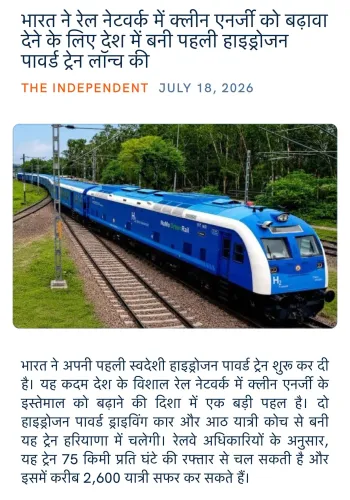
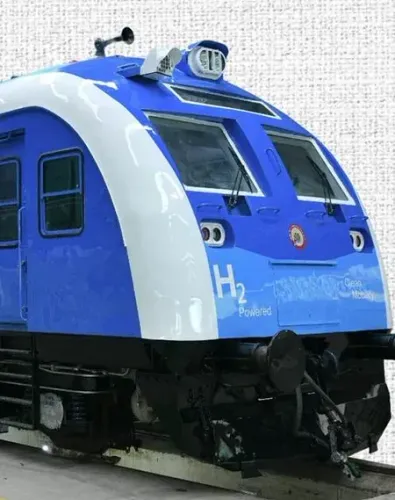
Union Textiles Minister Giriraj Singh on 18 July 2026 shared his appreciation for PM Modi's flagging off of India's first hydrogen-powered train at Jind, Haryana, calling it a historic Make in India achievement and a milestone for Indian Railways' green transition.
Key Takeaways
Union Textiles Minister Giriraj Singh publicly praised the launch of India's first hydrogen-powered train on 18 July 2026 .
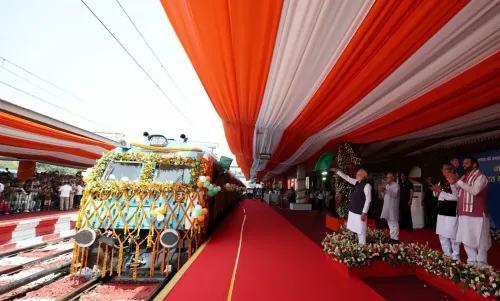
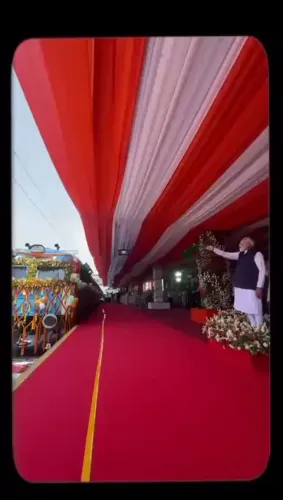
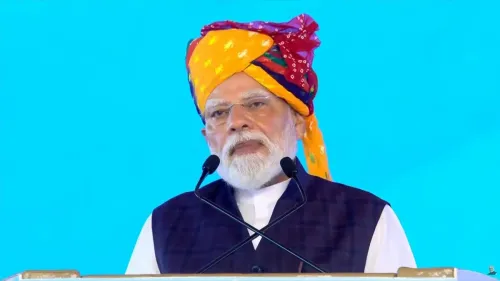
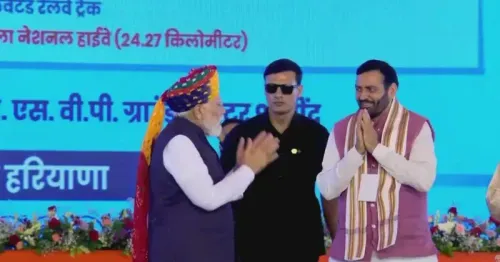
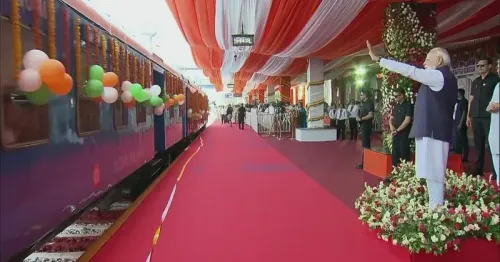
Prime Minister Narendra Modi flagged off the train at Jind , a district headquarters in Haryana .
The launch is being framed by the government as a flagship achievement of the Make in India initiative, first launched in September 2014 .
The hydrogen train aligns with India's National Green Hydrogen Mission , which targets domestic green hydrogen production and use.
Indian Railways has been progressively introducing indigenous rolling stock and exploring alternative propulsion to cut emissions since 2014.
Further rollout of hydrogen trains and expansion of fuelling infrastructure across the rail network are expected next.
Union Textiles Minister Giriraj Singh on Saturday, 18 July 2026 shared his appreciation for Prime Minister Narendra Modi's flagging off of India's first hydrogen-powered train at Jind, Haryana, calling the moment historic and praising the Make in India initiative that made it possible.
Context
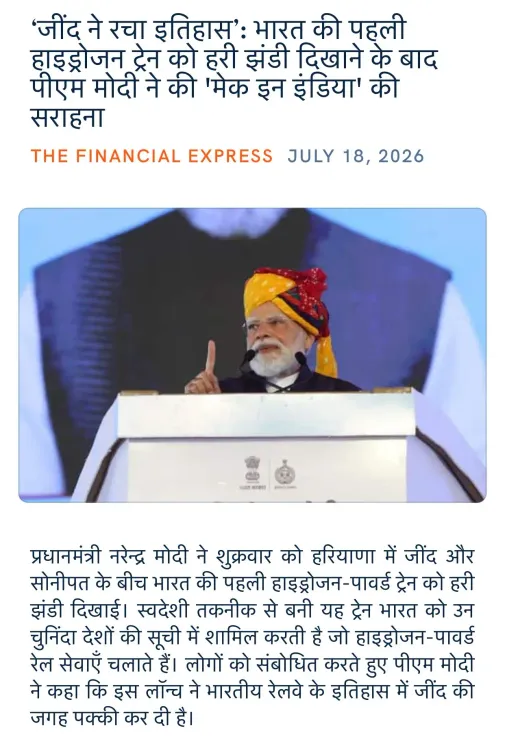
Sharing coverage of the event, Giriraj Singh highlighted the headline 'Jind ne racha itihas' ('Jind etched in history') as Prime Minister Modi flagged off what has been described as India's first hydrogen-powered train. The minister's post underscored the government's framing of the launch as a landmark moment in Indian rail and manufacturing history.
The train's flagging off at Jind — a city in the central Haryana district of the same name — places the town at the centre of a milestone in India's green mobility journey. Indian Railways, the state-owned operator of the national rail network, has been progressively introducing indigenous rolling stock as part of a broader push toward self-reliance and decarbonisation.
Policy Backdrop
The Make in India initiative, launched by the Government of India in September 2014, was designed to encourage domestic manufacturing and reduce the country's dependence on imports. The hydrogen train's indigenous development is being positioned as a direct product of that decade-long policy push.
India's pursuit of green hydrogen in transport is also aligned with the National Green Hydrogen Mission, which aims to position the country as a global hub for green hydrogen production and use. Indian Railways has long been identified as a key sector where alternative propulsion technologies could significantly cut carbon emissions, given the network's scale and reach.
Since 2014, the government has run parallel tracks of manufacturing self-reliance and transport decarbonisation, with milestones including indigenous locomotive production, the rollout of the Vande Bharat Express series, and now the entry of hydrogen propulsion into the national fleet.
Stakeholders and Impact
The launch carries significance for a wide range of stakeholders. Rail passengers stand to benefit from cleaner, quieter hydrogen-powered travel, while domestic manufacturing firms involved in rolling stock, fuel cells, and hydrogen supply chains are expected to gain from expanded orders and technology development opportunities.
Jind itself, a district headquarters in Haryana, gains visibility as the site of a nationally significant inauguration. The event is likely to boost local sentiment ahead of any upcoming political activity in the state, though the minister's post focused squarely on the national policy achievement rather than local politics.
For the broader Make in India programme, the hydrogen train represents a high-visibility proof point that domestic capability has advanced into frontier green technologies — a narrative the ruling BJP has consistently sought to amplify.
What's Next
Attention will now turn to the pace of further rollout of hydrogen trains across the Indian Railways network and the scaling up of hydrogen fuelling infrastructure at stations. Progress reports under the National Green Hydrogen Mission will be closely watched by industry and environmental observers alike.
Senior ministers across portfolios, including Giriraj Singh, are expected to continue amplifying the hydrogen train milestone as part of the government's broader communication around manufacturing self-reliance and green growth ahead of future electoral cycles.
Point of View
The hydrogen train represents a genuine technological leap, but the pace of network-wide rollout and hydrogen infrastructure buildout will determine whether the milestone becomes a movement. Senior ministers lending their social media weight to the launch suggests the government views this as a durable political asset, not merely a one-day headline.
NationPress
18 Jul 2026
Frequently Asked Questions
What is India's first hydrogen train and where was it launched?
India's first hydrogen-powered train was flagged off by Prime Minister Narendra Modi at Jind in Haryana. The launch marks a significant step in Indian Railways' push toward green and indigenous rolling stock.
What is the Make in India initiative and how does it relate to the hydrogen train?
Make in India is a flagship government programme launched in September 2014 to promote domestic manufacturing and reduce import dependence. The hydrogen train is being cited as a direct achievement of this initiative, demonstrating that India can indigenously develop frontier green transport technology.
What did Giriraj Singh say about the hydrogen train launch?
Union Textiles Minister Giriraj Singh shared coverage of the event on 18 July 2026, highlighting the phrase 'Jind etched in history' and praising PM Modi's Make in India push that enabled the hydrogen train's development.
What is the National Green Hydrogen Mission?
The National Green Hydrogen Mission is a Government of India programme aimed at making India a global hub for the production and use of green hydrogen. Indian Railways has been identified as a key sector where hydrogen propulsion can significantly reduce carbon emissions.
What happens next after India's first hydrogen train launch?
The focus will shift to how quickly Indian Railways can roll out more hydrogen trains across the network and build hydrogen fuelling infrastructure at stations, with the National Green Hydrogen Mission providing the broader policy framework for this expansion.