CM Himanta Highlights Crime Decline, Vows Tech-Driven Policing in Assam

Synopsis
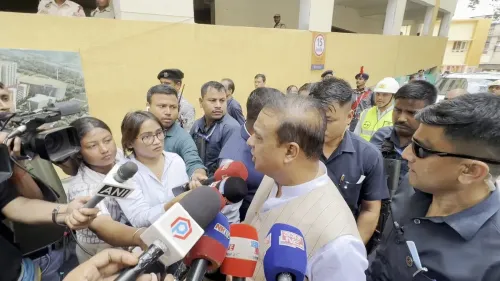
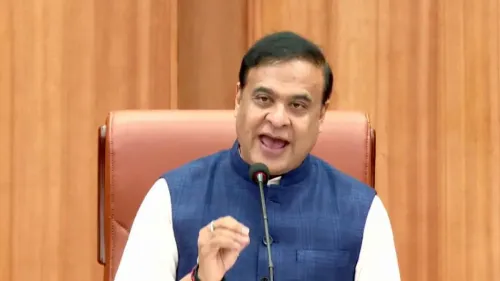
Assam Chief Minister Himanta Biswa Sarma on 18 July 2026 cited a drastic decline in crime and improved prosecution rates as proof of progress under 'Surakshit Assam', and pledged that Assam Police would continue its crackdown using modern, technology-driven methods.
Key Takeaways
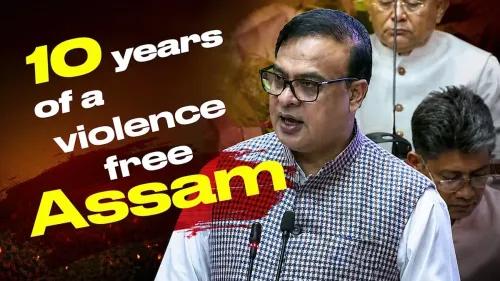
CM Himanta Biswa Sarma on 18 July 2026 publicly credited the 'Surakshit Assam' initiative with a drastic decline in crime across the state.
The Chief Minister highlighted improved prosecution rates as a key indicator of systemic progress in the criminal justice pipeline, not just arrests.
Assam Police has been directed to sustain the crackdown using modern, technology-driven practices .
Sarma has anchored law-and-order reform as a central governance priority since taking office in May 2021 .
The push aligns with national-level Ministry of Home Affairs frameworks for police modernisation across state forces.
Official annual crime statistics and future state budget allocations for policing will be key indicators of whether the stated gains are sustained.
Assam Chief Minister Himanta Biswa Sarma on Saturday, 18 July 2026, pointed to a significant decline in crime and improved prosecution rates as evidence of progress under his administration's 'Surakshit Assam' initiative, pledging that a sustained crackdown would continue with Assam Police adopting modern, technology-driven practices.
Context
In his post, CM Sarma stated: 'We have worked relentlessly to help build a Surakshit Assam. The drastic decline in crime and improved prosecution rates testifies to our progress. The crackdown will continue, with Assam Police adopting modern, technology-driven practices.' The statement frames law-and-order reform as a measurable achievement of his government rather than a work in progress.
Sarma assumed office as Assam Chief Minister in May 2021 with an explicit emphasis on internal security and law-and-order reforms. Since then, the state administration has repeatedly cited coordinated operations against organised crime and insurgent networks as central to its governance record.
Policy Backdrop
Assam has a long history of insurgency and organised crime that successive state governments have sought to contain through a mix of security operations and administrative measures. The push for technology-driven policing mirrors a national-level drive for modernisation of state police forces, aligned with priorities set by the Ministry of Home Affairs.
The North-East Democratic Alliance (NEDA), the BJP-led regional platform convenored by Sarma since its establishment in 2016, has also sought to align security and development policies across northeastern states. Assam's policing strategy sits within this broader regional framework, where internal security has been treated as a prerequisite for economic development.
The concept of 'Surakshit Assam' — meaning 'Safe Assam' — has been a recurring rhetorical and policy anchor for the Sarma administration, used to describe a cluster of initiatives spanning anti-crime drives, improved conviction rates, and the integration of digital tools into police operations.
Stakeholders and Impact
The primary beneficiaries cited by the administration are Assam's residents, particularly in districts historically affected by militancy and organised crime. Improved prosecution rates, if borne out by official statistics, would indicate not just more arrests but more effective follow-through in the criminal justice system — a distinction that matters for long-term deterrence.
Assam Police stands at the centre of the operational shift, with the government signalling continued investment in modern practices. Technology adoption in policing — ranging from surveillance infrastructure to digital case management — has been a stated priority, consistent with broader national frameworks for police modernisation.
What's Next
The release of Assam Police's annual crime statistics will be closely watched to validate the administration's claims of a 'drastic decline' in crime. Any forthcoming state budget allocations for police modernisation, recruitment, or digital infrastructure will indicate the financial commitment behind the policy direction.
CM Sarma's statement also signals that the law-and-order agenda will remain a central plank of the BJP's governance narrative in Assam ahead of future electoral cycles, with security outcomes being positioned as a tangible deliverable distinct from infrastructure or welfare schemes.
Point of View
The framing moves beyond optics of arrests to suggest systemic judicial follow-through, a more sophisticated metric that is harder to dismiss. The 'Surakshit Assam' branding also serves a dual purpose: it consolidates a policy identity ahead of electoral cycles while reinforcing NEDA's pitch that BJP-governed northeastern states deliver on internal security. The proof, however, will lie in independently verified crime statistics — a dataset the administration has implicitly invited scrutiny of.
NationPress
18 Jul 2026
Frequently Asked Questions
What is Surakshit Assam?
'Surakshit Assam', meaning 'Safe Assam', is a governance initiative of the Himanta Biswa Sarma administration focused on reducing crime, improving prosecution rates, and modernising Assam Police through technology-driven practices.
Has crime actually declined in Assam under CM Himanta?
CM Sarma has claimed a drastic decline in crime and improved prosecution rates as of July 2026. Independent verification will depend on official Assam Police annual crime statistics, which are yet to be publicly reviewed for this period.
What technology is Assam Police adopting?
CM Sarma's statement references 'modern, technology-driven practices' for Assam Police, consistent with national frameworks for police modernisation that include digital surveillance, case management systems, and data-driven deployment strategies.
When did Himanta Biswa Sarma become Chief Minister of Assam?
Himanta Biswa Sarma became Chief Minister of Assam in May 2021 , following the BJP's victory in the state assembly elections, and has since prioritised law-and-order reform as a central policy plank.
What is NEDA and what is Himanta Sarma's role in it?
NEDA, the North-East Democratic Alliance , is a BJP-led political platform established in 2016 to coordinate governance and security priorities across northeastern states. Himanta Biswa Sarma serves as its convenor.