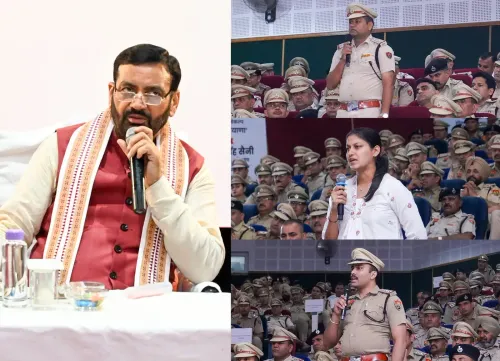
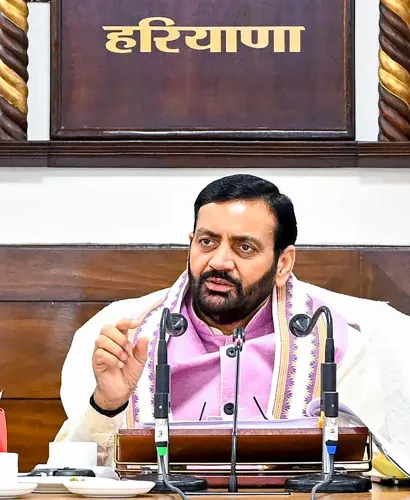
CM Saini Urges Haryana SHOs to Transform Policing
Synopsis
Haryana Chief Minister Nayab Singh Saini on 18 July 2026 publicly called on station house officers to work with determination, saying a committed SHO can transform the face of their police station area — reinforcing grassroots accountability as a governance priority.
Key Takeaways
Haryana Chief Minister Nayab Singh Saini posted on X on 18 July 2026 urging SHOs to work with resolve.
Saini stated that a committed station in-charge can 'change the face of their police station area.' The message targets the most basic unit of policing — the police station — as the locus of accountability.
Haryana Police station-level reform has been a recurring theme across state administrations.
BJP -ruled states have consistently used public messaging to signal performance expectations to frontline police officers.
Upcoming Haryana crime statistics and police review meetings will indicate whether the directive produces measurable change.
Haryana Chief Minister Nayab Singh Saini on Saturday, 18 July 2026, called on station house officers (SHOs) across the state to work with resolve, asserting that a committed police station head has the power to transform the ground reality of their jurisdiction.
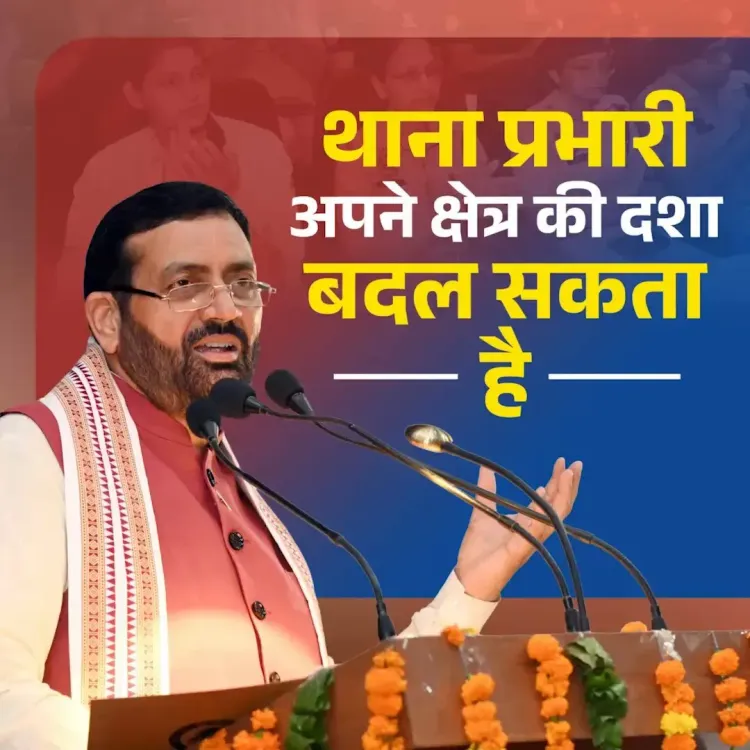
Posting on X, Saini wrote: 'थाना प्रभारी संकल्प लेकर कार्य करें, तो वे अपने थाना क्षेत्र की तस्वीर बदल सकते हैं' — 'If station in-charges work with determination, they can change the face of their police station area.' The message places accountability squarely at the grassroots level of law enforcement.
Context
Haryana Police is the state law enforcement agency responsible for maintaining order and investigating crime across all districts of the state. The police station, headed by an SHO, is the most basic administrative unit of policing and the primary point of contact between citizens and the law enforcement machinery. Saini's remark targets this frontline tier directly.
State chief ministers in India have long used public messaging to signal expectations to district and station-level officials, a practice that simultaneously communicates governance intent to the public and sends a performance directive down the administrative chain.
Policy Backdrop
Haryana governments across administrations have periodically initiated police station-level reforms aimed at improving local law-and-order outcomes, including faster FIR registration, better beat patrolling, and more visible community policing. The current BJP dispensation under Saini, which took office in 2024, has consistently highlighted grassroots policing performance as a pillar of its internal security and governance agenda.
Across BJP-ruled states nationally, chief ministers have made a pattern of addressing police station heads as a unit of accountability — underscoring that visible crime control at the local level is both a governance priority and a political messaging tool.
Stakeholders and Impact
SHOs and station-level police officers are the most immediate audience for Saini's directive. Their performance on crime registration, response times, and community relations directly shapes how residents in a given locality perceive state governance. A renewed emphasis from the Chief Minister's office can influence internal departmental reviews and postings.
Local communities — particularly residents in areas with persistent law-and-order concerns — stand to benefit if the exhortation translates into operational changes. Civil society groups and opposition parties will likely watch whether the statement is followed by measurable shifts in policing metrics or formal performance review mechanisms.
What's Next
Attention will now turn to whether Haryana Police headquarters schedules formal performance review meetings at the district or range level in the wake of the Chief Minister's public statement. Release of updated Haryana crime statistics would provide an objective baseline against which any claimed improvements can be measured.
Saini's post signals that police station-level governance will remain a visible theme in his administration's public communication — and that SHOs should expect heightened scrutiny of outcomes in their jurisdictions.
Point of View
He sidesteps systemic critiques and frames outcomes as a matter of individual officer resolve. The statement fits a broader pattern in BJP-governed states of using chief ministerial visibility to substitute for — or precede — structural reform. Whether it translates into formal review mechanisms or remains aspirational rhetoric will be the real test of its governance weight.
NationPress
18 Jul 2026
Frequently Asked Questions
What did Haryana CM Nayab Singh Saini say about SHOs?
Saini said that if station in-charges work with determination, they can change the face of their police station area, calling on SHOs across Haryana to take a pledge to improve their jurisdictions.
When did Nayab Singh Saini make this statement about police stations?
Saini made the statement on Saturday, 18 July 2026 , via a post on X (formerly Twitter).
What is an SHO in the Indian police system?
An SHO, or Station House Officer, is the officer in charge of a police station — the most basic administrative unit of law enforcement in India and the primary interface between citizens and the police.
What is Haryana's approach to police station-level reform?
Haryana governments have periodically directed police station-level reforms to improve local law-and-order outcomes, including faster FIR registration and more visible community policing, with the current BJP administration emphasising grassroots accountability.
What should we watch for after Saini's police accountability statement?
Key indicators will include whether Haryana Police schedules formal performance review meetings for SHOs and whether updated state crime statistics show measurable improvement in local jurisdictions.