CM Bhupendra Patel Hails Vikram-1 Launch as Historic Space Milestone
Synopsis
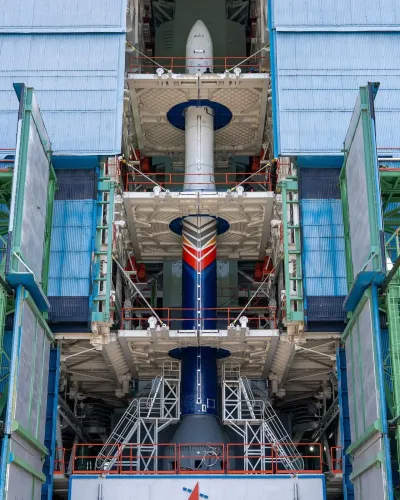
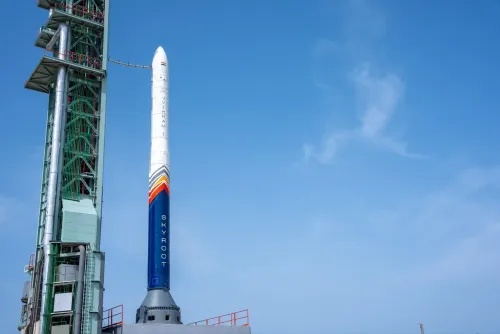
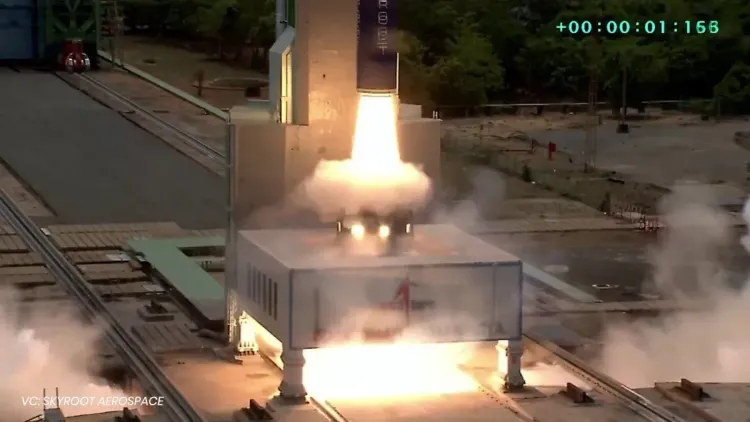
Gujarat Chief Minister Bhupendra Patel hailed the successful launch of Vikram-1 — India's first privately developed orbital rocket by Skyroot Aerospace under Mission Aagaman — as a historic milestone, crediting Prime Minister Modi's 2020 space-sector reforms for enabling the achievement.
Key Takeaways
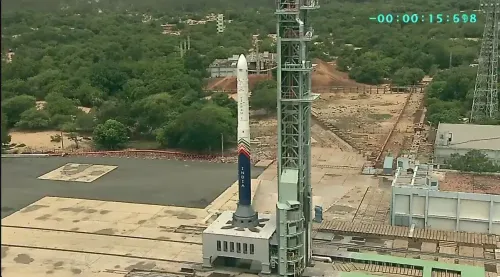
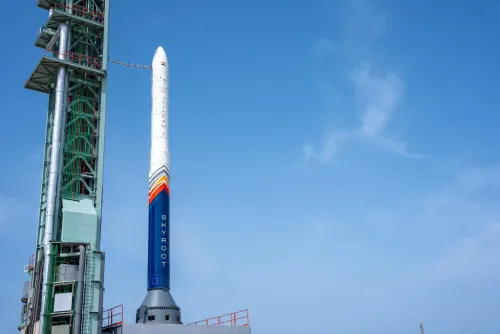
Vikram-1 , developed by Skyroot Aerospace , is India's first privately built orbital launch vehicle, flown under Mission Aagaman .
Gujarat Chief Minister Bhupendra Patel publicly congratulated ISRO , IN-SPACe , and Skyroot Aerospace on the milestone on 18 July 2026 .
The launch is a direct outcome of India's June 2020 space-sector reforms that opened rocket development to private companies.
IN-SPACe , established in 2020 , served as the regulatory body authorising the private launch under the new framework.
The achievement places India alongside a small group of countries with privately operated orbital launch capability.
Follow-on launches by IN-SPACe-licensed startups and potential new foreign-investment rules are the next milestones to watch.
Gujarat Chief Minister Bhupendra Patel on Saturday, 18 July 2026 congratulated Skyroot Aerospace, ISRO, and IN-SPACe on the successful launch of Vikram-1, describing it as a historic milestone in India's space journey. Vikram-1 is India's first privately developed orbital launch vehicle, flown under Mission Aagaman.
Context
In his post, CM Patel wrote that the achievement 'reflects the confidence, capability and aspirations of a New India, inspiring our youth to dream bigger and innovate further as we march towards an Aatmanirbhar Bharat [Self-Reliant India] and Viksit Bharat [Developed India].' He credited the milestone to 'path-breaking space sector reforms' carried out under the leadership of Prime Minister Narendra Modi. The post was tagged #IndiaWithVikram1, signalling coordinated political messaging around the launch.
Skyroot Aerospace, a Hyderabad-based private launch-vehicle company, has been developing the Vikram series of rockets as part of India's growing commercial space ecosystem. Mission Aagaman marks the company's attempt at reaching orbital altitude — a threshold that distinguishes a full launch vehicle from a sub-orbital demonstrator.
Policy Backdrop
The launch is a direct product of India's landmark June 2020 space-sector reforms, which opened rocket manufacturing, satellite operations, and launch services to private firms for the first time. Those reforms also created IN-SPACe — the Indian National Space Promotion and Authorisation Centre — as a single-window regulatory body to license and support non-governmental space activity.
ISRO, India's national space agency, continues to provide technical heritage and infrastructure support to private players, even as the government's stated goal is to grow a self-sustaining commercial space economy. The Aatmanirbhar Bharat framework has positioned space as a strategic sector where domestic capability-building is explicitly prioritised over import dependence.
India has set an ambitious target of capturing a significant share of the global commercial launch market, and a successful privately operated orbital vehicle would materially advance that goal. The 2020 reforms were widely regarded as the most consequential restructuring of the Indian space sector since ISRO's founding.
Stakeholders and Impact
The successful orbital launch, if confirmed, would be a landmark for India's space-startup ecosystem, validating years of private investment and engineering effort. Skyroot Aerospace had previously conducted sub-orbital test flights with earlier variants of the Vikram rocket, making an orbital success the next logical and commercially critical step.
Space startups licensed under IN-SPACe stand to benefit from the demonstration effect — a proven private orbital vehicle lowers perceived risk for investors and potential satellite customers. The achievement also carries symbolic weight for India's youth, whom CM Patel explicitly invoked as the intended audience for this moment of national ambition.
Internationally, a credible private Indian orbital launch capability adds a new competitor in the small-satellite launch market, placing India alongside the United States, New Zealand, and China as countries with privately operated orbital rockets.
What's Next
The immediate focus will be on mission data — confirming payload deployment and orbital insertion parameters — before the full significance of Mission Aagaman can be assessed. Follow-on launches by Skyroot Aerospace and other IN-SPACe-licensed startups are expected to define the commercial pipeline over the next several years.
Policy watchers will also look for any new rules easing foreign direct investment or technology-transfer norms in the space sector, steps that analysts have long argued are necessary to attract global anchor customers to Indian private launch providers. For Gujarat, whose aerospace manufacturing base has expanded under recent industrial policy, the broader space economy push could translate into supply-chain opportunities for component makers in the state.
Point of View
And the chorus of political congratulations — including from a state chief minister — signals the BJP's intent to claim the commercial space economy as a signature governance achievement ahead of future electoral cycles. CM Patel's invocation of both 'Aatmanirbhar Bharat' and 'Viksit Bharat' frames the event squarely within the ruling party's long-term national-development narrative. For India's startup ecosystem, a successful private orbital launch is a proof-of-concept that could catalyse venture investment and global customer interest in ways that no government announcement alone could. The key question now is whether the regulatory and foreign-investment environment will evolve fast enough to let Skyroot and peers convert this milestone into a sustainable commercial launch business.
NationPress
18 Jul 2026
Frequently Asked Questions
What is Vikram-1 and who made it?
Vikram-1 is India's first privately developed orbital launch vehicle, built by Hyderabad-based startup Skyroot Aerospace and flown under Mission Aagaman.
What is Mission Aagaman?
Mission Aagaman is the name of Skyroot Aerospace's orbital launch campaign for the Vikram-1 rocket, representing the company's attempt to reach orbital altitude for the first time.
What is IN-SPACe and what role did it play?
IN-SPACe — the Indian National Space Promotion and Authorisation Centre — is the regulatory body created in 2020 to license and support private-sector space activities in India; it authorised Skyroot Aerospace's Vikram-1 launch.
How did India's 2020 space reforms enable private rocket launches?
In June 2020, the Government of India opened rocket manufacturing, satellite operations, and launch services to private companies for the first time, and created IN-SPACe as a single-window agency to facilitate those activities.
Why did Gujarat CM Bhupendra Patel comment on the Vikram-1 launch?
CM Patel posted congratulations on 18 July 2026 to celebrate the national milestone, linking it to Prime Minister Modi's space-sector reforms and the broader Aatmanirbhar Bharat and Viksit Bharat goals.