Amit Shah Warns Congress Over 'Politics of Anarchy'
Synopsis
Union Home Minister Amit Shah on 2 November 2026 accused the Congress of practising 'politics of anarchy' under Rahul Gandhi and warned that Indian voters would deliver a 'befitting lesson' if the party did not abandon the approach.
Key Takeaways
Amit Shah posted a sharp attack on Congress and Rahul Gandhi on 2 November 2026 , accusing them of practising 'politics of anarchy'.
Shah warned that voters would give Congress a 'befitting lesson' and its leaders would have 'nowhere to hide their faces'.
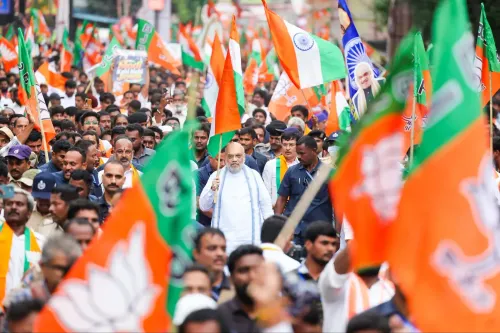
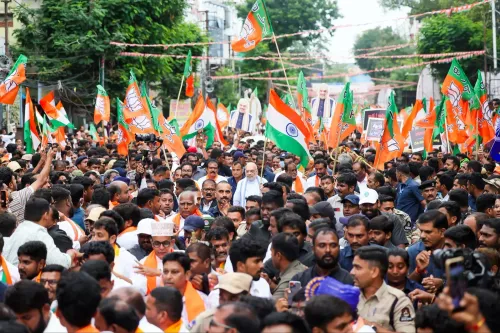
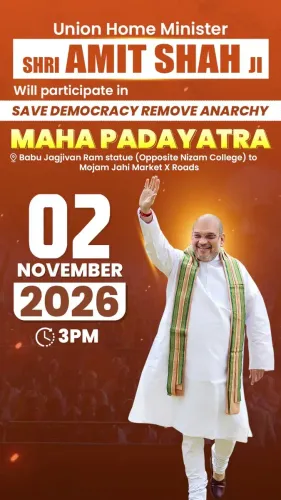
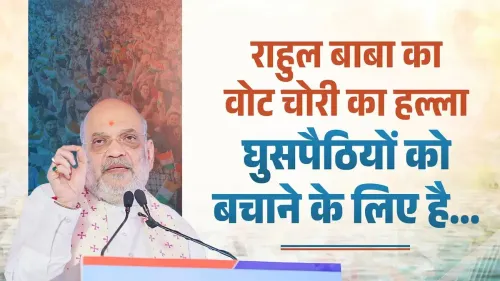
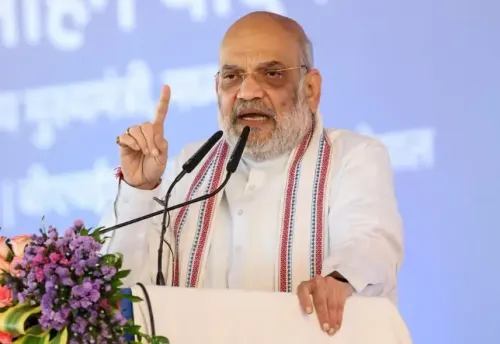
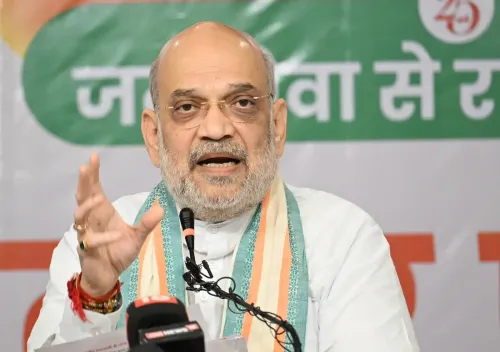
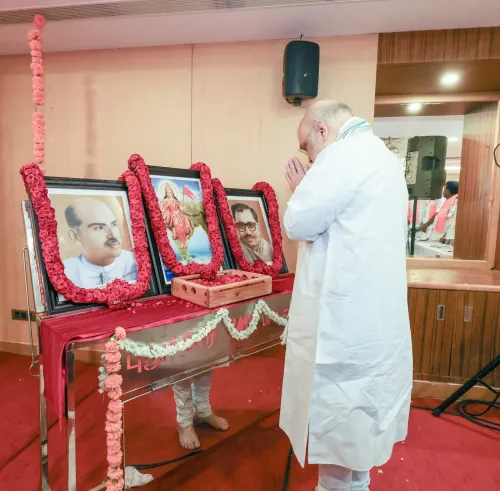
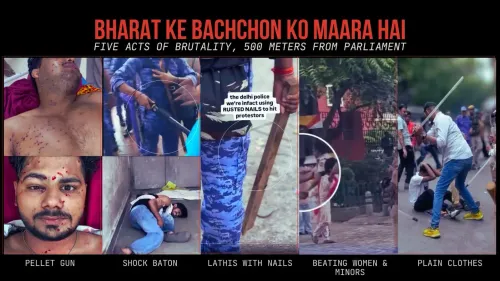
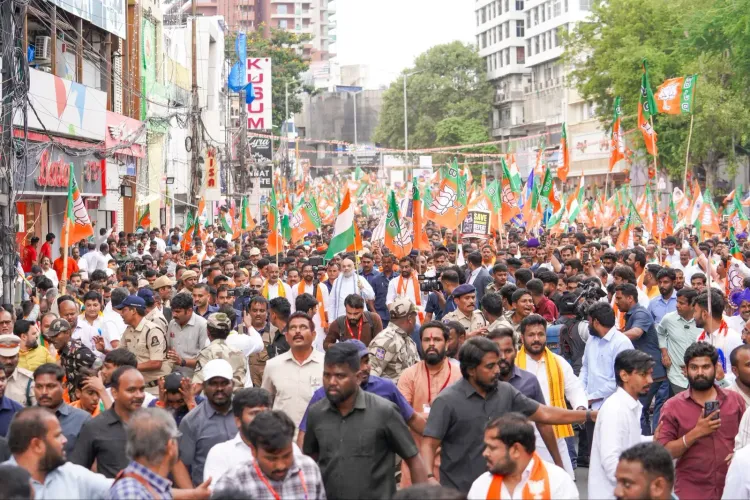
The post was accompanied by four images and the hashtag #SaveDemocracyRemoveAnarchy , signalling a coordinated BJP messaging campaign.
The 'anarchy vs stability' framing has been a core BJP political narrative since 2014 , used across multiple election cycles.
The specific event Shah described as 'exposed today' was not independently verified at time of publication.
A Congress response to the post had not been issued at the time of this report.
A sharp political broadside landed on Monday, 2 November 2026, when Union Home Minister Amit Shah fired a direct warning at the Indian National Congress, declaring that the party's conduct under Rahul Gandhi's leadership had been 'completely exposed' — and that voters would deliver a 'befitting lesson' if the Congress refused to change course.
Posting on X with the hashtag #SaveDemocracyRemoveAnarchy, Shah did not mince words: 'The politics of anarchy practised by the Congress under Rahul Gandhi's leadership stands completely exposed today. If the Congress does not abandon this approach, the people of India will teach its leaders a befitting lesson, and they will have nowhere to hide their faces.'
The 'Anarchy vs Stability' Frame BJP Has Used for Over a Decade
The framing is not new — but the sharpness is notable. Since 2014, the BJP's political playbook has consistently cast Congress-led opposition as a destabilising, anarchic force, contrasting it with the ruling party's self-projected image of law-order governance and decisive administration. What changes cycle to cycle is the intensity, and statements of this calibre typically signal that political temperatures are running high.
Shah's choice of the phrase 'nowhere to hide their faces' — a direct vernacular idiom — is designed to land hard with a mass audience. It is the language of accountability, not just rhetoric. The hashtag #SaveDemocracyRemoveAnarchy suggests a coordinated messaging push, with the post arriving alongside four images, indicating a curated visual campaign behind the attack.
Rahul Gandhi in the Crosshairs — Again
Rahul Gandhi, Congress's most prominent face and former party president, has been the BJP's preferred target in federal and state election campaigns alike. Framing him as the architect of 'anarchy' — rather than attacking the institution of Congress broadly — is a deliberate personalisation strategy, one that BJP strategists have deployed to question both his leadership credibility and the party's democratic credentials.
The Congress, India's oldest national party and the principal opposition force, has repeatedly pushed back against such characterisations, arguing that robust opposition is the essence of democracy, not a threat to it. A formal response to Shah's 2 November post had not emerged at time of publication.
Election Season Subtext
Statements of this pitch — personal, urgent, hashtag-amplified — rarely arrive in a vacuum. They tend to cluster around electoral calendars: before state assembly polls, during parliamentary sessions marked by confrontation, or when a specific political episode needs rapid framing. The specific trigger Shah refers to as the event 'exposed today' was not independently verified at the time of this report. What is clear is that both national parties are in active contest mode, and the Home Minister has chosen to raise the stakes publicly, putting the pressure squarely on Congress to respond — or absorb the blow in silence.
In Indian politics, silence after a challenge of this scale is rarely an option.
Point of View
Invoke democratic legitimacy as the battleground, and mobilise a hashtag to amplify reach. The 'anarchy' label has been stress-tested across multiple poll cycles and clearly still forms the spine of BJP's anti-Congress narrative. What is worth watching is whether this signals a specific upcoming electoral contest — state assembly polls or a parliamentary confrontation — or is simply a maintenance strike to keep Congress on the defensive. Either way, the Home Minister elevating the rhetoric personally, rather than leaving it to party spokespersons, tells its own story about how seriously BJP is treating the current political moment.
NationPress
2 Nov 2026
Frequently Asked Questions
What did Amit Shah say about Congress and Rahul Gandhi on 2 November 2026?
Amit Shah posted on X accusing Congress under Rahul Gandhi of practising 'politics of anarchy' and warned that Indian voters would give the party a 'befitting lesson' if it did not change course.
What is the hashtag #SaveDemocracyRemoveAnarchy about?
The hashtag was used by Amit Shah in his 2 November 2026 post attacking Congress, framing the BJP's position as defending democracy against what it calls Congress's destabilising politics.
Has BJP used the 'anarchy' charge against Congress before?
Yes. Since 2014, BJP has repeatedly framed Congress-led opposition as anarchic and destabilising, contrasting it with its own emphasis on stable governance and law and order.
Did Congress respond to Amit Shah's post?
A formal Congress response had not been issued at the time of this report.
Why does BJP target Rahul Gandhi specifically in political attacks?
Rahul Gandhi is Congress's most prominent leader and the face of the opposition, making him the natural focal point of BJP's campaign strategy to question the party's leadership and democratic credentials.