Amit Shah: Imposing Emergency not our culture, dissent vital to democracy
Synopsis
Home Minister Amit Shah used a Mumbai press conference on 13 September to deliver a two-pronged message: dissent is healthy in a democracy and Emergency-style governance belongs to the Congress, not the BJP. In the same breath, he launched the 'Seva Sankalp Abhiyan' — a month-long, 12-point national campaign marking Modi's 25 years in public office — signalling that the BJP is converting a political milestone into a grassroots outreach blitz.
Key Takeaways
Home Minister Amit Shah said imposing an Emergency is 'not our culture' , explicitly contrasting BJP governance with the Congress at a Mumbai press conference on 13 September 2026 .
Shah called dissent 'essential' to democracy while responding to questions on recent Gen Z student protests across India.
The BJP-led NDA will launch the 'Seva Sankalp Abhiyan' from 17 September to 17 October 2026 , marking PM Modi's 25 continuous years in high public office.
The campaign includes a 12-point action plan , the Seva Setu Abhiyan for welfare scheme delivery, blood donation drives, Namo Seva outreach, and pilgrimage journeys between Vadnagar and Varanasi .
Shah cited 25 crore people lifted out of poverty, 13 crore farmers under PM-Kisan, 11 crore Ujjwala beneficiaries, and 3 crore Lakhpati Didis as key governance achievements.
Shah reiterated that every illegal infiltrator will be identified and deported from India.
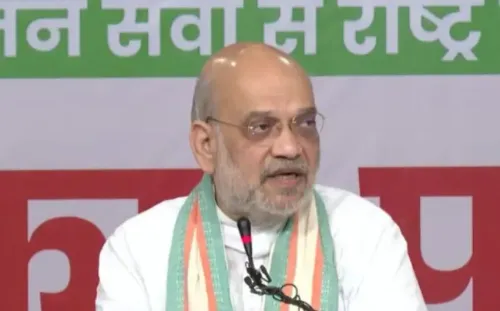
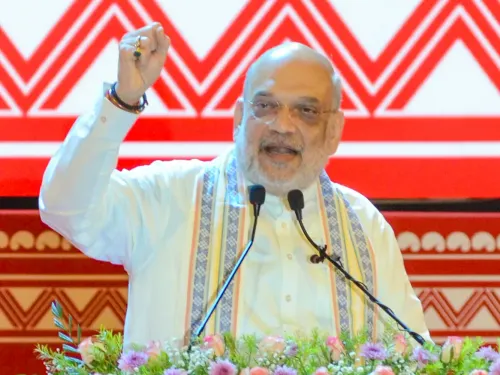
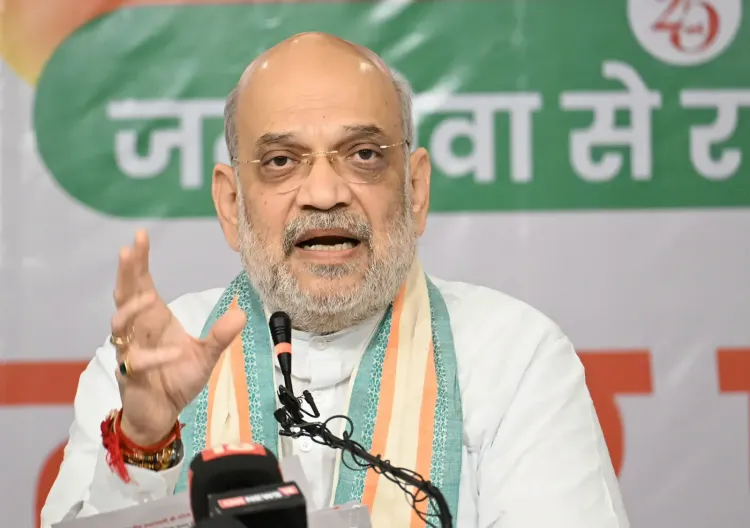
Union Home Minister Amit Shah on Sunday, 13 September 2026, in Mumbai, firmly asserted that imposing an Emergency is 'not our culture', drawing a sharp contrast between the Bharatiya Janata Party (BJP)'s governance philosophy and that of the opposition Indian National Congress. Shah made the remarks at a press conference while responding to questions on the societal and political impact of recent Gen Z-led student demonstrations across India.
Shah on Dissent and Democratic Values
Addressing questions on youth-led public unrest, Shah emphasised that dissent is a foundational feature of democratic governance. 'We live in a vibrant democracy. People naturally hold diverse views on various issues, and expressing those opinions is essential,' he said.
The Home Minister added: 'Our government does not believe in governing by declaring an Emergency. That reflects the culture of the Congress party. Our ethos is fundamentally different — we prioritise open discussion, engagement, and continuous dialogue with citizens.' The remarks are widely seen as a pointed reference to the 1975–77 Emergency imposed under the Congress-led government of Indira Gandhi — a period that remains a fault line in Indian political discourse.
Seva Sankalp Abhiyan: BJP's Month-Long Campaign
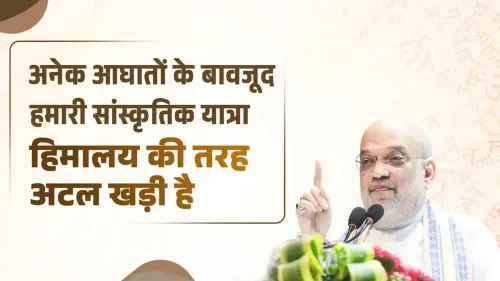
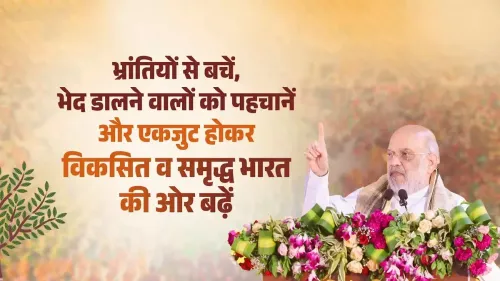
Shah also announced the BJP-led National Democratic Alliance (NDA)'s upcoming 'Seva Sankalp Abhiyan', scheduled to run from 17 September to 17 October 2026 across the country. The initiative marks Prime Minister Narendra Modi's completion of 25 continuous years in high public office — spanning his tenures as Chief Minister of Gujarat and subsequently as Prime Minister of India.
The month-long campaign features a structured 12-point action plan aimed at developmental and social engagement at every block and taluka level. Key components include the Seva Setu Abhiyan to ensure saturation delivery of central government welfare schemes at the local level, nationwide blood donation drives, specialised Anganwadi services, and community outreach programmes under the Namo Seva banner.
Shah added that the campaign will also feature a Seva Jyoti Kalash Yatra, cultural musical-theatrical performances, and bidirectional pilgrimage journeys connecting Vadnagar and Varanasi.
Shah's Account of the Modi Government's Record
Contrasting current governance with the pre-2014 era, Shah said the nation was previously 'heavily stymied by corruption, casteism, and dynastic politics' and that these systemic issues had been 'decisively eradicated' under Modi's leadership. He cited several figures in support: India has reportedly pulled 25 crore people out of poverty; 13 crore farmers receive support through the PM-Kisan scheme; 11 crore families have benefited from the Ujjwala Gas scheme; and 3 crore women have been empowered as Lakhpati Didis.
The Home Minister also highlighted the revocation of Article 370 in Jammu and Kashmir, the construction of the Ram Mandir and the Kashi Vishwanath corridor, and the successful execution of space mission Chandrayaan-3 as landmark achievements of the current administration. Shah noted that direct benefit transfers now reach beneficiaries directly into bank accounts.
National Security Stance
Maintaining a firm position on national security alongside democratic discourse, Shah reiterated the government's resolve on illegal immigration, asserting that 'every illegal infiltrator will be identified and deported' from India.
What Comes Next
The Seva Sankalp Abhiyan, beginning 17 September, will serve as a large-scale political outreach exercise for the NDA ahead of what observers note is a politically charged period. The BJP's framing — positioning Modi as Pradhan Sevak (Prime Servant) aligned with the ideals of Guru Nanak and philosopher-saint Samarth Ramdas's concept of 'Upbhog Shunya Swami' — signals a concerted effort to reinforce the Prime Minister's image as a self-sacrificing public servant at the grassroots level.
Point of View
But doing so in direct response to Gen Z protests gives the statement a contemporary edge — it signals the government is aware of the optics of security-force responses to youth-led demonstrations. The Seva Sankalp Abhiyan launch in the same press conference is no coincidence; converting Modi's 25-year milestone into a nationwide public-welfare blitz is a pre-emptive narrative effort to shift the story from protest to service. What mainstream coverage may underplay is that the BJP's grassroots saturation strategy — reaching every block and taluka — is as much an electoral infrastructure exercise as a welfare delivery one.
NationPress
13 Sept 2026
Frequently Asked Questions
What did Amit Shah say about imposing Emergency?
Home Minister Amit Shah said that running the government by imposing an Emergency is 'not our culture', contrasting the BJP's governance approach with the Congress. He made the remarks at a Mumbai press conference on 13 September 2026 in response to questions about Gen Z student protests.
What is the Seva Sankalp Abhiyan announced by Amit Shah?
The Seva Sankalp Abhiyan is a BJP-led NDA campaign running from 17 September to 17 October 2026 to mark PM Modi's 25 continuous years in high public office. It features a 12-point action plan covering welfare scheme delivery, blood donation drives, community outreach, cultural programmes, and pilgrimage journeys between Vadnagar and Varanasi.
What was Amit Shah's response to Gen Z protests in India?
Shah said dissent is a fundamental feature of a vibrant democracy and that citizens naturally hold diverse views on issues. He emphasised that the government believes in open discussion and continuous dialogue rather than suppression of opposing viewpoints.
What governance achievements did Amit Shah highlight?
Shah cited India pulling 25 crore people out of poverty, 13 crore farmers benefiting from PM-Kisan, 11 crore families covered under the Ujjwala Gas scheme, 3 crore women empowered as Lakhpati Didis, the revocation of Article 370, the construction of the Ram Mandir and Kashi Vishwanath corridor, and the success of Chandrayaan-3.
What is the BJP's stance on illegal immigration?
Home Minister Amit Shah reiterated at the press conference that the government's resolve on illegal immigration remains firm — every illegal infiltrator will be identified and deported from India.