CM Bhupendra Patel pushes natural farming sales hubs across Gujarat
Synopsis
Gujarat Chief Minister Bhupendra Patel and Governor Acharya Devvrat told collectors, DDOs and municipal commissioners to open permanent sales outlets for natural farm produce at municipal, district and taluka levels within a month, framing the push as part of Prime Minister Narendra Modi's Atmanirbhar Bharat vision and a people's movement against chemical fertilisers.
Key Takeaways
Governor Acharya Devvrat chaired a video conference on 3 June 2026 with collectors, DDOs and municipal commissioners on expanding natural farming.
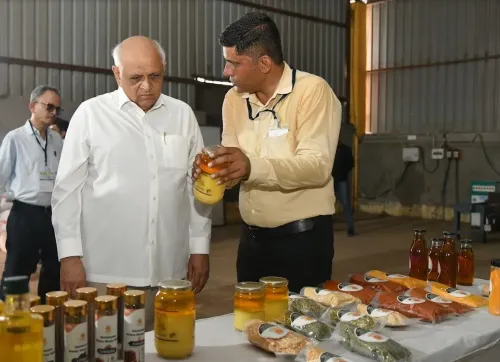
Permanent sales centres for natural produce to be opened at municipal corporation, district and taluka levels within one month.
CM Bhupendra Patel called chemical-free natural farming 'the need of the hour' for soil and human health.
Patel linked the drive to PM Narendra Modi's Atmanirbhar Bharat self-reliance vision.
Administration directed to work in 'mission mode' and share scientific information with farmers.
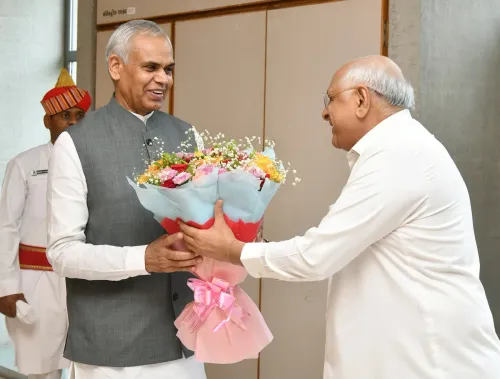
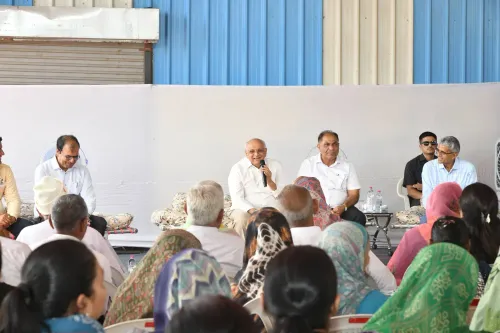
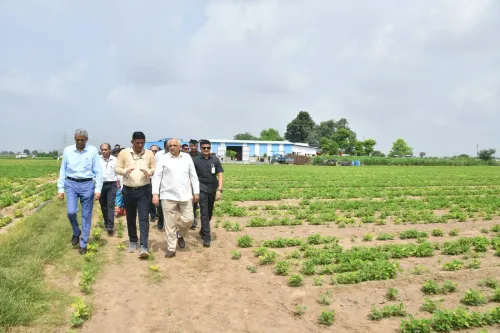
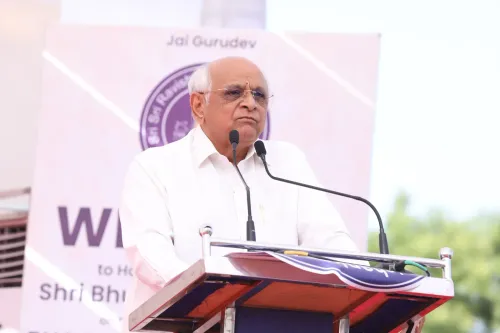
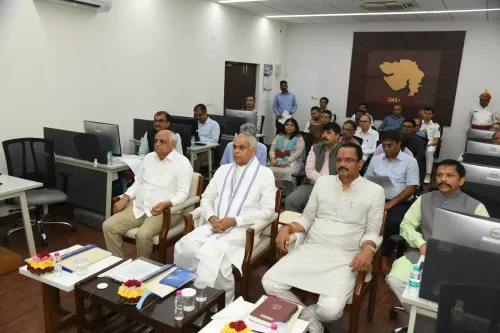
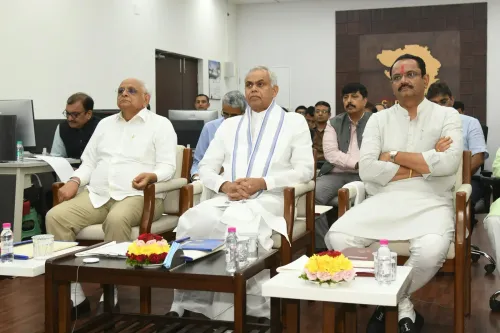
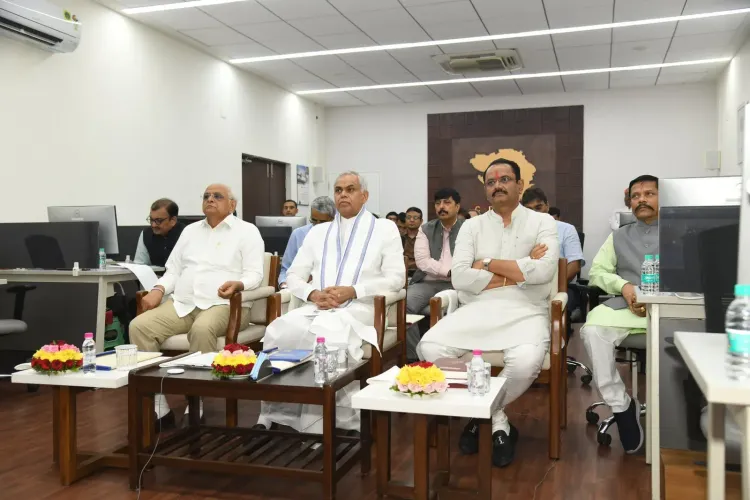
Gujarat Chief Minister Bhupendra Patel on 3 June 2026 joined a state-wide video conference chaired by Governor Acharya Devvrat with district collectors, district development officers and municipal commissioners to chart the expansion of natural farming across Gujarat. The Governor directed the administration to set up permanent sales outlets for natural farm produce at the municipal corporation, district and taluka levels within one month.
Context
In his post, the Chief Minister wrote that 'dharti mata' (Mother Earth) and human welfare demand a shift away from chemical fertilisers, calling natural farming 'the need of the hour'. He framed the meeting as part of a coordinated administrative push to widen adoption among Gujarat's farmers.
Patel added that the entire administrative machinery must work in 'mission mode' to realise Prime Minister Narendra Modi's vision of Atmanirbhar Bharat, equipping more farmers with scientific guidance and converting natural farming into a 'jan-andolan' (people's movement).
Policy backdrop
Atmanirbhar Bharat, announced by the Prime Minister in May 2020, placed agriculture among its priority pillars, with a stated aim of reducing dependence on imported and chemical inputs while strengthening local value chains. Gujarat has run pilot natural farming projects since the mid-2010s, gradually moving from district-level experiments to a state-wide framework.
Governor Acharya Devvrat, in office since 2019, has been a long-standing public advocate of cow-based and chemical-free farming, and has used the Raj Bhavan platform to convene administrative reviews on soil health. Wednesday's video conference fits that trajectory, linking the Governor's advocacy with the state government's executive reach.
Stakeholders and impact
The most immediate stakeholders are Gujarat's farmers, who would gain a guaranteed retail channel for naturally grown produce if the proposed outlets open on schedule. Permanent sales centres at municipal, district and taluka levels are intended to address a recurring complaint from organic and natural growers: that price premiums collapse without dedicated market infrastructure.
For district collectors, DDOs and municipal commissioners, the directive translates into a defined deliverable with a one-month horizon. The Chief Minister's emphasis on 'scientific information' also signals a parallel extension-services push, aimed at standardising training inputs rather than leaving uptake to ad-hoc campaigns.
Urban consumers stand to benefit if the sales centres bring certified natural produce closer to residential catchments in cities such as Ahmedabad, Surat, Vadodara and Rajkot, though pricing and certification protocols will determine whether the outlets find sustained footfall.
What's next
The clearest milestone is the one-month deadline for opening permanent natural-produce sales centres at three administrative tiers. Progress reports from collectors and municipal commissioners will be the first test of whether the 'mission mode' framing translates into physical infrastructure on the ground.
Beyond outlets, the state will be watched for movement on farmer registrations for natural farming training, the scientific curriculum used by extension officers, and any convergence with central schemes under the Atmanirbhar Bharat umbrella. If Gujarat's tiered retail model gains traction, it could offer a template other states study as they weigh how to anchor chemical-free agriculture with assured market access — turning an environmental objective into a self-reliance story at the village and ward level.
Point of View
The Gujarat government is shifting natural farming from a producer-side campaign to a market-access intervention, which is where similar state experiments have historically struggled. The Governor's sustained personal advocacy gives the drive unusual continuity across electoral cycles. Execution risk, however, sits squarely with district administrations now expected to deliver physical infrastructure on a tight deadline.
NationPress
23 Sept 2026
Frequently Asked Questions
What did Gujarat CM Bhupendra Patel announce about natural farming?
He said permanent sales centres for natural farm produce will be set up at municipal corporation, district and taluka levels within one month, following a video conference chaired by Governor Acharya Devvrat on 3 June 2026.
Who chaired the natural farming video conference in Gujarat?
Governor Acharya Devvrat chaired the video conference, which was attended by Chief Minister Bhupendra Patel along with district collectors, district development officers and municipal commissioners from across Gujarat.
How is Gujarat's natural farming push linked to Atmanirbhar Bharat?
CM Bhupendra Patel framed the expansion of chemical-free natural farming as a way to realise Prime Minister Narendra Modi's Atmanirbhar Bharat vision, asking the administration to work in mission mode and turn it into a people's movement.
Where will the new natural produce sales centres come up in Gujarat?
The outlets are to be established at three administrative tiers — municipal corporation level, district level and taluka level — across Gujarat, giving farmers dedicated retail points for naturally grown produce.
Why is Gujarat promoting chemical-free natural farming?
The state government has cited soil health, the welfare of Mother Earth and human well-being as reasons to move away from chemical fertilisers, aligning with broader national efforts to make Indian agriculture more sustainable and self-reliant.