Gujarat CM Bhupendra Patel pushes natural farming mission to collectors
Synopsis
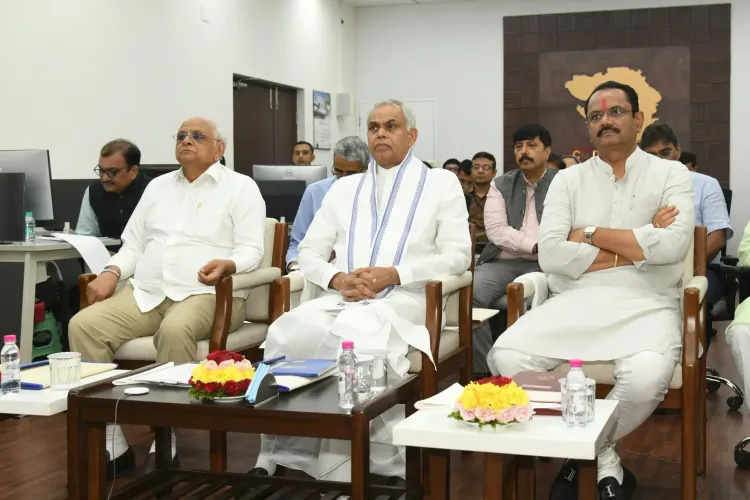
The Chief Minister's Office of Gujarat said CM Bhupendra Patel, with Agriculture Minister Jitu Vaghani and Governor Acharya Devvrat, led a video conference with district collectors, DDOs and municipal commissioners from Gandhinagar, urging them to take the natural farming campaign in mission mode and turn farmers fully toward chemical-free cultivation.
Key Takeaways
Governor Acharya Devvrat chaired a video conference from Gandhinagar with district and municipal heads on natural farming.
CM Bhupendra Patel and Agriculture Minister Jitu Vaghani took part in the meeting.
Patel asked officials to take the campaign in 'mission mode' and shift farmers 100 per cent toward natural farming.
He invoked PM Narendra Modi's call for large-scale adoption of natural farming for public health.
The Governor is visiting villages and farms directly to bring more cultivators into the movement.
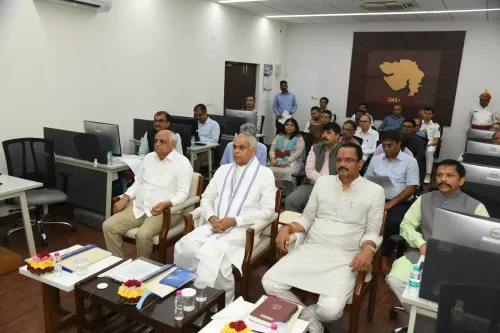
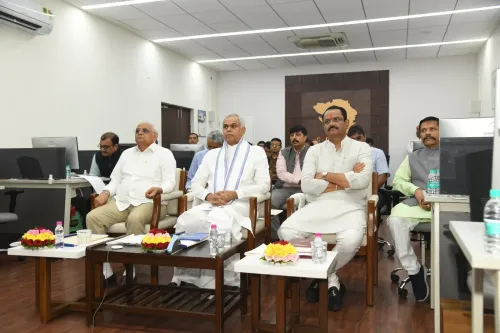
The Chief Minister's Office of Gujarat on Wednesday said Chief Minister Bhupendra Patel and Agriculture Minister Jitu Vaghani joined a video conference chaired by Governor Acharya Devvrat from Gandhinagar with district collectors, district development officers and municipal commissioners across the state to drive the rollout of natural farming. Patel urged the administrative heads to take up the campaign in 'mission mode' and work to shift farmers fully toward chemical-free cultivation.
Context
According to the post, the Chief Minister asked district and municipal officials to 'scientifically explain the importance and benefits of natural farming' to cultivators and extend cooperation to turn 100 per cent of farmers toward the practice. The meeting was held from Gandhinagar with administrative leaders dialling in from every district.
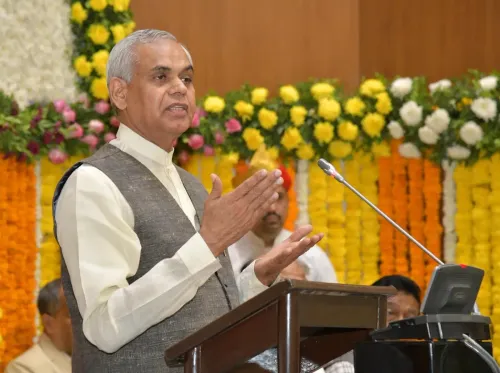
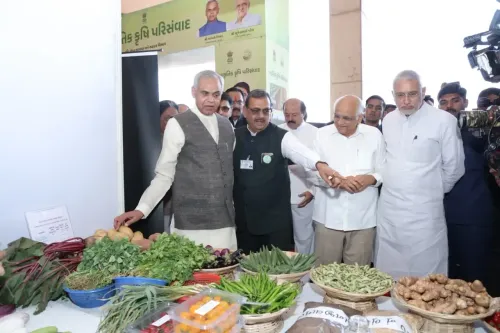
The Chief Minister's Office quoted Patel as saying that Prime Minister Narendra Modi has 'called for large-scale adoption of natural farming for the health of human life'. He added that Governor Acharya Devvrat is travelling village-to-village, holding direct dialogues with farmers and visiting their fields to bring more cultivators into what the state describes as a jan andolan (people's movement) for natural farming.
Policy backdrop
Natural farming — broadly, a low-input, chemical-free system relying on cow-based preparations, mulching and biodiversity — has been a recurring theme in Prime Minister Modi's public addresses since at least 2021. He has framed it as a route to restoring soil health, cutting input costs for small and marginal farmers, and reducing chemical residues in the food chain.
Gujarat has positioned itself as a frontline state for that agenda, with Governor Acharya Devvrat — long associated with promoting cow-based natural farming methods — serving as a public face of the outreach. The June video conference fits a pattern in which Raj Bhavan, the Chief Minister's office and the agriculture department coordinate to convert a national-level call into administrative targets at the district and city levels.
Stakeholders and impact
The immediate stakeholders are the state's farmers, who would have to alter input regimes, crop choices and marketing arrangements to switch from chemical-intensive cultivation. For many small and marginal cultivators, the transition can mean a temporary dip in yields before soil biology recovers, a concern that state outreach programmes typically seek to address through training and demonstration plots.
The video conference also placed responsibility on district collectors, district development officers and municipal commissioners — the field-level executives who oversee rural development schemes, agricultural extension and urban-fringe farming. Their participation signals that natural farming is being treated not only as an agriculture-department subject but as a wider administrative priority, including in peri-urban municipal areas.
Patel's appeal to explain the science behind natural farming reflects an acknowledgement that adoption depends on credibility with cultivators. Field visits by the Governor, and the direct conversations highlighted by the Chief Minister's Office, are the public-facing layer of that persuasion effort.
What's next
The state is expected to follow up the video conference with district-level action plans, training calendars and likely targets for the area to be brought under natural farming. The pace of adoption, the design of any incentive or hand-holding schemes, and whether the administration publishes district-wise progress data will be the practical tests of the 'mission mode' framing.
For the Centre, Gujarat's rollout is a closely watched template. If the combination of gubernatorial outreach and collector-led implementation succeeds in moving a measurable share of farmland to chemical-free practices, it could shape how other states structure their own natural farming missions in the coming agricultural cycles.
Point of View
Not just an agriculture-department subject. By pulling in district collectors and municipal commissioners, the state is mirroring how it has scaled past flagship missions — from sanitation to vaccination — using the collectorate as the lever. The Governor's village-level outreach gives the campaign political and moral weight, while the Chief Minister's '100 per cent' framing sets an ambitious benchmark that will invite scrutiny. The harder test will be designing transition support for small cultivators who face short-term yield risks.
NationPress
19 Sept 2026
Frequently Asked Questions
What did Gujarat CM Bhupendra Patel say about natural farming?
Bhupendra Patel asked district collectors, development officers and municipal commissioners to take the natural farming campaign in mission mode and work to shift farmers 100 per cent toward chemical-free cultivation. He spoke during a video conference chaired by Governor Acharya Devvrat from Gandhinagar.
Who chaired the Gujarat natural farming video conference?
Governor Acharya Devvrat chaired the video conference from Gandhinagar. Chief Minister Bhupendra Patel and Agriculture Minister Jitu Vaghani participated, along with district collectors, district development officers and municipal commissioners from across Gujarat.
What is natural farming and why is Gujarat promoting it?
Natural farming is a low-input, chemical-free system that relies on cow-based preparations, mulching and biodiversity to maintain soil health. Gujarat is promoting it in line with Prime Minister Narendra Modi's call for large-scale adoption to protect public health, cut farmer input costs and improve soil.
What role is Governor Acharya Devvrat playing in natural farming?
Acharya Devvrat is visiting villages across Gujarat, holding direct dialogues with farmers and inspecting their fields to encourage them to adopt natural farming. The Chief Minister's Office described his outreach as central to building a people's movement around the practice.
Which Gujarat officials are responsible for implementing the natural farming push?
District collectors, district development officers and municipal commissioners have been tasked with implementing the natural farming push at the field level. They have been asked to scientifically explain its benefits to farmers and drive adoption in their jurisdictions.