Governor Advocates Natural Farming for Soil and Health Protection in Gujarat Assembly
Synopsis
During a significant seminar at the Gujarat Assembly, Governor Acharya Devvrat championed natural farming as a vital approach to safeguarding soil, water, and public health, urging farmers and legislators to embrace sustainable practices.
Key Takeaways
Natural farming is essential for protecting soil and public health.
Governor Acharya Devvrat emphasizes the need for sustainable agricultural practices.
Research links chemical exposure to health issues.
Over eight lakh farmers in Gujarat have adopted natural farming.
Legislators are urged to promote natural villages in their constituencies.
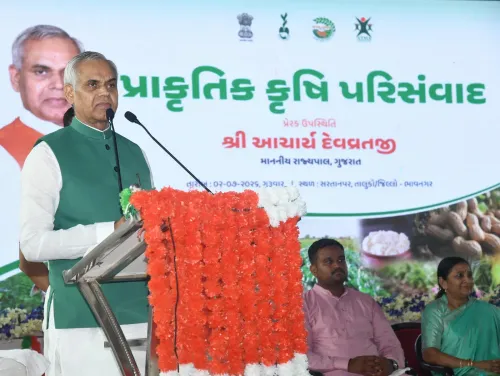
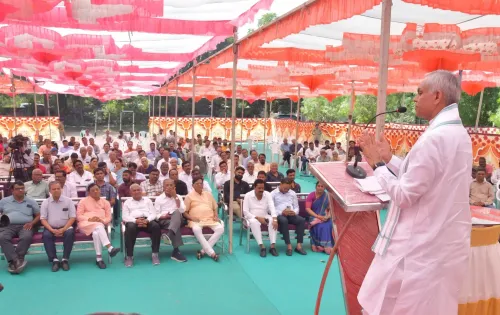
Gandhinagar, Feb 27 (NationPress) The importance of natural farming in protecting our soil, water, environment, and public health was emphasized during a seminar held at the Gujarat Legislative Assembly complex in Gandhinagar as part of the National Mission on Natural Farming.
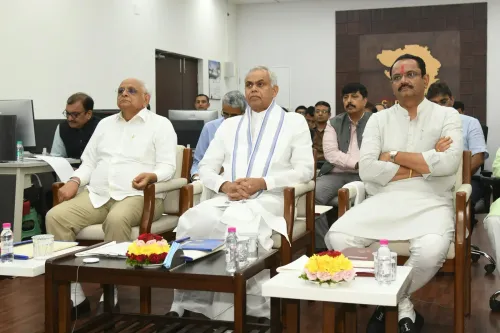
The event was presided over by Governor Acharya Devvrat and featured the participation of Chief Minister Bhupendra Patel, Assembly Speaker Shankar Chaudhary, and Gujarat BJP President Jagdish Vishwakarma.
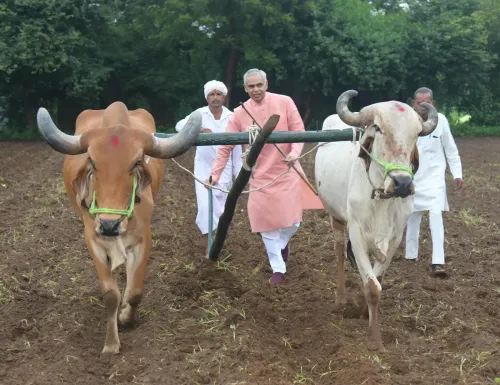
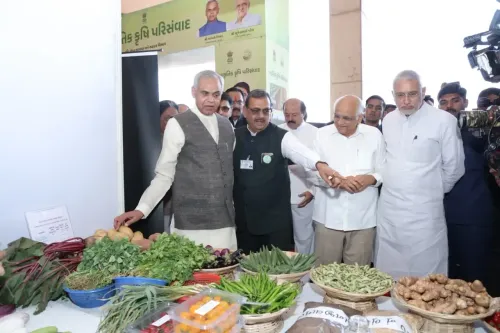
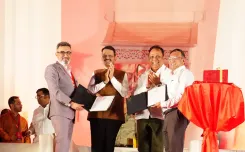
A fair dedicated to natural farming was organized on the Assembly grounds, where both the Governor and Chief Minister explored various stalls showcased by practitioners prior to the official session.
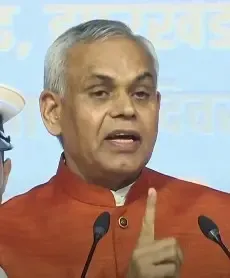
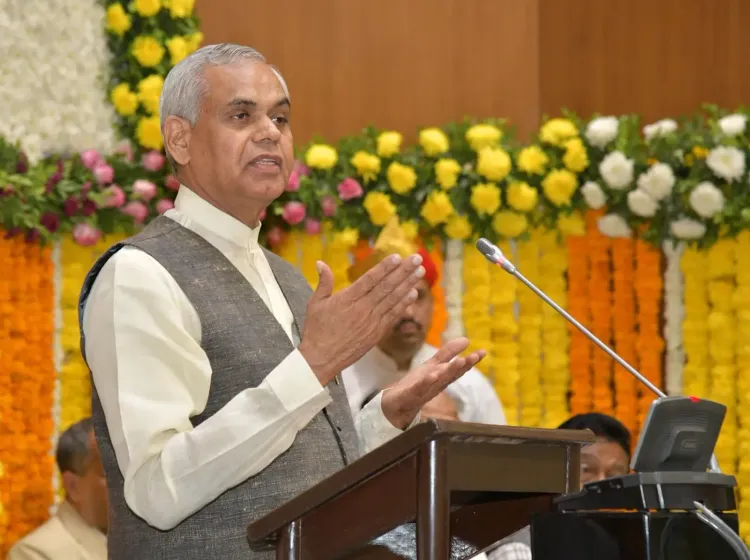
During his address to the legislators and attendees, Governor Devvrat stated, “To conserve water, soil, the environment, and human health, natural farming presents the most effective solution.”
He expressed satisfaction that this critical topic had garnered attention in the Assembly.
Governor Devvrat clarified the difference between organic and natural farming, noting, “Organic farming typically requires around 300 quintals of farmyard manure for every acre, while natural farming focuses on cultivating micro-organisms. Just one gram of dung from an indigenous cow is packed with over 300 crore micro-organisms, and cow urine is rich in essential minerals.”
By utilizing preparations like jeevamrut and ghan jeevamrut, he highlighted that “the population of earthworms and beneficial insects increases, thereby enhancing soil fertility naturally.”
Addressing public health issues, he remarked, “In past decades, diseases such as cancer, diabetes, and heart attacks were rare, yet today we see even young children afflicted by cancer.”
Citing research, he indicated, “Studies have shown that urea and pesticides are present even in a mother’s milk, which is deemed vital for newborns.”
On the topic of soil degradation, he explained, “During the Green Revolution, the organic carbon content in our soil ranged from 2 to 2.5 percent, but it has now plummeted to below 0.5 percent in many areas.”
He cautioned, “Soil with organic carbon levels under 0.5 percent is classified as barren.” In Gujarat, he noted that lands engaged in chemical farming have reached this alarming threshold, resulting in soil hardening and diminished rainwater absorption.
“Natural farming enables earthworms to create pores in the soil, which assists in rainwater retention,” he added.
Governor Devvrat also addressed the issue of fertilizer subsidies, stating, “Billions are spent on urea and DAP subsidies. Embracing natural farming could significantly reduce these expenses.”
He acknowledged the implementation of the National Mission on Natural Farming under the leadership of Prime Minister Narendra Modi, revealing that over eight lakh farmers in Gujarat have embraced this method with state assistance.
He encouraged farmers to initiate natural farming practices on a portion of their land and urged legislators, saying, “Every MLA should adopt one village in their constituency and transform it into a ‘natural village.’”
Chief Minister Patel characterized natural farming as “a necessity for both the present and the future.”
He quoted a traditional saying, stating, “‘Pehlu sukh te jat nirogi (the first happiness is good health)' and natural farming is the solution to achieve this.”
Alluding to the Prime Minister’s “Back to Basics” philosophy, he indicated that it calls for a revival not just of natural agriculture but also of conserving all resources critical to human health.
He advocated for broader implementation of initiatives such as water conservation, tackling global warming, enhancing green cover, and promoting chemical-free farming.
Point of View
The promotion of natural farming by influential figures such as Governor Devvrat underscores a growing recognition of the need for sustainable agricultural practices. This initiative aligns with broader environmental goals and health concerns, making it a crucial topic for farmers and policymakers alike.
NationPress
30 Sept 2026
Frequently Asked Questions
What is natural farming?
Natural farming focuses on cultivating soil health and biodiversity through the use of indigenous resources, such as cow dung and urine, without reliance on synthetic fertilizers.
How does natural farming benefit public health?
Natural farming can reduce the presence of harmful chemicals in food, contributing to better overall health outcomes and diminishing the prevalence of diseases linked to chemical exposure.
What are the key differences between organic and natural farming?
Organic farming typically requires large amounts of farmyard manure, while natural farming emphasizes the cultivation of micro-organisms and soil fertility through natural processes.
How many farmers in Gujarat have adopted natural farming?
Over eight lakh farmers in Gujarat have embraced natural farming practices, supported by the state under the National Mission on Natural Farming.
What initiatives are being encouraged alongside natural farming?
Alongside natural farming, initiatives such as water conservation, enhancing green cover, and promoting chemical-free cultivation are being encouraged for sustainable development.