US closes Peshawar consulate, shifts KPK diplomacy to Islamabad
Synopsis
The US is shutting its Peshawar consulate — its diplomatic frontline in one of South Asia's most volatile border regions — and folding KPK engagement into the Islamabad embassy. No closure timeline has been given, raising questions about whether this is purely administrative or signals a deeper security-driven reassessment of American presence near the Afghan border.
Key Takeaways
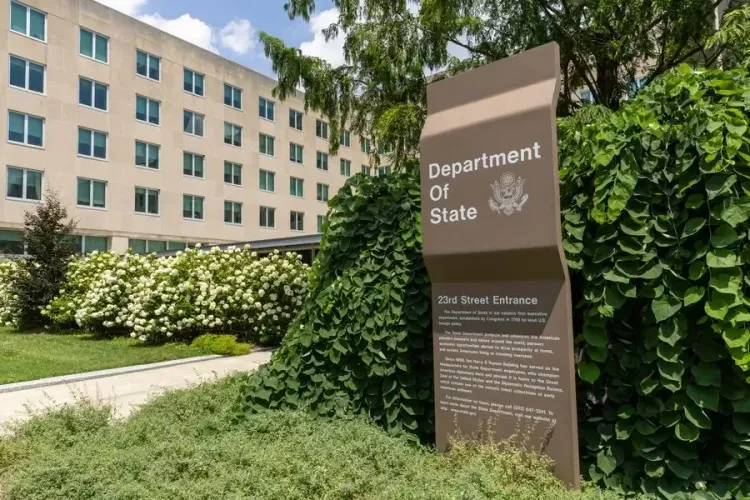
The US Department of State announced the phased closure of the US Consulate General in Peshawar on 6 May .
Diplomatic responsibility for Khyber Pakhtunkhwa will transfer to the US Embassy in Islamabad .
The State Department cited personnel safety and resource management as the reasons for the closure.
No timeline for the full closure or details of staffing reductions were disclosed.
The US Mission to Pakistan will continue operations through posts in Islamabad , Karachi , and Lahore .
Washington pledged continued engagement with KPK on economic ties and regional security .
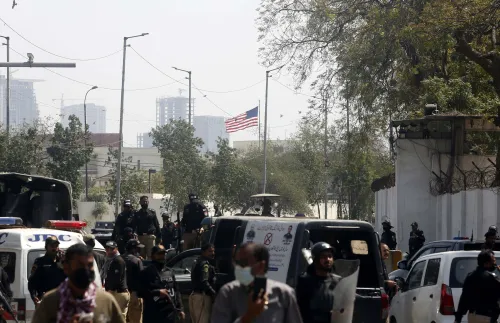
The United States has announced the phased closure of its Consulate General in Peshawar, with all diplomatic engagement covering Pakistan's Khyber Pakhtunkhwa (KPK) province to be consolidated under the US Embassy in Islamabad, the US Department of State confirmed on 6 May. The move marks a significant reconfiguration of American diplomatic presence in one of South Asia's most volatile regions.
What the State Department Said
In a brief media note, the State Department cited personnel safety and operational efficiency as the primary drivers of the decision. "The US Department of State is announcing the phased closure of the US Consulate General in Peshawar," the statement read. "Responsibility for diplomatic engagement with Khyber Pakhtunkhwa will transfer to the US Embassy in Islamabad."
The department did not specify a timeline for the full closure, nor did it confirm whether staffing reductions had already begun. The move was framed as reflecting "our commitment to the safety of our diplomatic personnel and efficient resource management."
Why Peshawar Matters
The Peshawar consulate has long served as Washington's frontline diplomatic outpost in a province that borders Afghanistan and has been at the epicentre of militancy, cross-border tensions, and counterterrorism operations for decades. Khyber Pakhtunkhwa remains strategically sensitive — home to former tribal areas that saw intense US-Pakistan counterterrorism cooperation during the post-9/11 era and the height of the Afghan conflict. This is the latest in a series of adjustments to the US diplomatic footprint in Pakistan in recent years.
Washington's Reassurances to Islamabad
Despite the closure, the State Department moved quickly to reassure both Pakistan and local stakeholders that its broader policy engagement would remain intact. "While our physical presence in Peshawar is changing, the Administration's policy priorities in Pakistan remain steadfast," the statement said. Washington pledged to continue engaging with KPK officials and residents on economic ties, regional security, and broader bilateral interests.
The department further confirmed that the US Mission to Pakistan would sustain operations through its remaining posts. "The Department, through the US Mission to Pakistan, remains dedicated to advancing the US-Pakistan relationship through our remaining diplomatic posts in Islamabad, Karachi, and Lahore," the statement noted.
What Happens Next
With no closure timeline publicly announced, questions remain about the pace of the drawdown and whether local visa and consular services will be affected. Analysts are likely to watch whether the consolidation signals a broader recalibration of US engagement with Pakistan's northwest — a region whose stability remains critical to any lasting settlement in neighbouring Afghanistan. The absence of a staffing disclosure also leaves open the question of whether the move is primarily administrative or reflects a deeper security reassessment on the ground.
Point of View
But the timing and location are hard to separate from the security context. Khyber Pakhtunkhwa has seen a marked uptick in militant activity in recent years, and consolidating KPK diplomacy into Islamabad effectively moves American diplomats further from the most volatile terrain. What the State Department has not said is as telling as what it has — no timeline, no staffing figures, no clarity on consular services for local visa applicants. For a province that was central to the US-Pakistan counterterrorism partnership for two decades, this is a quiet but consequential retreat.
NationPress
22 Sept 2026
Frequently Asked Questions
Why is the US closing its Consulate General in Peshawar?
The US Department of State cited the safety of diplomatic personnel and efficient resource management as reasons for the phased closure. All diplomatic responsibilities for Khyber Pakhtunkhwa will now be handled by the US Embassy in Islamabad.
When will the Peshawar consulate fully close?
The State Department has not announced a specific timeline for the full closure. It described the process as phased but gave no dates or milestones.
Will US diplomatic engagement with Khyber Pakhtunkhwa continue after the closure?
Yes, according to the State Department. Washington pledged to continue engaging with KPK officials and residents on economic ties, regional security, and bilateral interests through the US Embassy in Islamabad.
Which US diplomatic posts in Pakistan will remain operational?
The US Mission to Pakistan will continue to operate through its remaining posts in Islamabad, Karachi, and Lahore after the Peshawar consulate closes.
What is the significance of the Peshawar consulate?
Peshawar is the capital of Khyber Pakhtunkhwa, a province bordering Afghanistan that has been at the centre of militancy, cross-border tensions, and US-Pakistan counterterrorism cooperation since the post-9/11 era. The consulate served as Washington's frontline diplomatic presence in this strategically sensitive region.