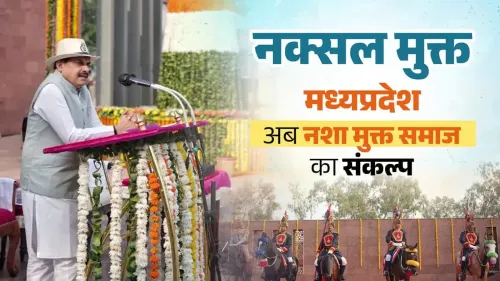
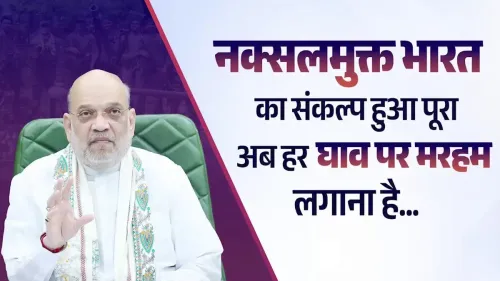
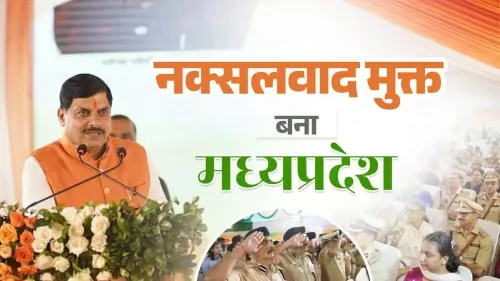
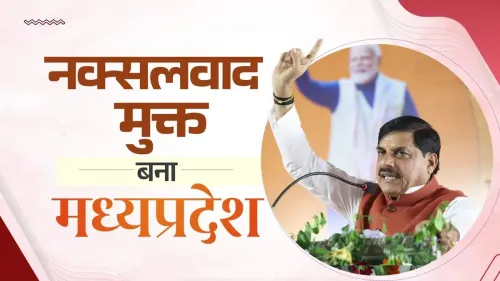
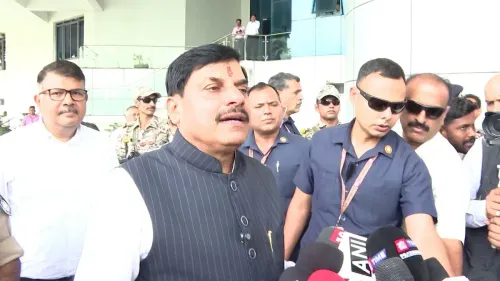
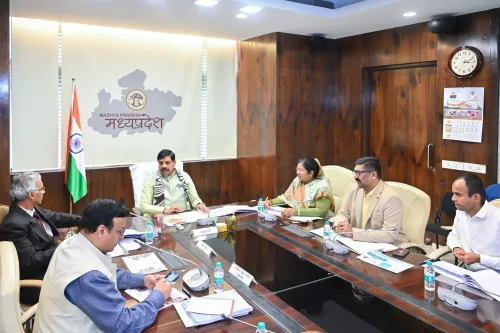
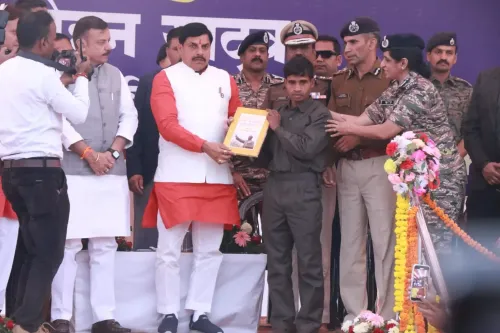
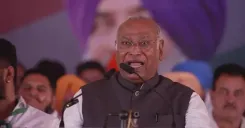
CM Mohan Yadav shares Amit Shah's claim of Naxal-free India
Synopsis
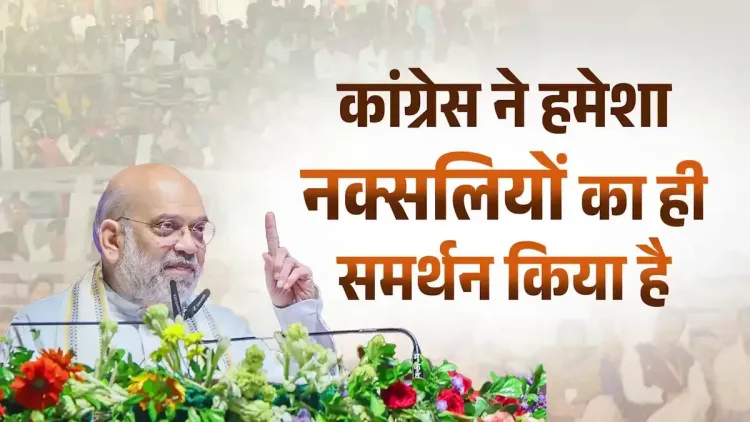
MP Chief Minister Dr. Mohan Yadav shared Home Minister Amit Shah's claim that India is now fully Naxal-free, citing a parliamentary statement in which Shah credited a strategy of force and surrender incentives for bringing 90% of Maoist cadres into the mainstream.
Key Takeaways
Union Home Minister Amit Shah claimed in Parliament that India has become entirely Naxal-free, a statement amplified by MP CM Dr.
Mohan Yadav on November 4, 2026.
Shah's stated policy: offer surrender and mainstream reintegration to those who lay down arms; deploy security forces against those who do not.
Shah claimed 90% of Naxal operatives surrendered and only 10% were killed — figures that have not been independently verified from public records.
The central government's LWE strategy since 2014 has combined CRPF-led operations with state-run surrender and rehabilitation schemes.
Official MHA data has shown a consistent decline in LWE-affected districts and incidents over successive years, though a formal 'Naxal-free' declaration has not been confirmed through published records.
The next MHA annual report on Left Wing Extremism will be a key benchmark for the claim's credibility.
A declaration that may define an era of internal security policy landed on social media on Wednesday, November 4, 2026, when Madhya Pradesh Chief Minister Dr. Mohan Yadav shared a pointed statement attributed to Union Home Minister Amit Shah — a claim that India has achieved a Naxal-free status through a twin-track strategy of security pressure and surrender incentives.
The post quotes Shah recalling a statement made in Parliament: 'jisko bhi surrender karna hai, wo hathiyaar daalkaar surrender kar de' — 'whoever wants to surrender, let them lay down their arms and surrender; we will bring them into the mainstream. Otherwise, our soldiers will take them on.' The Home Minister went on to claim that only 10% of Naxal operatives were killed while 90% surrendered, and that 'aaj poora desh Naxal mukt ho gaya hai' — 'today the entire country has become free of Naxalism.'
A policy built on two levers: force and rehabilitation
The claim reflects a strategy the central government has pursued consistently since 2014 — combining targeted operations by central security forces with structured rehabilitation and surrender packages for Maoist cadres. The Ministry of Home Affairs has, in successive years, documented a reduction in Left Wing Extremism-affected districts and in the number of violent incidents, particularly across Chhattisgarh, Jharkhand, Odisha, and Maharashtra.
That pattern of declining violence has been cited repeatedly in parliamentary interventions by Shah himself, who has framed the approach as evidence that development outreach in tribal regions, combined with credible security pressure, creates the conditions for mass surrenders. The central forces — including the CRPF's specialised CoBRA battalions — have led the operational component, while state governments administered surrender and rehabilitation schemes.
What the numbers mean — and what remains unverified
The specific ratio cited — 10% killed, 90% surrendered — and the sweeping assertion of a fully Naxal-free India have not been independently corroborated through publicly available official records. It is important to note that such figures cannot be verified from established data at the time of publication.
What the broader record does show is a substantial, documented decline. The number of LWE-affected districts in India shrank significantly over the past decade, with the government periodically revising the list of 'most-affected' districts downward. Incidents of Naxal violence, security-force casualties, and civilian killings all trended lower in official MHA tallies — a trend that underpins the narrative Shah articulated in Parliament.
MP's stake in the Naxal story
Madhya Pradesh itself was once counted among states with active Left Wing Extremism pockets, particularly in its southern districts bordering Chhattisgarh. Chief Minister Dr. Mohan Yadav amplifying Shah's statement carries a local resonance: for tribal communities in the Vindhya and Bastar border belt, a Naxal-free declaration — if borne out — would signal an end to decades of displacement, coercion, and stalled development.
Security forces and tribal communities across the affected belt remain the most direct stakeholders in what comes next — specifically whether rehabilitation infrastructure keeps pace with the surge in surrendered cadres, and whether the conditions that once made Maoist recruitment possible have genuinely been addressed.
The next Ministry of Home Affairs annual report on Left Wing Extremism metrics will be the clearest test of how close to the finish line India actually is — and whether a milestone being claimed in Parliament holds up under scrutiny.
Point of View
CM Yadav signals that BJP-governed states are ready to own that victory politically. The 90/10 surrender-to-kill ratio, if validated, would reframe the entire counter-insurgency as a success of incentive design rather than brute force, with significant implications for how India handles future internal security challenges. However, the gap between political declaration and verified data is a vulnerability: if post-surrender rehabilitation falters or residual violence resurfaces, the milestone risks becoming a liability. The real test is whether development investment in LWE-affected tribal districts has been durable enough to prevent a second generation of recruitment.
NationPress
4 Nov 2026
Frequently Asked Questions
Has India officially been declared Naxal-free?
Union Home Minister Amit Shah has claimed in Parliament that India is now entirely Naxal-free, as shared by MP CM Dr. Mohan Yadav on November 4, 2026. However, a formal government gazette notification or verified MHA declaration to this effect has not been confirmed in publicly available records.
What is the government's surrender policy for Naxals?
The central government offers Naxal cadres the option to surrender, lay down arms, and be brought into the mainstream through rehabilitation schemes. Those who do not surrender face security operations by central forces including the CRPF's CoBRA battalions.
What did Amit Shah say about Naxals in Parliament?
Shah stated that he had made clear in Parliament that those who wished to surrender could lay down their weapons and would be rehabilitated, while those who did not would face security forces. He claimed 90% of Naxal operatives surrendered and only 10% were killed.
Which states were most affected by Naxalism in India?
The worst-affected states have historically included Chhattisgarh, Jharkhand, Odisha, Maharashtra, and parts of Madhya Pradesh. The government has steadily reduced the number of districts classified as 'most-affected' in its annual LWE assessments.
Why is Mohan Yadav sharing Amit Shah's Naxal statement?
As Chief Minister of Madhya Pradesh — a state that borders Chhattisgarh and once had LWE-affected districts — Dr. Mohan Yadav's amplification of Shah's claim underscores the BJP's effort to present the counter-Naxal policy as a completed mission and a governance achievement.