Elephant deaths in Jharkhand: 4th carcass found in West Singhbhum in 2 months
Synopsis
Four elephants have died across Jharkhand in just two months, with the latest carcass found in West Singhbhum after villagers say the Forest Department failed to respond to their overnight distress calls. With electrocution, suspected poaching, and intra-herd clashes all cited as causes, the deaths point to a deepening crisis of human-wildlife conflict — and institutional failure — along the state's forest fringe.
Key Takeaways
A 4th elephant carcass in two months was found near Tankura village, West Singhbhum on 4 November 2026 .
Villagers say a herd of ~20 elephants entered the village on Tuesday evening; the Forest Department did not respond to calls for help.
Electrocution is suspected but unconfirmed; a post-mortem report is awaited.
A separate October case in Bhangaon village saw a female elephant found dead with both tusks missing , raising poaching concerns.
An elephant died of confirmed electrocution in Komar village, Latehar on 7 September after touching illegal high-voltage fencing.
Reports indicate 7 elephant deaths have been recorded in the region over the past year.
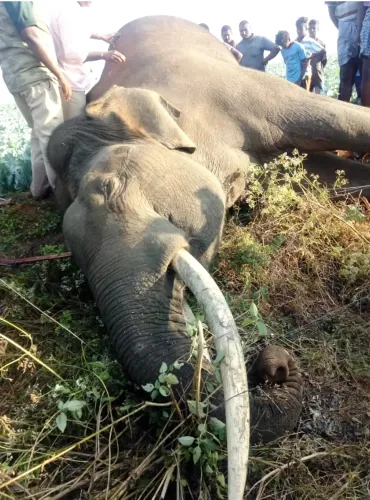
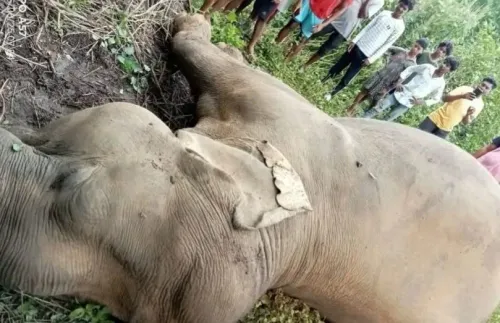
A fresh elephant carcass was discovered in a field near Tankura village in West Singhbhum district of Jharkhand on Wednesday, 4 November 2026, taking the total number of elephant deaths reported across the state's forest regions to four in the last two months. The finding has deepened concern over what wildlife observers say is an alarming pattern of human-wildlife conflict and inadequate institutional response in the region.
How the carcass was found
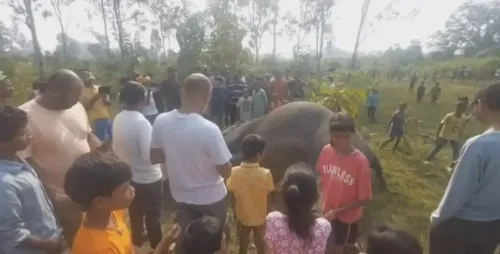
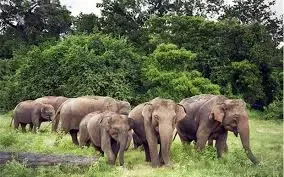
Villagers near Burma Toli in the Tankura settlement, under the Barajamda OP area of West Singhbhum, spotted the body the morning after a herd of roughly 20 elephants had entered village limits on Tuesday evening. Residents said they alerted the Forest Department and requested immediate assistance, but no official team arrived through the night. Left without support, the villagers spent the entire night attempting to drive the herd away from their homes and fields.
By morning, one elephant was found lying dead in an open field. The exact cause of death remains unconfirmed. Villagers suspect electrocution, but officials say the cause will only be established after the post-mortem report is received. Residents have demanded an impartial investigation and questioned the Forest Department's response time.
A pattern of deaths across districts
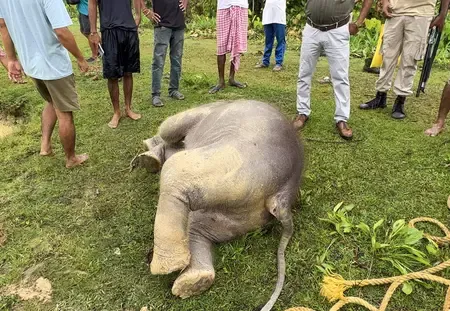
The latest incident is part of a string of elephant fatalities that have shaken Jharkhand's forest belt over the past two months. On 28 October, a dead elephant was found in the Bishunpur forest under Balumath police station limits in Latehar district. Forest Department officials, led by Ranger Nand Kumar Mahato, reached the site the following day and conducted an inquiry. Officials reportedly suspected the animal may have died in a clash with another elephant.
Earlier in October, a female elephant was found dead in Bhangaon village of the Jagannathpur area in West Singhbhum. Both her tusks were found missing, raising strong suspicion of poaching for the illegal ivory trade. Forest officials launched a separate investigation into that case. According to reports, seven elephant deaths have now been recorded in this region over the past year.
Electrocution: a recurring cause
On 7 September, an elephant died after coming into contact with a live electric wire in Komar village, also under Balumath police station in Latehar district. A herd of about 15 elephants had moved toward agricultural fields near the village when one animal touched electrified fencing installed to protect crops and homes, dying on the spot.
Notably, wildlife officials and conservationists have flagged a dangerous trend: villagers living on forest fringes are increasingly installing electric fencing above prescribed wattage limits, or connecting it directly to AC mains, to ward off elephants from their fields. While the impulse to protect livelihoods is understandable, such installations are both illegal and lethal.
Institutional gaps and what comes next
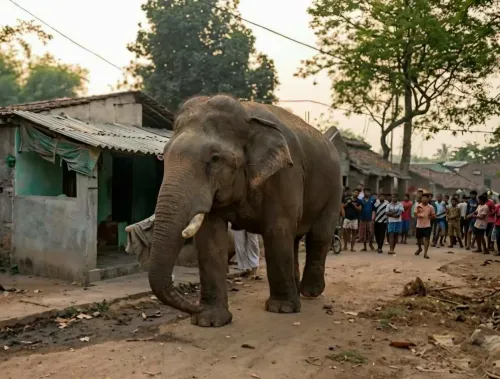
Elephant movement through villages bordering Jharkhand's forests has risen sharply, putting both communities and the animals at heightened risk. Critics argue that the Forest Department's failure to respond to distress calls — as seen in the latest Tankura incident — leaves villagers with little choice but to resort to dangerous deterrents. This comes amid broader concern about habitat fragmentation and shrinking corridors for elephant herds in the state.
Authorities are yet to release a consolidated action plan addressing either the surge in human-elephant conflict or the enforcement of safe fencing norms. With the post-mortem report on the latest carcass still awaited, wildlife organisations and local residents are watching to see whether the state government treats this as an isolated incident or a systemic emergency.
Point of View
No one came, and an elephant died. The Forest Department's absence in that overnight window may well be the story, not just the carcass. Meanwhile, the missing tusks in the Bhangaon case suggest that poaching networks are exploiting the same forest zones where the department is visibly absent. Jharkhand needs not just post-mortems on individual animals, but a systemic audit of corridor protection, illegal fencing enforcement, and rapid-response protocols — before the death count climbs further.
NationPress
4 Nov 2026
Frequently Asked Questions
How many elephants have died in Jharkhand in recent months?
Four elephants have died across Jharkhand's forest regions in the past two months alone, with the latest carcass found in West Singhbhum on 4 November 2026. Reports indicate that seven elephant deaths have been recorded in the broader region over the past year.
What is the suspected cause of the latest elephant death near Tankura village?
Villagers suspect the elephant died due to electrocution, but the exact cause has not been confirmed. A post-mortem examination is under way and the official cause of death will be known only after those results are released.
Why are villagers installing electric fencing, and is it legal?
Residents living on the forest fringe are erecting electric fencing to protect crops and homes from elephant herds. However, connecting such fences directly to AC mains or above prescribed wattage limits is illegal and has been directly linked to at least one confirmed elephant electrocution death in Latehar district in September.
Was there a suspected poaching case among the recent deaths?
Yes. A female elephant found dead in Bhangaon village in the Jagannathpur area of West Singhbhum had both her tusks missing, raising strong suspicion of poaching for the illegal ivory trade. The Forest Department launched an investigation into that case.
What action has the Forest Department taken?
Officials conducted an inquiry into the 28 October death in Latehar district, led by Ranger Nand Kumar Mahato. However, in the latest Tankura incident, residents say no Forest Department team arrived despite being alerted, drawing public criticism. No consolidated action plan addressing the surge in human-elephant conflict has been announced by state authorities.